Petra Lingua Revisited

Posted on

Petra Lingua is our curriculum of choice for learning French. We read books in French and I talk to them in French in the afternoon, but we build vocabulary in a systematic way with Petra Lingua.

I have written before about this website: here and here. You can learn many languages, like German, Chinese, Spanish, Italian and even Swedish.

In the fall, when it became clear that my local homeschool community did not really have an interest in our French Play Group, I put Petra Lingua to the side and focused on reading to the kids in French. I also tried using French on a more consistent basis with them, in the afternoon.

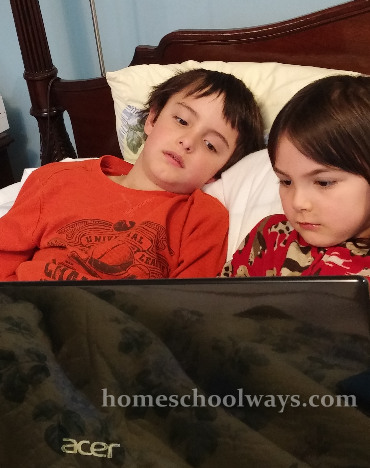
Then life happened: the holidays in November and December; my father’s passing in January; the flu in February. While they lingered on the bed with no energy, I read to them a lot, but then I also put a laptop in front of them to see if they had any interest and energy for Petra Lingua French. They did!

Children studying with Petra Lingua

My children study French with Petra Lingua while having the flu

So much so, they fought over who to do the exercises. Continue reading »


Story of the World, Vol. 1, Chapter 13

Posted on

Chapter 13 deals with The New Kingdom of Egypt. The kids colored the map and the mask of Tut while I read the first two stories. I asked if they could handle two more stories and they said yes. So I finished the chapter in that one sitting. The following day, my son brought his coloring pages to Daddy and told him about the Valley of the Kings and how it is full of tombs etc. I praised him for his narration, which I had not even requested.

That’s one thing I learned: when the chapter is long and we do it in one sitting, they do not want to answer review questions or to do a narration. They are ready to get away from the table and play! So I will have to work on reviewing this lesson later this week.

I asked if they wanted to make a monument and read the paragraph which explains it could be about somebody who died, a toy, an activity they enjoy or whatever. My son said he wanted to make a monument to Papaw – my husband’s father, who passed away one year ago. My children both were affected greatly by his passing and the concept of death became real to them then.

Bread and Glue

Bread and Glue

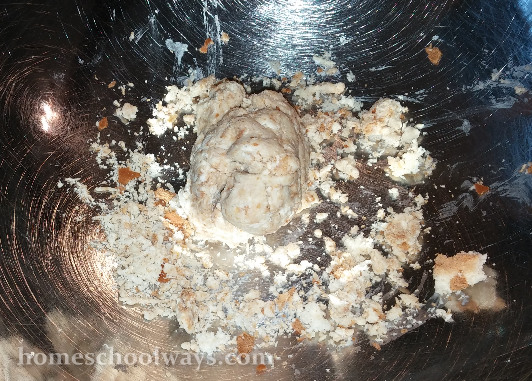
So we took bread and glue and proceeded to mix them together as indicated. It required white bread, which we never buy – we like whole wheat bread. My daughter, who is almost five, saw how messy and sticky this exercise was, and told me she did not want to build a monument.

Ball of glue and white bread

Ball of glue and white bread

Instead, she wanted to try the white bread. She ate a slice and loved it so much, she grabbed a second slice. Then, she asked for a third and a fourth, in a PBJ. I am always happy to see her eat, so I obliged, after we finished our monument and we washed our hands very well.  Continue reading »


Thoughtful Thursday Week 7 – Getting the Flu

Posted on

My son got the flu last week. We don’t know where, of course. But we had been out almost every day of the week for different activities. The doctor told us to keep him out of school through Thursday. I told her he was homeschooled. She said, “The question is, where did he get the flu?”

I informed her that we had seen people virtually every day of the week before: group violin lesson, Adventurer Club, Library Story Time, church, The Muse… She took it all in. She was going through a paradigm shift in her mind and it was visible on her face.

Homeschooled kids do get out… And they do get the flu… But even if you did not have all these activities, they would be accompanying their parents to the grocery store, at the very minimum, or to church…

Thoughtful Thursday

Oh well. Some things don’t change. People will always discover new things about homeschooling which change their perspective 180 degrees.  Continue reading »


Story of the World, Vol. 1, Chapter 12

Posted on

Chapter 12 deals with the Middle Kingdom of Egypt. I read to them while they colored the brooch pictures. To my surprise, it really worked. I thought maybe it was just a fluke last time. But it really works. Coloring keeps them focused and they listen while I read.

We worked through the review questions and tried our best to narrate. Let’s just say, it’s a work in progress. But we shall not give up…

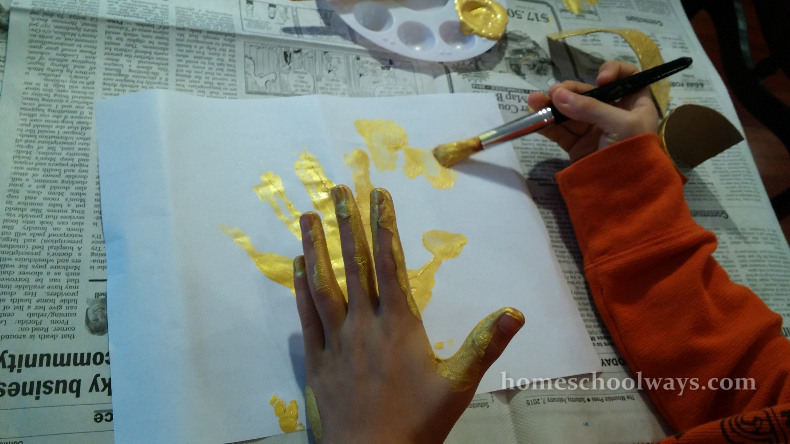
For our craft, we made gold color bracelets. Big mess, but worth it. My son enjoyed it so much, he decided to paint his hand and do a hand print in gold paint.

Painting a gold bracelet

Painting a gold bracelet


Gold Hand Print

Gold Hand Print

I discovered that the tube of tissue paper is impossible to cut the way they recommended in the book (first in half, then lengthwise). At least, for me, it was impossible. I found it easier to cut it first lengthwise and then in half.  Continue reading »


8 Ways Learning a Second Language Helps Kids Grow

Posted on

Recently, I became aware of a language service which I think will help many parents teach their children a second language. When it comes to language learning, support, accountability, and regular routines are key factors. But let me let them speak for themselves…


As a homeschooling parent, there’s no doubt that you find yourself constantly wondering how you can help your child obtain a well-rounded education that both challenges and excites. Placing an emphasis on learning a second language is a great way to introduce your child to another culture and encourage a healthy sense of wonder about the world. Consider these benefits of learning a second language:


1. It is directly related to higher scoring on standardized tests.

Learning a second language increases brain performance across the board. Research shows that students who have studied a foreign language do better on standardized tests like ACT exams and the SATs.


2. It encourages flexibility and open-mindedness.

Kids who study another language grow up in an environment where objects, feelings, and other facets of life have different names. This positions them to avoid being overly judgmental, deeming their native language, values, and culture “right,” while others are “wrong.”


3. It leads to better mathematical problem-solving skills.

Language learning is much more than a linguistic process; it is directly related to increased cognitive problem-solving. Kids who are fluent in a second language routinely outperform other students on math tests, despite having less of a mathematics emphasis in their core curriculum.


4. It improves memory.

Using the brain to learn a new language involves constant memorization of new vocabulary. This serves as a strengthening exercise, with research indicating that those who speak two languages are better at memorizing lists, statistics, and other facts.


5. It promotes increased understanding of others.

Kids who know how to speak another language learn to love and appreciate other cultures besides their own. Whether close to home or while traveling abroad, they can connect with native speakers of the language on a personal and meaningful level.


6. It gives them a competitive advantage.

Being bilingual has numerous benefits on paper, like being able to add it to a resume or college application. The foreign language skills your child learns now can translate to a measurable advantage in the future.


7. It positions kids for easier language learning in the future.

Future language learning is less intimidating for bilinguals. The brain recognizes patterns, rules, and structure, and experts say that each subsequent language learned is easier than the one before it.


8. It opens the door to making new friends and connections around the world.

There’s no better way to entice your child to be curious about the world than promoting language learning in your home. Being fluent in a second language is about much more than being able to speak to others, it enables your child to form new friendships, learn about other cultures, and fuels their appetite to explore the world beyond the home. And that is one of the greatest gifts any parent can give!

If you haven’t already, now’s the perfect time to incorporate language learning into your child’s life. Choose from small group classes, online lessons, and more, provided by expert teachers, to engage your child and get them excited about mastering a new language!
Dusty Fox writes on behalf of Language Trainers, an online language tutoring service for individuals and businesses. Take one of Language Trainers’ free online language level tests to see how good your current skills are, or send a quick inquiry to learn more about their tailor-made course packages today!

Thoughtful Thursday Week 6 – More Guest Posts

Posted on

Happy Thoughtful Thursday!

Here are two more guest posts I wrote for two very interesting homeschooling blogs:

The titles pretty much speak for themselves. I think you know by now that it is my passion to encourage homeschooling moms to dare to teach a foreign language in their homeschool even if they do not speak it.

Thoughtful Thursday 6

On the other hand, I have a special interest in bilingual and trilingual moms who try to pass on their languages to their children. And yes, there are polyglot moms out there who still haven’t figured out how to do it.  Continue reading »


My Latest Book, Life in the Smoky Mountains

Posted on

My latest book is out, available in paperback and Kindle formats: Life in the Smoky Mountains, Gatlinburg Through the Eyes of A Local.

February 5-8 (so starting tomorrow), the Kindle book will be free.

Please share with your travel-loving friends.

Life in the Smoky Mountains


This book is a collection of my newspaper columns, a travelogue of my staycation as a local in a tourist town, a collection of essays about life in the Smokies.

It covers homeschooling indirectly, as I share the activities we do in the Smokies with our preschool and early elementary children.


Story of the World, Vol. 1, Chapter 11

Posted on

Eureka! I found a way to get my kids to do their mapwork AND their coloring sheet (especially my son). Have both worksheets ready on the desk, with markers and crayons nearby. While I read the lesson and the stories, they color. That’s it. They need something to do and look at to get a visual about what they hear, so the worksheets serve a brilliant purpose.

Chapter 11, dealing with Ancient Africa, seemed very interesting to my children, possibly because of the Anansi stories. Two stories were included in the chapter and I read them while the kids were coloring their Anansi and Turtle picture.

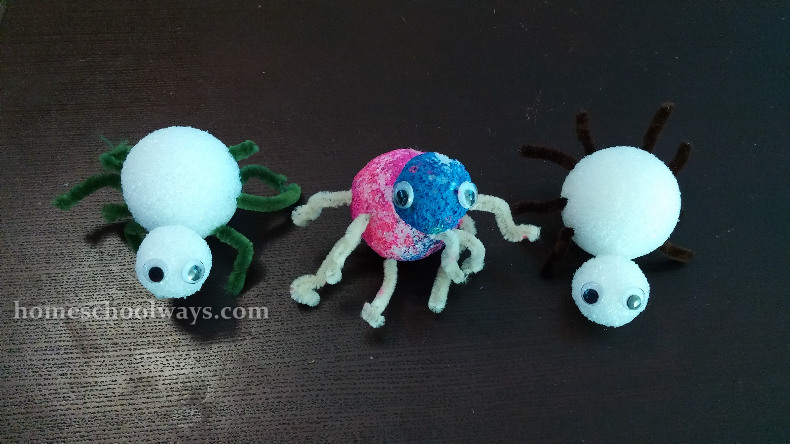
As I read the introduction, we looked at the map in the book and the one in their workbook. We chose to make Anansi the Spider out of styrofoam balls.

Anansi the Spider Craft

We each built an Anansi. My daughter wanted hers pink and blue.

The other stories recommended will have to come from the library. As I put in my requests through the library’s website, I even found a video book: Anansi and the Magic Stick, by Eric Kimmel. I looked it up on youtube and it’s there, but different. It is read by other people and, in my opinion, not as well done as this one. Since my library’s website is a membership site, I can’t share a link with you.  Continue reading »


Thoughtful Thursday Week 5 – Speed vs. Depth

Posted on

Did you grow up hating math or loving it? I grew up liking math. I made good grades in it, but I never thought I was a “math person” per se.

It turns out, there is no such thing as a “math person.” Everybody is capable of learning math. And everyone should have the chance of being introduced to math in a creative, fun way. Math should not be a series of mindless drills and repetition exercises. Math facts – especially the ones in arithmetic, or the early grades – should be understood.

Thoughtful Thursday

Which is why we chose to switch to Right Start Mathematics, a Montessori-inspired math program put together by Dr. Joan Cotter. I was getting a bit bored of this curriculum, not to mention confused – because it is so different, when… I discovered an MOOC by Stanford University called How to Learn Math – For Students. It totally reassured me Right Start Math is the right way to introduce my children to math concepts.

Oh, what a treasure trove of brain research and busted myths about mathematics I found in this Stanford course. It took me about two hours over two days (three sessions total) to finish all the lessons. My children came and hovered over my shoulder for a bit, as I watched the videos and answered the quizzes. Not sure they got much out of it, but some things sounded more interesting than others, I suppose. They stayed longer for some sessions.  Continue reading »


Story of the World, Vol. 1, Chapter 10

Posted on

We studied Ancient China, chapter 10 of The Story of the World Volume 1 mostly in the car. I knew the Story of the World CDs would come in handy. The kids enjoyed the story of the silk worms. They had no idea about how silk is made. I feel so privileged – all over again – to be the one introducing them to such facts about the world.

They did their mapwork. My daughter colored the page with Chin and his dad, but my son put it off. Again, I do not insist on coloring if he does not want to.

We read some of the books recommended. My local library did not carry these particular titles, but they got them for us in about a week through the inter-library loan program. Meanwhile, the children’s librarian brought us similar books which they did have. One of them actually had the same title as the one recommended by Susan Wise Bauer, i.e. “Ancient China,” and it made it confusing later on as I was returning both titles.  Continue reading »