French Friday, Top 10 French Words

Posted on

Hello again, on a French Friday morning. Or, should I say, Bon matin (Good morning)! Do you have ten minutes in your homeschooling schedule to squeeze in a bit of French? Oui? (Yes?) Très bien, alors! (Very well, then!)

Have you always wanted to learn French but never knew where to start? Wonder no more. Here are the Top 10 most frequently used French words, according to Gougenheim 2.00 – Fréquences orales et de production. Please find the pronunciation guide within [ ] and the English translation after the equal sign.
Top 10 French Words

1. le [luh], la [lah], l’ [l], les [lay] = the (definite article)

Can you believe French has four words where English only has one? That’s because French nouns are masculine (le), feminine (la), begin with a vowel (which makes le/la drop their own vowels and become l’), or need a plural article when they are in the plural form (les).

2. être [eh-tr] = to be (verb)

3. avoir [ah-vwahr] = to have (verb)

4. de [duh] = of, from (preposition)

5. un [uhn], une [yewn], des [day] = a, an, some (indefinite article) Masculine nouns in French require “un”, feminine nouns require “une” and plurals call for “des.”

6. je [zhuh] = I (subject pronoun)

7. il/ils [eel] = he, it / they (subject pronouns)

8. ce [suh] = this (indefinite demonstrative pronoun)

9. pas [pah] = not (negative adverb)

10. à [ah] = to, in (preposition)

Please let me know what kind of resources would best work for your French-learning needs in your homeschool. For more French Friday lessons, click here. À bientôt! (See you soon!)

Before Five in a Row

Posted on

Last year, my son turned five and my daughter turned three. I did not buy a preschool curriculum-in-a-box. We read a lot of books instead and did living math. Homeschooling gives me that flexibility. Besides, I really like the Charlotte Mason approach which replaces textbooks with living books.

I did not know how to come up with different activities based on what we were reading, so I bought Before Five in a Row (BFIAR) – the Five in a Row (FIAR) volume designed for children ages 2-4. In a different format than the regular FIAR volumes (which are meant for ages 4-8), BFIAR introduced us to a fascinating list of children’s classics and provided suggestions for activities based on the stories and concepts in the books.

This taught me how to put together a unit study – an approach which I could then take to other books we read, not included in BFIAR. That skill right there is worth the money for a new copy. Check out the amazon price below – better than on the FIAR website.

We read most of the BFIAR books from the library. We owned two titles and eventually found a third one at a homeschooling curriculum fair. Honestly, I did not feel the need to own them all. We already have many, many books.

My children loved all the titles and kept asking me to read them again and again and again. I think I read Blueberries for Sal a hundred times. OK, so maybe I read it only 14 times and it felt like a hundred times. When I got really bored, I focused on their enjoyment of the book. It helped.

After reading Blueberries for Sal, my children wanted to drop five frozen blueberries in a metal bowl every day just so they could go, “Kerplink, kerplank, kerplunk.” It’s the kind of memory that will stay with a mom (and her children) forever.

Before Five in a Row will always be the first curriculum (although the FIAR publishers tell you FIAR is not a curriculum) we ever tried and loved. If you love reading to your children and don’t know how to create a unit study based on what you are reading, I suggest you learn from BFIAR.

Some of the activities will go over the head of a two-year-old, so you can either work them with your older preschoolers or skip them altogether. Homeschooling allows for a tailored approach. Every time.


Free Ebook – 21 Days to Jumpstart Your Homeschool

Posted on

Is your homeschool running low on fuel? Do you need to connect to an external Power Source – the One Who called you to homeschool in the first place? Then get your copy of my FREE ebook, 21 Days to Jumpstart Your Homeschool.

Part devotional, part workbook, this step-by-step guide helps you achieve more and stress less. I wrote it to encourage fellow travelers on the homeshooling journey.

Convenient, compelling and clear-cut, 21 Days to Jumpstart Your Homeschool will quickly improve the health of your homeschool through fun, exciting and personalized exercises. Click on the book cover below to download or sign-up from the sidebar menu.

21 Days to Jumpstart Your HomeschoolThe effort it takes to homeschool your children can leave you running on your own juices. Bring new energy into your homeschool by reading and working through this free ebook. Download it now and uncover simple solutions for guaranteed results. (Already subscribed? Look for an email in your inbox later today, with the link to download the book.)


French Friday, Alouette

Posted on

Last Friday, I started a series of French lessons which I plan to turn into a permanent tab on my blog. Homeschooling would not be complete without at least one foreign language, right?

Today, let’s look at one of the most famous French songs ever: Alouette. Children use this song to learn the names of body parts in French.


Alouette

Refrain: Alouette, gentille alouette,

Alouette, je te plumerai.

1. Je te plumerai la tête. x2

Et la tête! Et la tête!

Alouette! Alouette!

A-a-a-ah

Refrain

2. Je te plumerai le bec. x2

Et le bec!  x2

Et la tête!  x2

Alouette!  x2

A-a-a-ah

Refrain

Alouette - Lark - body parts in French

Body parts in French, on a lark (alouette)

3. Je te plumerai les yeux. x2

Et les yeux!  x2

Et le bec!  x2

Et la tête!  x2

Alouette!  x2

A-a-a-ah

Refrain

Repeat the above with: le cou, les ailes, les pattes, la queue,  le dos.

Literally, the song says, “Lark, lovely lark, I will pluck the feathers off your head, beak, eyes, neck, wings, feet, tail, back.”

To sing Alouette in English, use

Little skylark, lovely little skylark,

Little skylark, I’ll pluck your feathers off.

I’ll pluck the feathers off your head, x2

Off your head, x2

Little lark, x2

O-o-o-oh etc

Apparently, a lark woke the song writer up one morning and he was not an early bird (no pun intended) or a card-carrying member of PETA. He calls the lark “lovely” or “nice” (gentille) though, which intrigues me. The song may have originated in France, but it is also attributed to Québec, the French-speaking Canadian province.

To hear the pronunciation, here’s a youtube video with a kid-friendly arrangement. Hope this little French song enriches your homeschool day!


My Top 10 Strategies for Raising Polyglots

Posted on

Because of my European background,  I want to raise polyglots even though we live in the United States. It helps that I homeschool – it gives me time to speak and read to them in different languages. If they went to school for seven hours a day in the majority language (English), it would put every other target language (Romanian, French, Spanish) at a huge disadvantage.

This post is linked to

I focus on Romanian and French for now. I decided I would add Spanish to the mix only after we get a grip on these two. Their daddy is American, so it’s all English with him.

So here are my Top 10 strategies for raising polyglots:

1. I spoke to them in the target language from birth. When others around us must understand my conversation with my children, I switch to English. Even though I live and homeschool in the US, I use Romanian as the language of instruction as much as I can. I repeat new concepts and vocabulary in both Romanian and English to make sure they get it.

2. I read to them in the target language at least 20 minutes a day. At first, I translated from English into Romanian. As the books got more complex, I switched to reading in English from English books, in French from French books and in Romanian from Romanian books.

3. We sing and listen to music in Romanian and French. While they play or eat, we turn it on in the background. They really like it. I point out some words if they are interested.

4. We Skype regularly in Romanian with my family or friends. Any French-speaking kids out there that we can Skype with?

5. I brush up on my own language skills by reading books, newspapers and blogs in French (or other languages). I listen to the news in French.

6. We listen to Radio France International, especially Le Journal en Français Facile for the children’s sake.

7. My children stumbled upon Fireman Sam in French and Robocar Poli in Korean on youtube. They even found Postman Pat in Dutch. When a character is hanging on a cliff yelling HELP in another language, they get it. Caution: TV viewing harms small children’s brain. My children are three and almost six. We only allow them 30 minutes daily, if at all.

8. We look to make friends with people who speak French or Romanian in our area. It’s tough though. But I keep hoping.

9. When the children get older, we will take them on trips to Québec and France.

10. Once my children can write, we plan to find them pen pals. Hopefully, my community of multicultural bloggers will hook me up in a few years (hint, hint).

I take teaching languages seriously, but I’m relaxed about it. Children don’t need pressure. Through it all, I am thankful that homeschooling allows me the time to accomplish my goal of raising polyglots in the good ol’ USA.


Rod & Staff Preschool Workbooks

Posted on

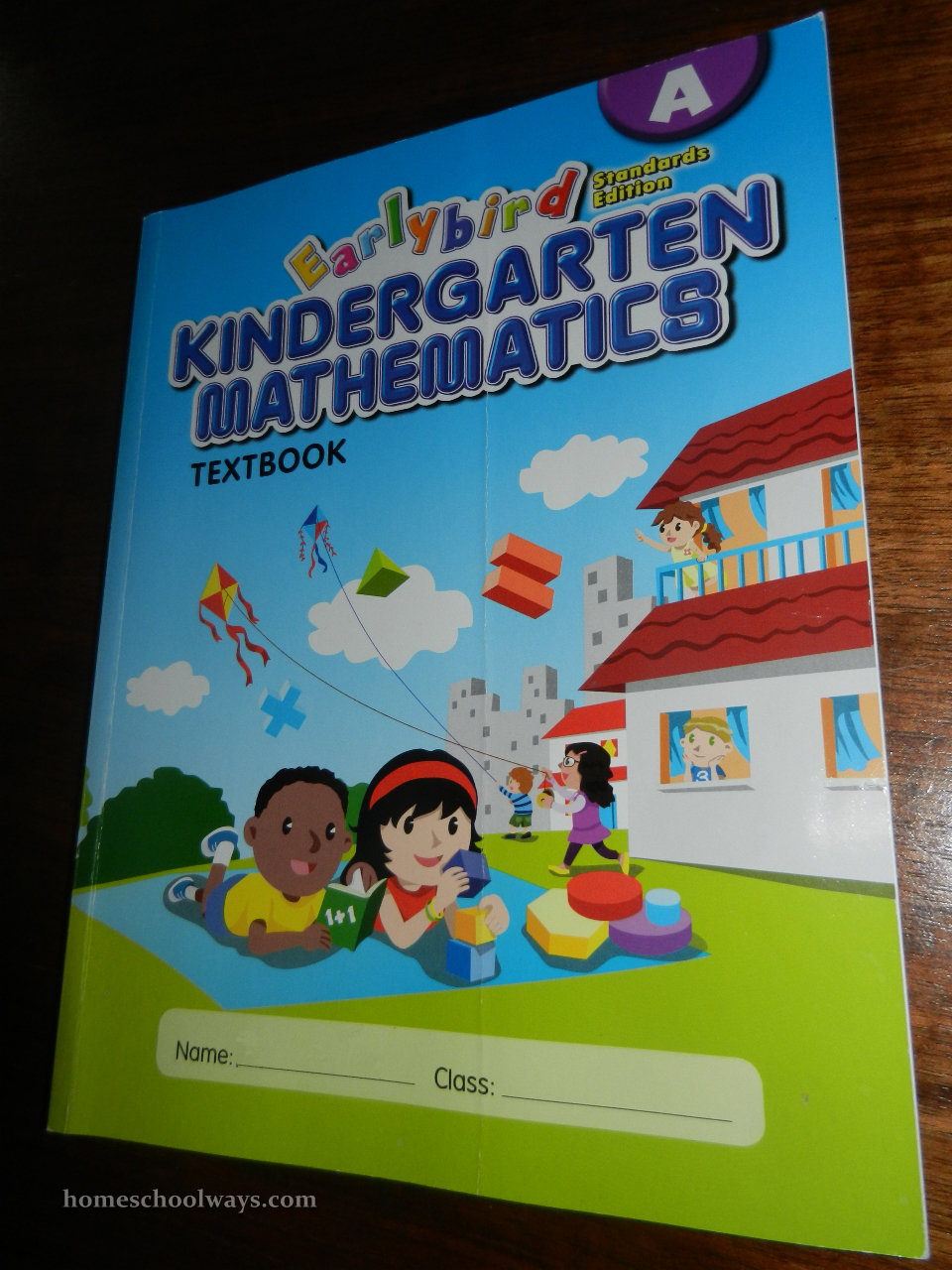
Earlier this year, while my son and I were doing math, my daughter asked to do math, too. He is five. She is three. I use Singapore Math Earlybird Kindergarten with him and I really like it, by the way. But alas, Singapore Math does not publish a preschool workbook. What’s a homeschooling mother to do?

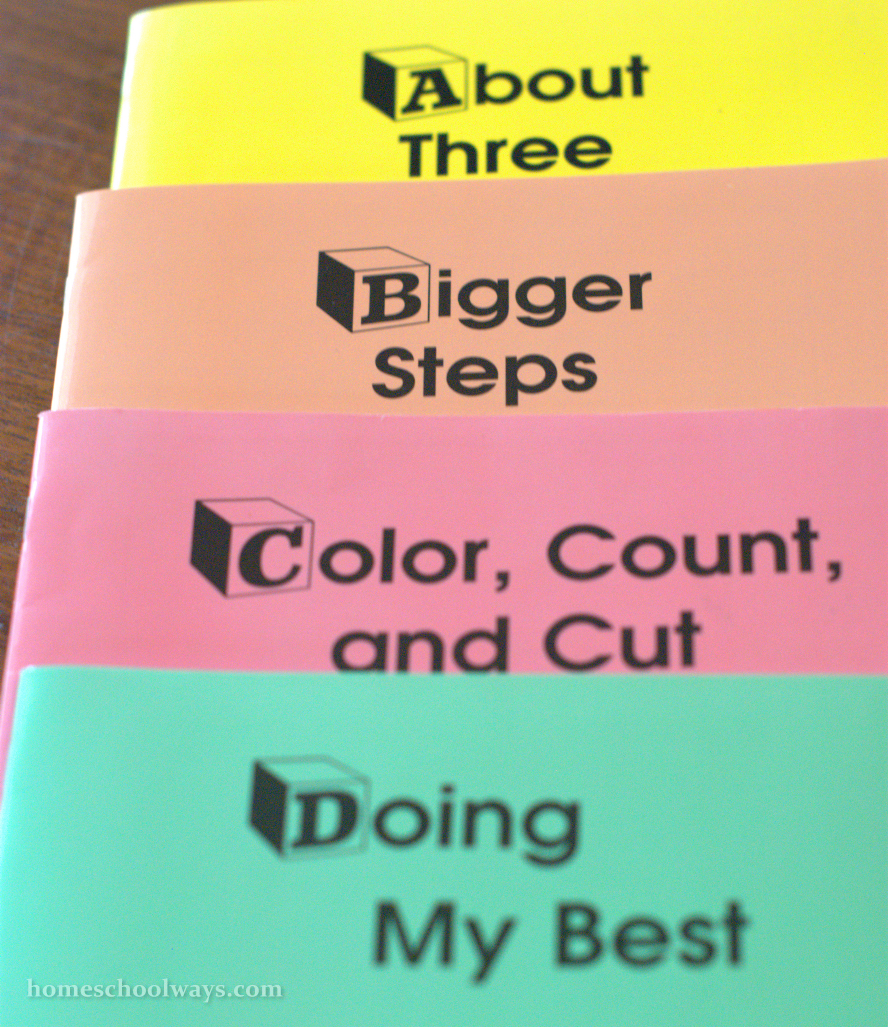
For a while, I printed worksheets for my daughter from the internet. When I got tired of it, I investigated around and found the Rod & Staff Preschool Workbooks. They come in two series: one for ages 3-4 and the other for ages 4-5. Since my son was still in preschool (technically speaking), I ordered both series.

My daughter loved her workbooks from the start. She finished one in two sittings. It was almost scary. She kept turning the page saying, “One more.”

Rod and Staff Preschool

Rod and Staff Workbooks for ages 3-4

She seems to be a natural pen-and-paper learner but, of course, she still likes hands-on activities, too – and we do plenty of those. As a younger sibling, she has been learning new concepts by osmosis on a daily basis. I work with my son and she plays nearby, within earshot. She absorbs information without realizing it.

I was amazed at how much she already knew as we worked through these booklets. The whole experience felt like a review of material I never covered with her. But it did not feel like a waste of time. We practiced important study skills like following directions, working on a page from top to bottom and from left to right, and stopping when the attention span wanes.

It also felt like the perfect way to ease her into the role of student and me into the role of teacher. For three years, I have been mommy. Now I am her teacher, too. We uncovered a new layer in our relationship.

The publishers have included cut and paste activities throughout, not just matching, drawing lines, coloring and tracing. The black-and-white format does not catch the eye, but it does the job. My daughter never objected to it in the beginning. However, after a few weeks of sitting next to her brother, who was working through his colorful Singapore Math workbook, she asked for a book “like his.” I told her she would get one “like his” when she gets to kindergarten.

I believe three-year-olds are too young to trace neatly. We skipped the tracing pages or, if she asked me to do it, I traced to show her the motions, by saying out loud, for instance, “To make a one, we go from top to bottom.”

As to my son, the workbooks for four- and five-year-olds never appealed to him, probably because (1) they were below his level and (2) Singapore Math offers tactile practice before asking a young child to show understanding of an abstract concept with pen and paper. So my daughter may inherit the Rod and Staff books for the next level.

Don’t you just love homeschooling? Things don’t always go as planned, but they work out in the end.


Aquarium Homeschooling Science Classes

Posted on

Once a month, I take my children to Ripley’s Aquarium in Gatlinburg for science classes designed especially for homeschoolers. Preschoolers started last week, but I could not take my daughter because she suffered from acute bronchitis.

My son being in kindergarten, he attends the K-2 class – an interesting mix of maturity levels. So far, we have attended two classes. About fifteen children showed up each time. Their parents, some handling a preschooler and/or a baby, attend the class as well. The young ones behave well. So far, no incidents.

The students sit on the carpet in the middle of the room. Parents and younger siblings sit on chairs set up against three of the walls in the room.

The September class, Beautiful Biomes, presented the seven types of environments on this planet. My son found it a bit boring. The PowerPoint slides did not save us from the monotony of a lecture-style presentation, although the teacher’s voice brimmed with excitement.

Thirty minutes into it, my son came over to my seat and told me he was bored. I encouraged him to pay attention as best he could. He did not have to wait long after that.

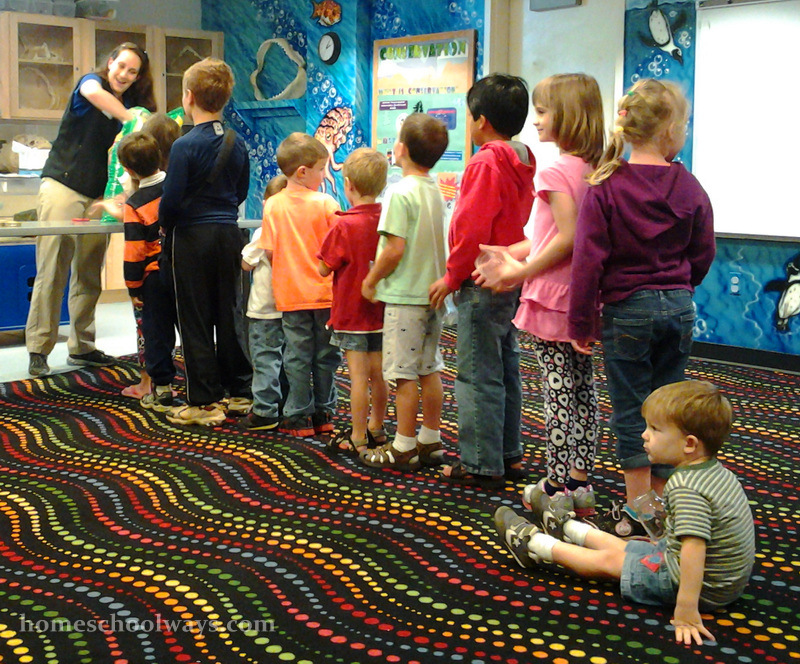
The teacher asked the students to line up so they can receive materials for the hands-on activity. They created their own biome by planting flower seeds into mason jars filled with dirt. My son was proud to bring his home.

Ripley's Aquarium science class on beautiful biomes

Homeschoolers line up to receive their materials

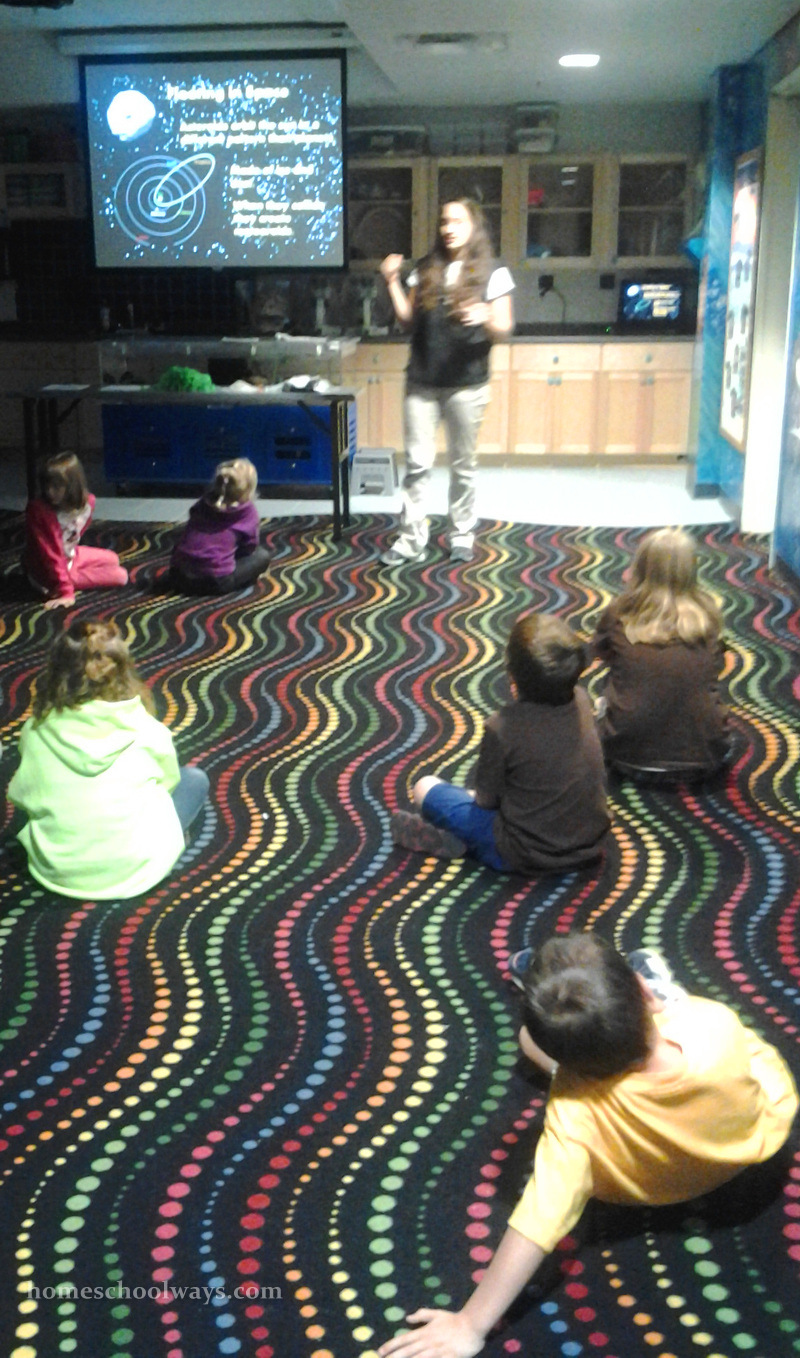
The October class, Shooting Stars, held our attention better. Pictures of the Universe inspire me with awe. Space fascinates my son.

Ripley's Aquarium Lecture on Shooting Stars - Homeschooling Science Class

Lecture on the Universe

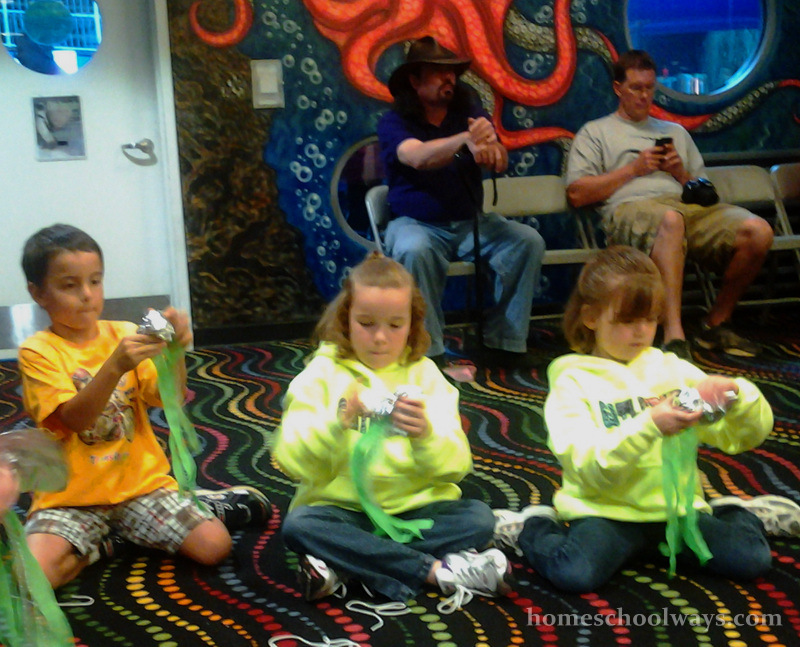
For the craft, they built shooting stars, following step-by-step directions from the teacher.

Ripley's Aquarium Shooting Stars Homeschooling Class

Building a shooting star

We received a handout with about thirty websites to check out about space. I can’t wait to look at more pictures with the Universe. “The heavens declare the glory of God and the firmament shows His handiwork.” Psalm 19:1

Showing off his shooting star Ripley's Aquarium

Showing off his shooting star

I like science, but it does not come naturally to me. I am thankful to Ripley’s for putting on classes for homeschoolers.


Singapore Math Earlybird Kindergarten

Posted on

Three criteria steered me in the direction of Singapore Math (SM) for my son’s homeschool kindergarten year. Here they are, in no particular order:

1. I feel strongly that little children in general and little boys in particular need lots of hands-on activities to grasp abstract concepts. SM provides lots of practical activities in one lesson before asking a young child to use pen and paper and demonstrate understanding. The written practice is short and sweet, too.

2. I believe that math, like any other subject, can be as boring or as exciting as a teacher makes it. SM makes math fun to teach. As I bring out visual aids and tactile props, my son gets excited. I enjoy watching him learn. Probably because it feels like play time. No groans – like the time I put a Rod and Staff workbook in front of him. He comes up with his own way of using these manipulatives, too. I believe it proves instruction just took place.

3. Asian students always win or place very high in international math competitions. I grew up in Romania and I know that plenty of Romanian students win or place high, as well. Because of my background, I am not bound to the American way of looking at numbers. SM comes close to the way I learned math.

Singapore Math Earlybird Kindergarten

Book A

The book is colorful, which helps a young child, I think. The lessons are short and move from hands-on to abstract, a transition that is not always easy. However, I noticed that if I let him “play” with the manipulatives long enough, he is more inclined to color in/match/draw lines in the book afterwards.

I like the emphasis on vocabulary and proper grammar, too. The books suggests the teacher have the child repeat full sentences about the new concept, e.g. “The pattern repeats itself every three pieces.”

All in all, we love Singapore Math Earlybird Kindergarten. Besides the workbooks (A and B), we bought the ten booklets suggested, which contain nursery rhymes like Hickory, Dickory, Dock or classic stories like Goldilocks and the Three Bears. Though not required, these readers add to the overall experience and show my son that math is all around us.

Bonus: my daughter joins us for reading time, so we are all together again. I love the way homeschooling facilitates learning and bonding as a family.


French Friday, Calendar Flashcards

Posted on

For my Friday post, I decided to upload a couple of resources for learning French. These are for you to use in your homeschool or after school language learning efforts. For more French Friday resources, click here.

I made some flash cards for you to download and print. The PDF links are below. You can use them with either reading or non-reading students. The first page of each PDF file will give you instructions on how to incorporate them in your daily routine, but I am sure you can figure other ways to use them.

If you need further help with the pronunciation, – and who doesn’t? – click on the youtube videos. I chose some neat songs to help reinforce pronunciation and help with memorization. We retain information better if we learn it in a song.

I placed the videos right here for your convenience. Feel free to bookmark this post and come back to it as needed.

My plan is to create more of these lessons and upload them all in a special tab by themselves on my blog. Coming soon. Sign up for email updates so you don’t miss it.

Until then, enjoy the days of the week as well as the months of the year in French below.

Click on the PDF link under each picture and save and print your flash cards as needed. The pronunciation video follows.


Les jours de la semaine

 Days of the Week in French PDF link


The months of the year in French

 Months of the Year in French PDF link


This post is linked to

Creative Kids Culture Blog Hop

What a fun activity to add to your calendar moments every morning. For five minutes a day, you and your homeschooling students can solidify French knowledge and stimulate neurons. Enjoy!


Our First Official Homeschool Break

Posted on

We homeschool for six weeks and take a week off. Many veteran homeschoolers have recommended this schedule as a sanity preserver, so I am going with the voice of experience. We have homeschooled now for six weeks and this is the first official school break in our home. It’s exciting.

I thought this would be the week when I finally finish some writing projects and can applesauce, but I have all kinds of other appointments which I was not planning on. On top of that, our monthly Ripley’s Aquarium science class happens to be this week and we still have another session of our Adventurer Club to attend before we take a two-week break from that…

Looks like learning will happen despite the break from the 3Rs.

The curve ball is the bug my daughter has been fighting for a few days now and which has transferred to my son today.

Speaking of my son, I asked him to sweep the floor after lunch and he did a great job. I still had to sweep a bit after him in places, but he has made a lot of progress since last week. He was proud of what he accomplished. After he missed the trash can though, he got discouraged. He asked me to sweep up the mess. I told him that he was still learning and encouraged him not to give up. He was still negative, but stood there and watched me sweep.

After I cleaned up the trash can area, he came back to me asking me to let him try dumping the dust pan again. He did not miss this time. I felt he was growing right there before my eyes, not just in home ec. skills, but also in attitude towards work and in his self-image.

Work is an important component of the Moore Formula (besides academics and service). I think children learn so much by working and performing chores around the house.

As I look up, I thank God for every day I am able to stay home and teach the kids.

As I look up, I thank God for every day I am able to stay home and teach the kids.

When we visited their grandmother in the hospital over the weekend (that falls under service, by the way), my son narrated a whole book to her of his own free will – Curious George Gets a Job. (Narration is a Charlotte Mason method.)

Of all the books we have read to him recently, he thought of that one because George broke his leg and had to wear a cast – like grandmother, who fell and broke her leg, and has to wear a cast now.

My daughter sang I’m a Super Sleuth – which she learned in church recently – also of her own free will. Children are so good at comforting others. They are natural at it.

I feel so blessed to be able to stay home with them and teach them and watch them grow and learn.

Homeschooling blesses me just as much as it blesses them. Which is why, when I look up at the sky, I thank God for my life. How did I get to be so lucky?