Rod & Staff Preschool Workbooks

Posted on

Earlier this year, while my son and I were doing math, my daughter asked to do math, too. He is five. She is three. I use Singapore Math Earlybird Kindergarten with him and I really like it, by the way. But alas, Singapore Math does not publish a preschool workbook. What’s a homeschooling mother to do?

For a while, I printed worksheets for my daughter from the internet. When I got tired of it, I investigated around and found the Rod & Staff Preschool Workbooks. They come in two series: one for ages 3-4 and the other for ages 4-5. Since my son was still in preschool (technically speaking), I ordered both series.

My daughter loved her workbooks from the start. She finished one in two sittings. It was almost scary. She kept turning the page saying, “One more.”

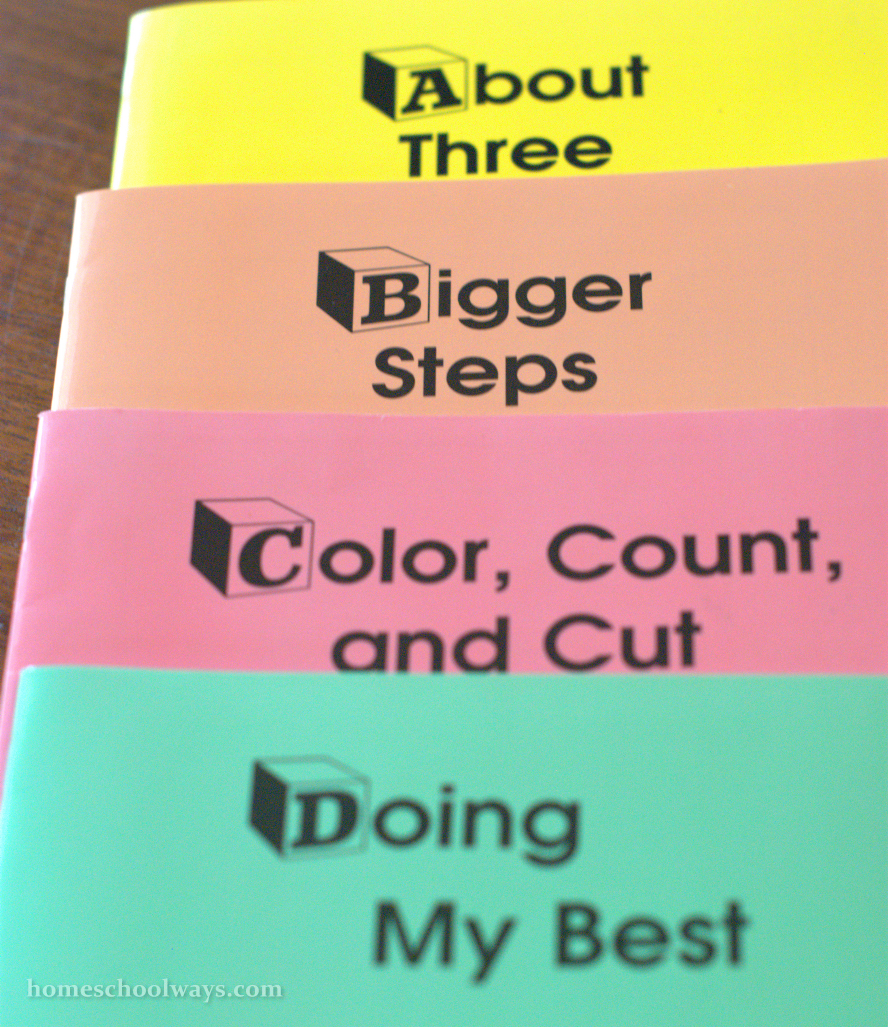
Rod and Staff Preschool

Rod and Staff Workbooks for ages 3-4

She seems to be a natural pen-and-paper learner but, of course, she still likes hands-on activities, too – and we do plenty of those. As a younger sibling, she has been learning new concepts by osmosis on a daily basis. I work with my son and she plays nearby, within earshot. She absorbs information without realizing it.

I was amazed at how much she already knew as we worked through these booklets. The whole experience felt like a review of material I never covered with her. But it did not feel like a waste of time. We practiced important study skills like following directions, working on a page from top to bottom and from left to right, and stopping when the attention span wanes.

It also felt like the perfect way to ease her into the role of student and me into the role of teacher. For three years, I have been mommy. Now I am her teacher, too. We uncovered a new layer in our relationship.

The publishers have included cut and paste activities throughout, not just matching, drawing lines, coloring and tracing. The black-and-white format does not catch the eye, but it does the job. My daughter never objected to it in the beginning. However, after a few weeks of sitting next to her brother, who was working through his colorful Singapore Math workbook, she asked for a book “like his.” I told her she would get one “like his” when she gets to kindergarten.

I believe three-year-olds are too young to trace neatly. We skipped the tracing pages or, if she asked me to do it, I traced to show her the motions, by saying out loud, for instance, “To make a one, we go from top to bottom.”

As to my son, the workbooks for four- and five-year-olds never appealed to him, probably because (1) they were below his level and (2) Singapore Math offers tactile practice before asking a young child to show understanding of an abstract concept with pen and paper. So my daughter may inherit the Rod and Staff books for the next level.

Don’t you just love homeschooling? Things don’t always go as planned, but they work out in the end.


Aquarium Homeschooling Science Classes

Posted on

Once a month, I take my children to Ripley’s Aquarium in Gatlinburg for science classes designed especially for homeschoolers. Preschoolers started last week, but I could not take my daughter because she suffered from acute bronchitis.

My son being in kindergarten, he attends the K-2 class – an interesting mix of maturity levels. So far, we have attended two classes. About fifteen children showed up each time. Their parents, some handling a preschooler and/or a baby, attend the class as well. The young ones behave well. So far, no incidents.

The students sit on the carpet in the middle of the room. Parents and younger siblings sit on chairs set up against three of the walls in the room.

The September class, Beautiful Biomes, presented the seven types of environments on this planet. My son found it a bit boring. The PowerPoint slides did not save us from the monotony of a lecture-style presentation, although the teacher’s voice brimmed with excitement.

Thirty minutes into it, my son came over to my seat and told me he was bored. I encouraged him to pay attention as best he could. He did not have to wait long after that.

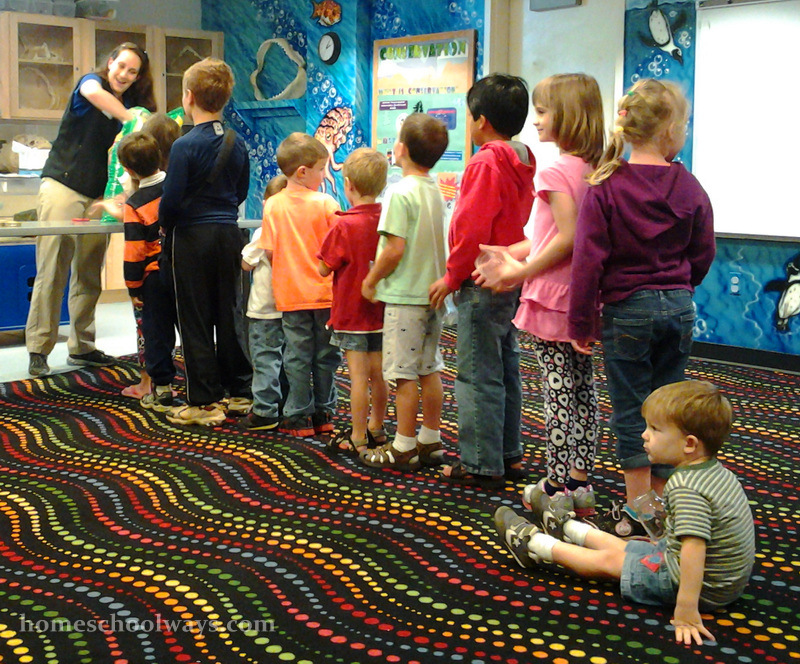
The teacher asked the students to line up so they can receive materials for the hands-on activity. They created their own biome by planting flower seeds into mason jars filled with dirt. My son was proud to bring his home.

Ripley's Aquarium science class on beautiful biomes

Homeschoolers line up to receive their materials

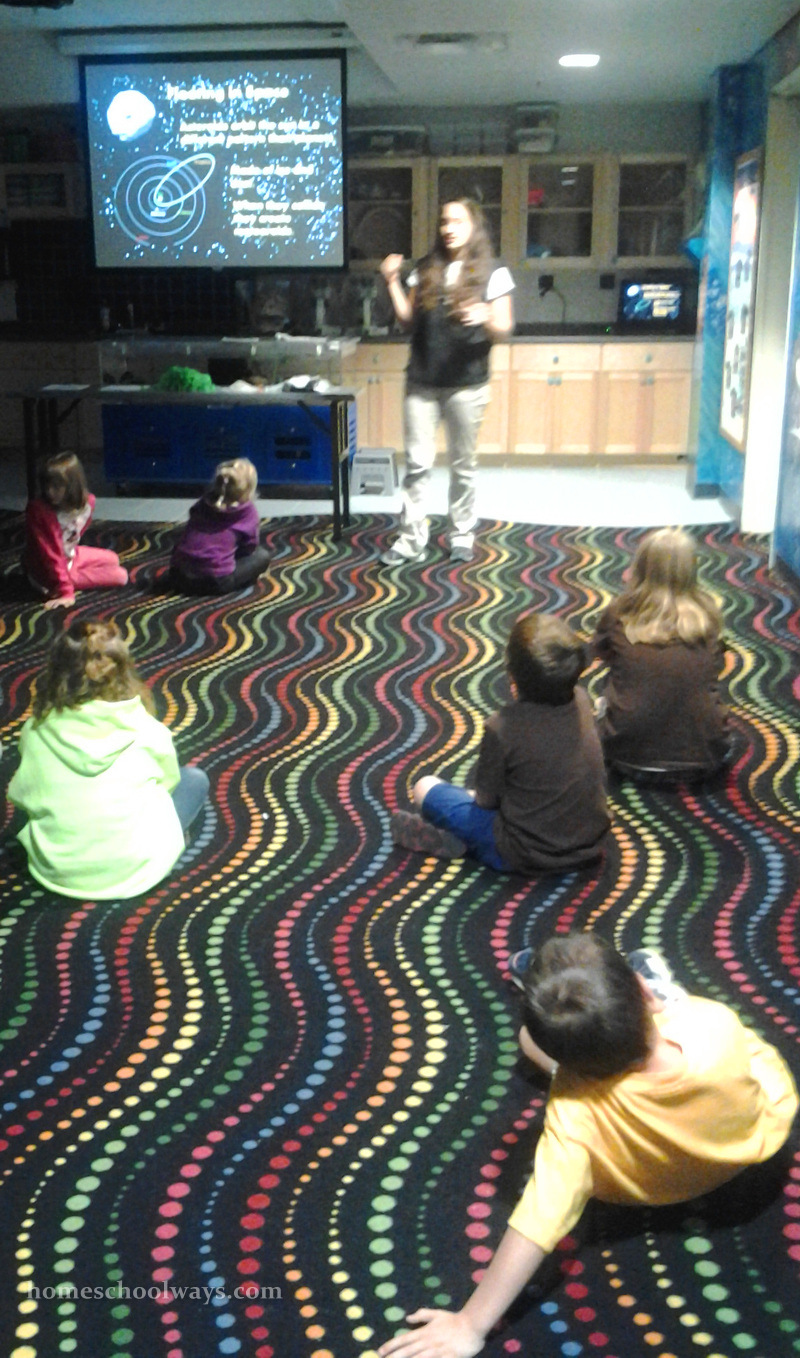
The October class, Shooting Stars, held our attention better. Pictures of the Universe inspire me with awe. Space fascinates my son.

Ripley's Aquarium Lecture on Shooting Stars - Homeschooling Science Class

Lecture on the Universe

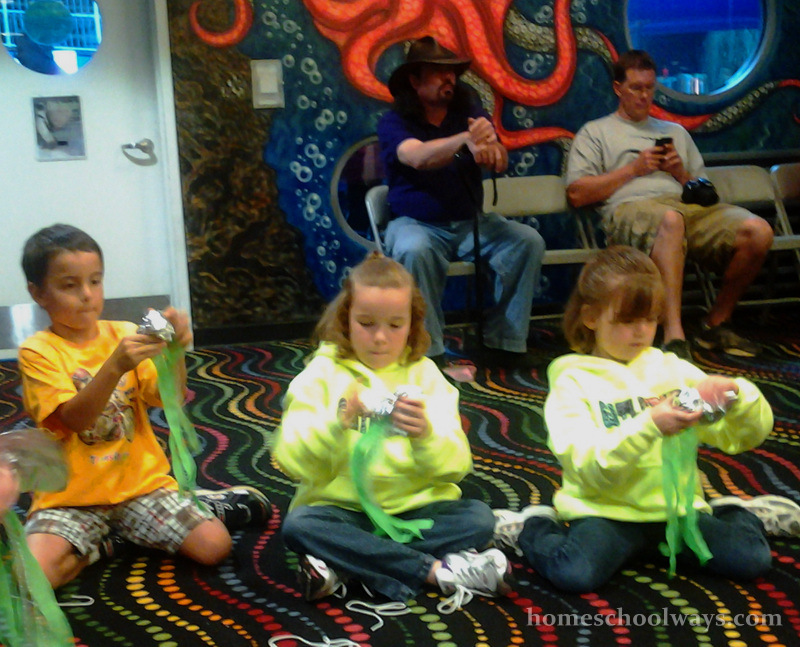
For the craft, they built shooting stars, following step-by-step directions from the teacher.

Ripley's Aquarium Shooting Stars Homeschooling Class

Building a shooting star

We received a handout with about thirty websites to check out about space. I can’t wait to look at more pictures with the Universe. “The heavens declare the glory of God and the firmament shows His handiwork.” Psalm 19:1

Showing off his shooting star Ripley's Aquarium

Showing off his shooting star

I like science, but it does not come naturally to me. I am thankful to Ripley’s for putting on classes for homeschoolers.


Singapore Math Earlybird Kindergarten

Posted on

Three criteria steered me in the direction of Singapore Math (SM) for my son’s homeschool kindergarten year. Here they are, in no particular order:

1. I feel strongly that little children in general and little boys in particular need lots of hands-on activities to grasp abstract concepts. SM provides lots of practical activities in one lesson before asking a young child to use pen and paper and demonstrate understanding. The written practice is short and sweet, too.

2. I believe that math, like any other subject, can be as boring or as exciting as a teacher makes it. SM makes math fun to teach. As I bring out visual aids and tactile props, my son gets excited. I enjoy watching him learn. Probably because it feels like play time. No groans – like the time I put a Rod and Staff workbook in front of him. He comes up with his own way of using these manipulatives, too. I believe it proves instruction just took place.

3. Asian students always win or place very high in international math competitions. I grew up in Romania and I know that plenty of Romanian students win or place high, as well. Because of my background, I am not bound to the American way of looking at numbers. SM comes close to the way I learned math.

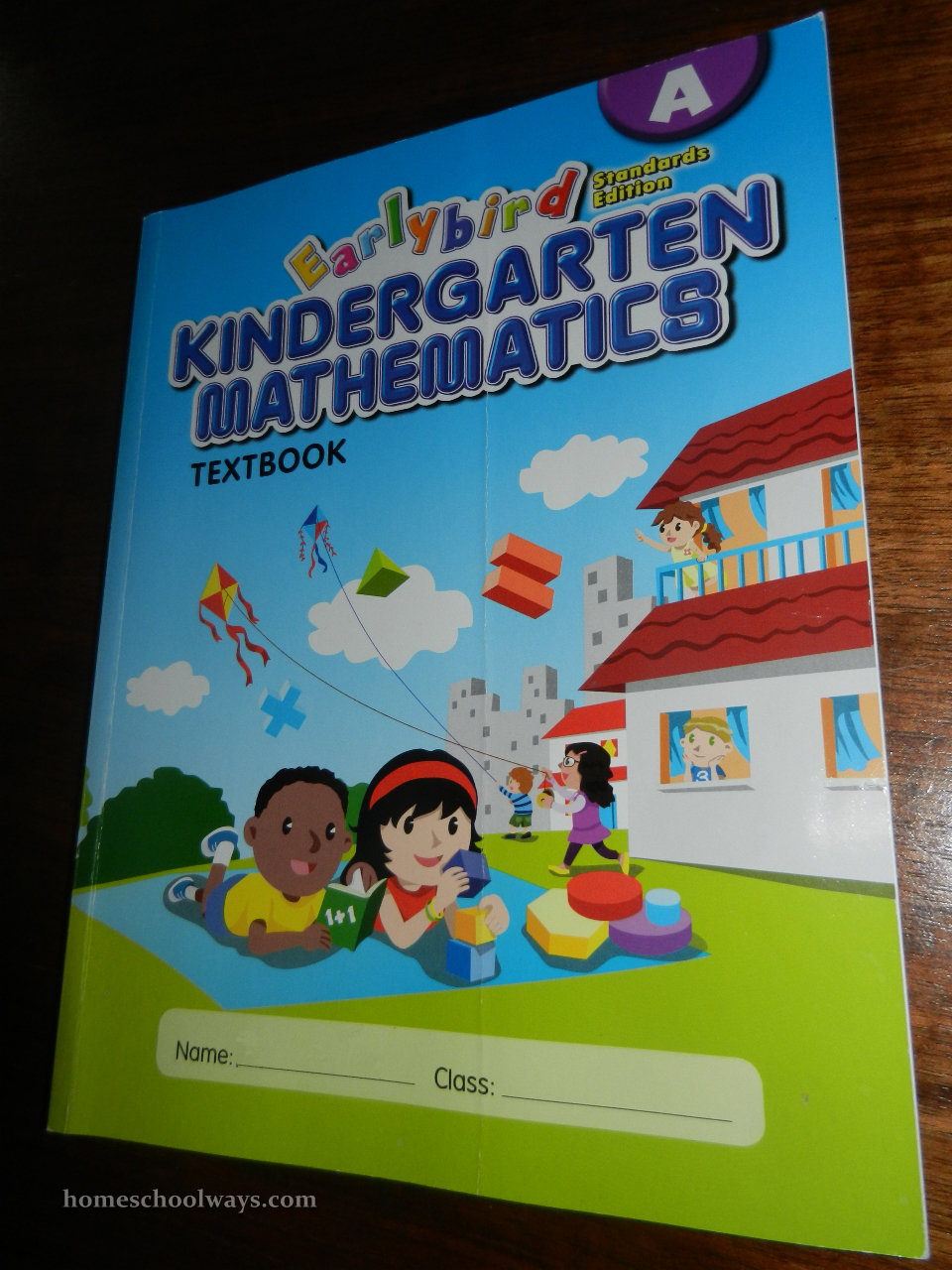
Singapore Math Earlybird Kindergarten

Book A

The book is colorful, which helps a young child, I think. The lessons are short and move from hands-on to abstract, a transition that is not always easy. However, I noticed that if I let him “play” with the manipulatives long enough, he is more inclined to color in/match/draw lines in the book afterwards.

I like the emphasis on vocabulary and proper grammar, too. The books suggests the teacher have the child repeat full sentences about the new concept, e.g. “The pattern repeats itself every three pieces.”

All in all, we love Singapore Math Earlybird Kindergarten. Besides the workbooks (A and B), we bought the ten booklets suggested, which contain nursery rhymes like Hickory, Dickory, Dock or classic stories like Goldilocks and the Three Bears. Though not required, these readers add to the overall experience and show my son that math is all around us.

Bonus: my daughter joins us for reading time, so we are all together again. I love the way homeschooling facilitates learning and bonding as a family.


French Friday, Calendar Flashcards

Posted on

For my Friday post, I decided to upload a couple of resources for learning French. These are for you to use in your homeschool or after school language learning efforts. For more French Friday resources, click here.

I made some flash cards for you to download and print. The PDF links are below. You can use them with either reading or non-reading students. The first page of each PDF file will give you instructions on how to incorporate them in your daily routine, but I am sure you can figure other ways to use them.

If you need further help with the pronunciation, – and who doesn’t? – click on the youtube videos. I chose some neat songs to help reinforce pronunciation and help with memorization. We retain information better if we learn it in a song.

I placed the videos right here for your convenience. Feel free to bookmark this post and come back to it as needed.

My plan is to create more of these lessons and upload them all in a special tab by themselves on my blog. Coming soon. Sign up for email updates so you don’t miss it.

Until then, enjoy the days of the week as well as the months of the year in French below.

Click on the PDF link under each picture and save and print your flash cards as needed. The pronunciation video follows.


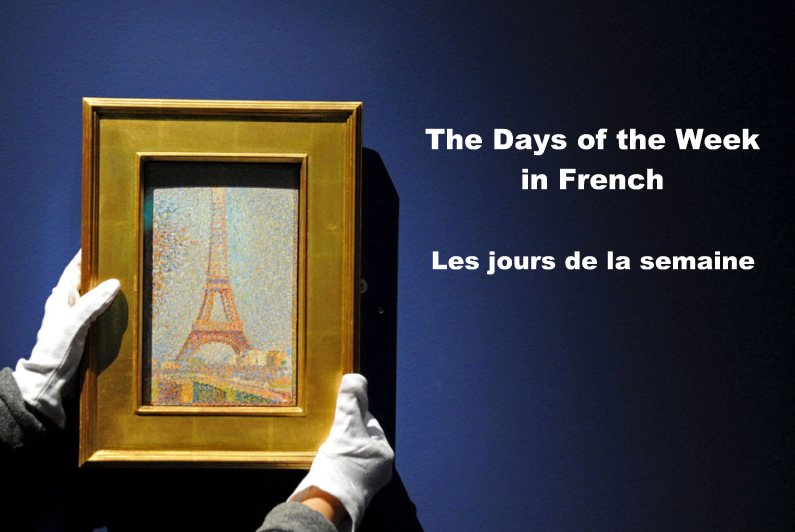
Les jours de la semaine

 Days of the Week in French PDF link


The months of the year in French

 Months of the Year in French PDF link


This post is linked to

Creative Kids Culture Blog Hop

What a fun activity to add to your calendar moments every morning. For five minutes a day, you and your homeschooling students can solidify French knowledge and stimulate neurons. Enjoy!


Our First Official Homeschool Break

Posted on

We homeschool for six weeks and take a week off. Many veteran homeschoolers have recommended this schedule as a sanity preserver, so I am going with the voice of experience. We have homeschooled now for six weeks and this is the first official school break in our home. It’s exciting.

I thought this would be the week when I finally finish some writing projects and can applesauce, but I have all kinds of other appointments which I was not planning on. On top of that, our monthly Ripley’s Aquarium science class happens to be this week and we still have another session of our Adventurer Club to attend before we take a two-week break from that…

Looks like learning will happen despite the break from the 3Rs.

The curve ball is the bug my daughter has been fighting for a few days now and which has transferred to my son today.

Speaking of my son, I asked him to sweep the floor after lunch and he did a great job. I still had to sweep a bit after him in places, but he has made a lot of progress since last week. He was proud of what he accomplished. After he missed the trash can though, he got discouraged. He asked me to sweep up the mess. I told him that he was still learning and encouraged him not to give up. He was still negative, but stood there and watched me sweep.

After I cleaned up the trash can area, he came back to me asking me to let him try dumping the dust pan again. He did not miss this time. I felt he was growing right there before my eyes, not just in home ec. skills, but also in attitude towards work and in his self-image.

Work is an important component of the Moore Formula (besides academics and service). I think children learn so much by working and performing chores around the house.

As I look up, I thank God for every day I am able to stay home and teach the kids.

As I look up, I thank God for every day I am able to stay home and teach the kids.

When we visited their grandmother in the hospital over the weekend (that falls under service, by the way), my son narrated a whole book to her of his own free will – Curious George Gets a Job. (Narration is a Charlotte Mason method.)

Of all the books we have read to him recently, he thought of that one because George broke his leg and had to wear a cast – like grandmother, who fell and broke her leg, and has to wear a cast now.

My daughter sang I’m a Super Sleuth – which she learned in church recently – also of her own free will. Children are so good at comforting others. They are natural at it.

I feel so blessed to be able to stay home with them and teach them and watch them grow and learn.

Homeschooling blesses me just as much as it blesses them. Which is why, when I look up at the sky, I thank God for my life. How did I get to be so lucky?


Lego Quest and Homeschooling, Part 2

Posted on

Our lives revolve around LEGO building systems or so it seems. We use LEGO Education sets in our homeschooling efforts. Then, we use LEGO brick sets for any type of free play my children dream up.

I recently discovered a blog (now inactive) which provided a list of 52 LEGO challenges – one for every week of the year. You may have seen my first post in this series. For other LEGO-related posts, please click here.

My son recently finished four more LEGO Quests and here they are.


LEGO Quest #7 – Collaboration

The idea is to work with at least one other person in creating a project, whatever that project might be. Well, we all pitched in. Daddy, mommy and little sister helped, but we let him come up with the idea.

Our son decided he wanted to build a home – which I thought was appropriate since we were all going to help him. Together, we built a home. Does anybody else see any symbolism in this?

LEGO Quest Collaboration

LEGO Home


He and his sister decided to add a few more details to it.

Finishing touches on his home, with his sister

Finishing touches on the LEGO home


LEGO Quest #8 – Your Favorite Book

It could be a character, scene, object or even a feeling from that book. He first chose the book, “Winnie the Pooh.” Then, he was stumped. I suggested a few things and he chose to make Winnie’s honey pot. There he is, taking a picture of his creation, while little sister is looking on.

Taking a picture of his creation

Photographing his Winnie the Pooh honey pot


These days, my son is fascinated with counting to 100 by 10s. So he was asking for quest #10, then #20, then #30… Neither inspired him. We continued down the list of quests and we ran out. Finally, we decided to work on (almost) the last two.


LEGO Quest #50 – Macro Scale

The idea is to reproduce a brick or a plate in macro scale. He made a small tent and a big tent.

LEGO Tent Macro Scale

Macro scale LEGO tents


LEGO Quest #51 – Olympic Event

I reminded him what the Olympic Games are. We looked at the examples provided on the blog, but nothing inspired him. He decided to build a mini-golf course, probably inspired by our latest putt-putt game.

Notice the attendant ready to give out golf clubs (leaning against red bricks in the attendant’s box) and golf balls (in the yellow box). I know, I know, putt-putt is not an Olympic game yet, but maybe it should be, for the sake of five-year-old boys and girls all over the world.

LEGO Mini-Golf Course and Attendant

LEGO putt-putt attendant and course in the background


And the Winner Is…

Posted on

… Mitzi Hendrich of Maryville. Congratulations, Mitzi! The Dollywood tickets are coming your way. Dollywood is a great homeschooling field trip – not just an amusement park. In some areas, it’s like stepping back in time 100 years. What a great way to learn American history.

Announcing the winner of a Dollywood ticket giveaway

In case you don’t know what I am talking about, I am giving away two Dollywood tickets to a blog subscriber. More information here.

Happy homeschooling!


How to Come Up with 4 Hours of Homeschooling Kindergarten

Posted on

{Today is the last day to enter to win 2 FREE Dollywood Tickets. See right menu for information.}

Some states ask homeschoolers to perform four hours of instruction in each of the 180 days of school they must report at the end of the school year. Tennessee, where I live, is one of those states.

State officials do not ask for specifics on what we did each day during those four hours. However, for my own sake, I keep tabs on what we do daily and how long each activity took. I use a simple notebook on each child, even though my daughter is in preschool and, as such, her instruction is not “official.”

Now, let’s define instruction. Any time knowledge is imparted, instruction happens. Children do not receive instruction only if they are seatead at a desk with their textbooks opened at a specific page as directed by an adult licensed as a teacher, who is standing in front of a blackboard or white board or SMART interactive board.

Children learn all the time. It’s what children do. They learn. They haven’t been around much, so most of what they see around them is new and exciting. Our task as parents is to surround them with positive, age-appropriate sources of information, according to their learning styles.

My daughter, a preschooler, joins us for most activities, so I use plural when I describe what we do. Here’s how I come up with four hours of instruction for my son, who is in homeschool kindergarten.


First Hour

30 minutes – Bible. This represents both our morning and evening devotional times, during which we read stories from age-appropriate Bible curriculum, learn hymns and praise songs, memorize passages of Scripture, pray, and do crafts or activities that will solidify and make real the knowledge of God. This time also covers those precious moments throughout the day when we talk about God because they ask about life and I direct their minds to the truths of the Bible.

30 minutes – Home Ec. Think making the bed, taking dirty clothes to the hamper, putting toys and school supplies up at the end of the day, dusting, wiping the table after meals, doing laundry, setting the table, stirring the oatmeal I cook for breakfast, pouring flour from the measuring cup into the mixing bowl for pancakes, pushing buttons on the blender filled with yummy ingredients under my supervision, learning to mow with daddy, emptying the dishwasher… I could go on and on. Home ec. skills are life skills which establish habits that will make them great spouses and parents and responsible adults with healthy self-images. Instruction happens throughout the day in small bits. I have approximated this to be half an hour daily.


Second Hour

1 hour – Romanian (mother tongue). I speak with them in Romanian 90% of the time I am with them. I also read to them in Romanian. It adds up to more than one hour a day, but I keep it simple for recording purposes.


Third Hour

30 minutes – Recess. Why not? If they count it as school time in public schools, we can, too.

30 minutes – Reading with mommy. I read picture books and various readers to them. We worked our way through “Before Five in a Row” and SimplyCharlotteMason.com reading lists. Now we are working through “Books Children Love.” Sometimes I have my son read a page or a whole reader, depending on how motivated he feels that morning.

Fourth Hour

30 minutes – P.E. Every day, as long as it is over 46F and dry, my children spend time outside on their bikes or doing various ball activities with me or with each other. Today we played a bit of tennis, for instance. Catching, throwing, rolling, and bouncing a ball are important large motor skills. Some days they bike the Gatlinburg trail. Daddy and I run alongside them. It is four miles both ways and we do it in 70 minutes, including a five-minute break when we turn around at Sugarlands Visitor Center. Great cardio workout. When it’s warm, we go to the pool. Every other month, they take swim lessons.

30 minutes – The 3Rs, i.e. formal instruction in reading, writing and arithmetic. Ten minutes per subject is plenty for a five-year-old. A child’s attention span is their age in minutes plus one. So a three-year-old can focus for about four minutes and a five-year-old for about six minutes. I make sure I don’t push my son beyond his limits. We might take a break and talk about something (he always has a story to share) before we go on to the next concept. We will probably do fifteen minutes per subject in the second semester; by then, my son will be six.


Fifth Hour

30 minutes – Reading with daddy. This is a nightly routine which happens after supper and just before bedtime.

10 minutes – Music. I play classical music for them throughout the day, during meals, or in the car. If they are interested, I tell them it is Telemann or Handel or Mozart etc.

10 minutes – Arts & Crafts. They make cards for different events and people on a regular basis. They draw, cut and paste in their lapbooks. They decorate their bedroom according to their fancy with old ribbons and scotch tape. They paint. They draw with chalk in the driveway.

10 minutes – Science. Once a month, they take a class at Ripley’s Aquarium. Nature walks or simply being in the yard provide an opportunity for spotting insects and animals. We melt ice. We make popsicles. We grow butterflies out of caterpillars we mail ordered. We write in our nature journals. We learn to cook and can and garden.

10 minutes – Foreign Languages. I tell them things in French and Spanish every day. Simple things. “Thank you” or “here you are” or “please” or whatever simple phrase I may use in Romanian, I repeat it in French. Or Spanish. Or English. I find myself saying the same thing in three or four different ways. Sometimes I make them repeat it, but other times, if we are hard at play, I just say it and we move on. We also repeat the days of the week and the months of the year in several languages for our calendar activities.

As you can see, I easily come up with more than five hours of “instruction” per day. Which means that I can leave out certain activities based on what we have on our schedule as a family that particular day. Activities can carry over for recording purposes, too. It works out well. I told you homeschooling was a flexible endeavor.


Homeschooling and Multilingualism

Posted on

Before I say anything about the languages that I speak and teach to my children, let me make it clear that if I don’t have love (i.e. the genuine article, a.k.a. agape in Greek), I am only a resounding gong or a clanging cymbal and who wants to do that for a living? Not me. Not in my home. Not in our homeschooling process.

If that gong and cymbal comparison sounds familiar, it’s because it is. I got it from a gentleman who spoke several languages himself and wrote a dozen small books which have been translated into many, many languages. I am referring, of course, to the Apostle Paul.

Comparing a loveless polyglot to a resounding gong is found in 1 Corinthians 13:1, to be precise. In this chapter, Paul talks about other accomplishments which mean very little in the absence of agape, but he starts out with multilingualism – a detail that has always resonated with me. Pun intended.

Having said all that, I must mention that am fluent in Romanian, French, and English. I have a good knowledge of Swedish, Spanish, Italian, and Latin. And I have basic knowledge of German, Norwegian and Portuguese. Here’s how…

I was born in Romania and lived there until I was 19. I took French in school (two hours a week, grades 5-12). I took English in school (two hours a week, grades 6-12). I also took Latin in the eighth grade. Two foreign languages plus Latin were mandatory subjects in Romania back then – not sure what they do now – but they did not have to be for me.

I have always loved languages and found it easy to learn words and grammar rules. Words to me are like toys to a child. I always want new ones.

Homeschooling and multilingualism

I majored in French and English at the University of Bucharest (UB). While there, I took Latin and Ancient French (Ancien Français) classes. It was incredibly helpful to see the evolution of French words from Roman times to the Middle Ages versus today.

Most people do not know that Romanian is a Romance language right along French, Italian, Spanish and Portuguese. We use the Roman alphabet, even though we are surrounded by nations who use the Cyrillic. So yes, I had some home advantage to all this language learning.

I learned Italian by watching Italian movies and TV – if you saw Michele Placido in La Piovra, you would, too – and by listening to Eros Ramazzotti’s music. It occurs to me that I have been a Ramazzotti fan since 1986 – almost three decades. His lyrics are deep poetry.

I learned Spanish on the go, during my lunch breaks in college, preparing for a mission trip to Ecuador in 1995. While there, immersion did the trick.

Swedish and Norwegian come from my three years of living in Sweden – I loved my Scandinavian period, especially the last year, when I lived in Stockholm. You might know this, Swedish vs. Norwegian is like British English vs. American English.

I took German classes here and there, from the TV, from conversation guides, from German friends. Swedish, Norwegian, German and English, of course, fall in the Germanic language family and the similarities help solidify new vocabulary.

Recently, I was watching an interview in Portuguese with English subtitles and I was relying heavily on reading the translation. At one point, I heard the words in Portuguese and the subtitles were delayed. I understood what was said and when the translation popped on the screen, it confirmed it. I tuned my ears and focused more. It was not hard to get it. I was very surprised, but I guess I should not be. Once you have most of the languages in one language family, it’s only a matter of imagination and fine tuning the endings of the words and some grammar rules.

My children are bilingual (Romanian and English) because daddy has always addressed them in English (he is American) and I have always talked to them in Romanian. I am working on adding French and Spanish to their repertoire. I sprinkle Latin here and there throughout the day, when I point out Latin roots of English words and how similar certain words are in many languages (e.g., rapid – English, rapid – Romanian, rápido – Spanish, rapide – French).

If my children went to “regular” school for seven hours a day, I would have very little time to expose them to other languages. That’s one of the big reasons why I chose to homeschool. Time. Time to pursue what we want, after we get basic academic skills out of the way.

For instance, the other day, we had to take a car trip right after breakfast to run an errand. We did our calendar and foreign language activities in the car. We said the days of the week and the months of the year in English, Romanian and French. Then, we counted to 20 in all three languages. I have written briefly about car schooling before.

That’s just another reason why I like homeschooling: learning happens everywhere you go, while you run errands and live your life together as a family, even when you are away from a desk. I linked to

Best4Future Wednesdays
Creative Kids Culture Blog Hop

Lego Quest and Homeschooling, Part 1

Posted on

My son loves LEGO bricks. I started him with DUPLO bricks when he was about two years old. By four, he was asking for LEGO bricks. His sister being two at the time, I had to make sure she would not put them in her mouth. We separated her DUPLO space from his LEGO space. It worked.

He is now five and builds projects that amaze me. I keep telling myself we need to send pictures of them to LEGO Club Jr. magazine. My daughter is three and a half now and she plays with LEGO bricks as well. In fact, my children usually play together and they mix the DUPLO and LEGO building systems into neat designs and intricate stories.

When I stumbled across LEGO Quest, I knew this would be a hit with my son. I did not even have to show him. He happened to pass by my laptop and spotted LEGO bricks on the screen. “What are you doing with that, mommy?”

I showed it to him. He was hooked. He did four quests in less than forty minutes. He would have done more, but it was time to start our bedtime routine.

First, he did Quest 2: Monochromatic. He chose color white. His sister and I picked as many white bricks for him as we could until he said, “Stop. I have enough.”

LEGO Bricks Pile

White LEGO Bricks

He started building and came up with this Mini Space Shuttle.

LEGO Mini Space Shuttle

LEGO Mini Space Shuttle

Then, he did Quest 1: Create A Car. He was bent on monochromatic even though I told him he could use as many colors as he needed. He chose red and came up with this car.

LEGO Car

LEGO Car

I was ready to call it a night, when he asked to do Quest 3: Vessel. I read the definition of vessel to him: boat, airship, bowl, cup, artery, vein (blood vessel), a person (a vessel of grace) etc. He chose to make a hovercraft. Here it is.

LEGO Hover Craft

LEGO Hovercraft

When I read LEGO Quest 4 (Two-dimensional) and LEGO Quest 5 (Tool) to him, he did not feel inspired. We moved on to Quest 6: Creature. He ran to the carpet where his LEGO stash was and came up with this.

LEGO Rain Forest Bear

LEGO Rain Forest Bear

I asked him to tell me what it was, where it lived, and what it ate. He said it was a rain forest bear, it lived in the rain forest and that it rained a lot over there. Apparently, this creature eats trees, chipmunks, squirrels and cement. Before I could say anything, my son added, “Cement will not dry up in his belly.”

Here’s a picture of the four LEGO Quests he made last night.

LEGO Quest Creations

LEGO Quest Creations

I am not sure how many parts I will have to this homeschooling series, but a series it must be. It depends on how quickly he finishes the 52 LEGO Quests and how much we spread them over time. For other LEGO-related posts, please click here.