Story of the World, Vol. 1, Chapter 7

Posted on

Chapter 7 deals with “Hammurabi and the Babylonians,” with a section about Hammurabi’s code. We built a ziggurat by following the instructions in Ancient Egyptians and Their Neighbors. This book is recommended in several SOTW chapters and contains simple projects for kids to do. I am not sure that a first grader could do any of these projects without adult help, but that’s what teaching is all about, right? Leading and guiding a student through his work and hoping that some things will stick.

The book mentioned using corn meal to achieve the texture of a ziggurat and Tempera paint. I gathered all my materials, including the recommended measuring spoon and cup. They said to draw stairs with a black marker. This seemed easier than the ziggurat project in the SOTW Activity Book, which involved cutting stairs out of a cereal box and gluing them.

Cereal boxes, paint, glue, corn meal to make a ziggurat

Materials to make a ziggurat

As my husband walked by, you know, the principal of our school, he saw the gear and asked, “What you’re making, honey?” When I explained, he said, “Oh, I can spray paint your ziggurat and throw some sand on it. Just glue it for me first. Wouldn’t that be easier?”  Continue reading »

Story of the World, Vol. 1, Chapter 5

Posted on

The First Sumerian Dictator, Chapter 5, – we listened to it in the car. It was a rather uneventful chapter.

Besides, we were still busy finishing up some of our Egyptian inter-library loan books which came a bit late. BTW, I have added the new activities to the post about Chapter 4.

We read the recommended stories from The Read-Aloud Classics to expose the kids to some vocabulary typical of the Arab world. The story of the merchant who hides 1,000 coins in a pot was very interesting. So was Aladdin, naturally.

The Three Princes Cover

The Three Princes was a really enjoyable story, with a great moral – sacrificial love. I made the parallel to God’s sacrificial love for us, in giving His Son to die for our sins.

It was neat to see my four-year-old search for words on the worksheet. She knows the letters and can read short words. I don’t expect her to read before she is ready. So the approach I took was quite relaxed.  Continue reading »


Story of the World, Volume 1, Chapter 2

Posted on

Chapter 2 of Story of the World Volume 1 is called “Egyptians Lived on the Nile River.” It would be really easy to spend three months on this chapter. We spent almost three weeks.

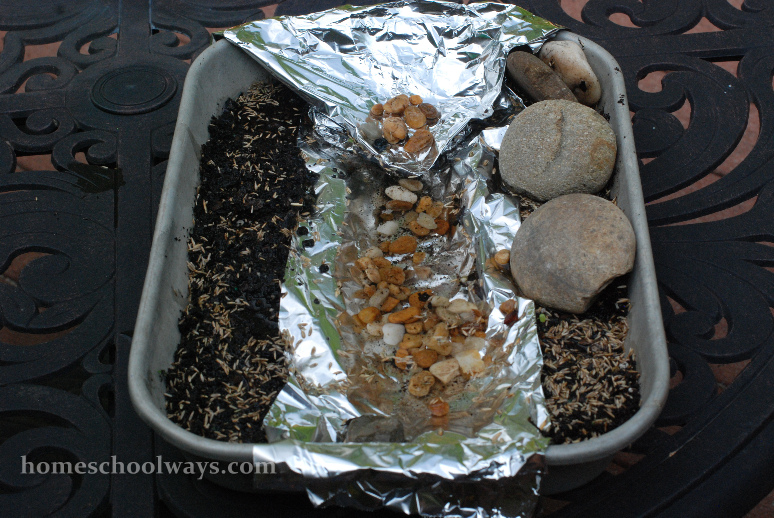
I read the first section to them, “Two Kingdoms Become One,” and we looked at our wall world map to locate Egypt and the Nile river. We did the map work recommended, Student Page 6. With that fresh in mind, we built a model of the Nile according to the directions given in the Activity Book. My Egyptians got very sow-happy with the grass seed, as you can see from the picture.

Nile River Model

Our Nile River Model, Day 1. I should probably take pictures in three weeks, too.

We read “The Longest River” as a substitute book for “The Nile River,” but it seemed extremely dry and boring. I’m all for nonfiction books. Yet, my children just could not get excited about this one. Not all nonfiction books are created equal, obviously.  Continue reading »


Story of The World, Volume 1, Introduction

Posted on

Story Sunday is a new series on Homeschool Ways – a series about how we learn from Story of the World, Volume 1 in our homeschool.

I will link up regularly to SOTW Blog Roll 2014, which, by the way, offers a number of inspirational blog posts from many other families using this history curriculum.  Continue reading »