Tuesday Tome Week 4 – Pride and Prejudice

Posted on

As I work my way through the books listed in The Well-Educated Mind, all sorts of things go through my mind. Pride and Prejudice is one of those literary works that we should read at least once a decade. A teenager will experience this novel differently than a 25-year-old and a 35-year-old will see yet so many other things – new things – in this book.

Pride and Prejudice

I do not recommend the movie with Keira Knightley, by the way. It it too hard to squeeze this literary gem into a two-hour film. Plus it’s just not done well. I saw this movie a long time ago and did not like it at all. After reading the novel last week, I watched bits of this movie on YouTube and disliked it even more.  Continue reading »


Story of the World, Vol. 2, Chapter 16

Posted on

Chapter 16 describes England after the Norman Conquest. I thoroughly enjoyed this chapter and, for the first time ever, we did all the crafts and activities suggested. How can I NOT build an edible castle? How could we NOT work with Play-Doh in different colors to illustrate the blending of languages into English? How could we NOT play a medieval game of Fox and Geese?

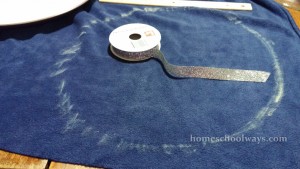
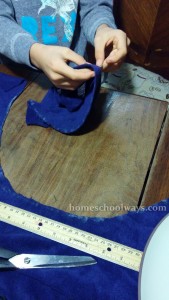
Coin purses craft for children

Coin purses – a rare cloth craft we put together for history

I even shocked myself by summoning enough courage to do a textile craft… after I told you guys I do not enjoy them and I draw a line there… But there was absolutely no sewing involved, not even fabric glue… So we made two almoners (coin purses).

The chapter is rather long, with three stories, so we finished the map and coloring page (a castle) in one day and left the crafts for the next day.  Continue reading »


How to Balance Enrichment Activities with Family Life

Posted on

While the benefits of sports for our children are immeasurable and include so many factors that go beyond simple fitness, such as improving their alertness and sense of working in a team; it’s important not to go overkill on your child’s extracurricular activities. Getting the family together, study time, play time, and making sure your child’s growing body gets the full recovery it needs after each active session are all vital to healthy development.

But just like all the other pressures in life, from work commitments to birthday parties to gatherings with friends, it can sometimes feel impossible to balance enrichment activities with family life. So be an advocate for whichever sport your child decides to choose, but keep in mind that family matters too.  Continue reading »


Tuesday Tome Week 3 – Gulliver’s Travels

Posted on

Written by Jonathan Swift (an Irish clergyman) and published in 1726, this book has never been out of print. It contains four volumes, each detailing a voyage to a different fantasy land. First and foremost, I want to say that this is NOT a children’s book.

Tuesday Tome - Gulliver's Travels

Many of us grew up with a fragment or two of this book in our literature program. Maybe we have watched the cartoon or seen a picture of Gulliver as a giant surrounded by six-inch Liliputians. However, this book was written as a satire on human nature, English politics, and travelling books so prevalent during Swift’s time. Until you read the unabridged book, you don’t really get the whole meaning behind it.  Continue reading »


King Cake – A French Tradition

Posted on

In order to teach my children all about French culture, I decided to start a new tradition: bake a king cake for Epiphany or Three Kings’ Day, which is January 6th. Traditions vary from region to region. This year, I wanted to make a cake. Next year, I may opt for a galette (pastry) instead.

King Cake and breakfast

King Day Breakfast

We had a lot of fun with it. I hid a LEGO mini-figure in the cake and asked the youngest member of the family to sit under the table and decide who should get each slice.

King Day Traditions

The youngest sits under the table and decides the order of the slices.

The person who gets the slice with the mini-figure gets to wear a crown and be king or queen for a day. Continue reading »


Tuesday Tome Week 2 – The Pilgrim’s Progress

Posted on

The Pilgrim’s Progress is a Christian classic and an English literature classic. Published in 1679, it was written by John Bunyan while he was in prison for his faith. As an independent preacher, he bothered the established Church of England and they put him in prison for preaching differently. And yet he was able to focus and write this masterpiece.

Tuesday Tome - The Pilgrim's Progress

This book can easily be read in a week, though you might want to take longer because it feels like a devotional. I stopped in several places and meditated on the meaning of the names of the characters and how what happened to him happened to me at one point or another. I read it in four days.  Continue reading »


Why Kindergarten Is The Toughest Year

Posted on

I have a theory which says that kindergarten is the toughest year. Let’s see… Where shall I begin? This is such an obvious statement to me, I have a hard time organizing all the bombarding thoughts that come to me in its support.

For starters, you are likely to be pretty new to homeschooling. If this is your first child, then you are a nervous wreck. You are scared by the whole enormity of taking on your child’s education as your personal responsibility and the negative words of Aunt Suzy or Grandma Thelma still ring through your ears. May the Lord bless all the Suzys and Thelmas of the world with more knowledge on the subject of homeschooling and sensitivity, right?

Girl counting with math teddy bears

My daughter, in Kindergarten this year, learning (playing?) with the math teddy bears.

Secondly, you probably think that every day that goes by without doing at least an hour of the 3 Rs is a wasted day. It is not, but you don’t really accept this if this is your first child. You will probably be more relaxed by the second child’s kindergarten year though.  Continue reading »


Advent, Hanukkah, Kwanzaa

Posted on

At our local library, Anna Porter Public Library in Gatlinburg, about three weeks ago, we participated in a workshop explaining the three main holidays celebrated in December: Advent (Christmas), Hanukkah, and Kwanzaa. This post should have been written about three weeks ago, but such is life. A homeschooling blogger can only do so much through the holiday season.

Hanukkah Workshop

Ms. Ethel lighting Hanukkah candles

Ms. Ethel, our children’s librarian for years, retired at the end of 2015, so this workshop, her last, was special. With her Jewish heritage, Ms. Ethel was able to give us a Hanukkah prayer in Hebrew as she lit the Hanukkah candles. I picked up on the words Elohim and Mitzvah but not much else. Continue reading »


Story of the World, Vol. 2, Chapter 15

Posted on

Chapter 15 deals with the first kings of England, including the Norman Conquest. Three stories took us through three hundred years of medieval history in the British Isles. It is familiar territory for me, as I took a course in British History and Civilization when I was studying at the University of Bucharest. But that was many years ago and it is good to revisit these topics.

Alfred Cakes

I experimented with different sizes because the recipe said to make four cakes out of all the dough and it just seemed like they would be too big.

The kids colored the picture of Alfred the Great and the Bayeux Tapestries while I read. Then, we worked on the map. For our craft, we baked Alfred cakes. Continue reading »


Tuesday Tome Week 1 – How to Read a Book

Posted on

Mortimer Adler is many things to many people. Or a nobody to some. He has become an important figure in my life because of his work in putting together a collection of the best works in Western literature. Then, I got to read his own work and learned some more.

What better way to start my Book of the Week Club than with a book about how to read books? I know of no better book that Mortimer Adler’s classic “How to Read a Book.”

Tuesday Tome Week 1

I read Adler’s book in about 10 days but it can totally be read in a week if you get one of those easier weeks without deadlines outside your normal homeschool routine. Translation: no canning projects or publishing deadlines and then it can be done in a week. Continue reading »