Tuesday Tome Week 18 – Madame Bovary

Posted on

I read Madame Bovary painstakingly. It took me longer than a week because I had to put it down over and over again. I was not sure I could finish it. It pains me to see characters – especially women – making foolish mistakes again and again. When I finally came to about 80% of the book, – yes, I read it on my Kindle – I started enjoying it. Why? Because Emma Bovary was finally hitting rock bottom.
Madame Bovary

I don’t like reckless behavior, whether in real life or in literary fiction. I understand why Susan Wise Bauer included this novel in her list of 32 best novels to read from Western literature. It is the first novel chronologically which puts an end to Romanticism and starts Realism as a current in literature.

Gustave Flaubert shocked many people with the realistic depictions of every day life and the adultery Madame Bovary engaged in while married to Charles Bovary, a country doctor in Yonville, France. Flaubert even got sued over the book, which shocked the sensibilities of many in the 19th century.
Continue reading »


Tuesday Tome Week 17 – Founding Mothers

Posted on

Founding Mothers by Cokie Roberts makes for very good historical reading as long as you can peel off the layer of mockery she dishes all over the Founding Fathers. Ms. Roberts has done a lot of reading to bring us details about the wives and mothers of the Founding Fathers, but she presents it through her liberal lens and that is a pity.

Founding Mothers

Casting aspersions upon the heroic and the patriotic is not the way to go when you tell the stories of our Founding Mothers. Yes, women were lacking the vote and right to property back then. Yes, women were perpetually pregnant and barefooted in the kitchen. But why do you have to mock the men for it?

The men were the product of their era. Many of them came around on the issues of slavery and education for women during the years described by this book. Some even started wondering about the womanly vote. It all takes time. I take issue with Cokie Roberts’ history of the Founding Mothers because of the tone she takes towards the Founding Fathers.

Do you really have to tell us three times in the book that Alexander Hamilton was a womanizer and Martha Washington named her tomcat after him? Would one time not have been enough? Do you really have to throw sarcasm at Benjamin Franklin for being a pig – for a pig he was? Why can you not recount some of his good parts – for he had many? Why magnify the men’s defects and paint a picture of only their growth areas? What kind of history is this?

Ms. Roberts sounds like a feminista with a chip on her shoulder – someone who has not completely recovered from the gender war. I would like to reminder her, next time she rattles on about the wonderful, enlightened European nations, that Switzerland only got the vote for women in 1971. Wrap you mind around that historical fact, Ms. Roberts!  Continue reading »


Tuesday Tome Week 16 – Stories of Composers

Posted on

Stories of Composers For Young Musicians by Catherine Wolff Kendalls makes for great bedtime reading. (I have been reading to my children since they were infants. We read before going to bed but we also read throughout the day.)

My children take violin and piano lessons and my goal is to make classical music a delight for them. As such, we play classical music during our meals and we read as much about composers as we can. I have invested in some CDs about composers’ lives but my children were still too small at the time – we are talking preschool age.

Stories of Composers

They are now 6 and 8 and these stories seem to go over better. It will be an interesting test, after reading this book with them, to re-visit the initial CDs and see if the kids have a better reaction to them.

Because they did enjoy this book. It was a bit boring for my six-year-old in the beginning, because the book has no pictures beyond a portrait of the composer. But she soon realized these composers fell in love and married – well, most of them did. She is in this phase of awakening to romance.  Continue reading »


Tuesday Tome Week 15 – Mommy, Can We Practice Now?

Posted on

Mommy, Can We Practice Now? by Marie Parkinson is another helpful book for parents whose children are involved in music lessons. Paying for violin or piano lessons is one thing. Making sure the kiddos practice every day at home without losing one’s temper is another thing altogether.

First, let me tell you a story. I have a friend who puts her children in a public school. She does not understand why I homeschool. That’s fine. We respect each other and have wonderful conversations about being a mom and cooking and life in our small town.

Mommy Can We Practice Now?

She definitely does not understand why I pay somebody else to teach my children violin and piano when I can play violin and some piano – albeit not at a concert soloist level. Indeed, it may seem inconsistent. To say “I am not a violin teacher by training” is the same as to say “I am not a physics teacher by training.” Which means I really have no business tackling my children’s education as a homeschooler, overall.

But this is where I disagree. Physics or chemistry or reading or any other school subject are very different from the arts. Music and art are best taught by somebody who is trained as an artist and, even better, as a teacher of artists.  Continue reading »


Adler on DVD

Posted on

Last month, I came across this wonderful DVD with talk-style seminars by Mortimer Adler and Charles van Doren about how to read a book. This DVD was produced by Encyclopedia Britannica probably as a companion to How To Read A Book – the actual book by that title. But it got lost and found only in recent years.

How to Read A Book DVD

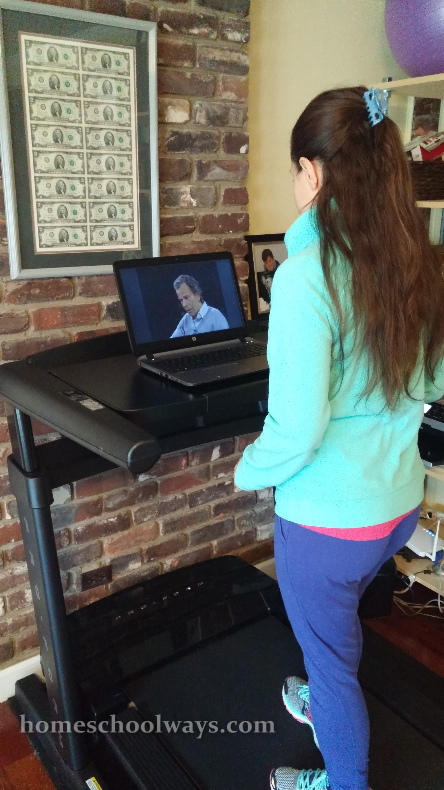
Walking while watching Mortimer Adler and Charles van Doren

You can watch a clip here or here so you get an idea what to expect. Mortimer Adler and Charles van Doren are sitting at a table discussing how to tackle books and why. If you read the book you should also get the DVD. If you have not read the book, you should get the DVD, especially if you are not 150% psyched about reading a book about how to read books. The DVD contains the same information as the book, but it reinforces it in conversational style.

The two men discuss the reasons for reading and explain how to read The Great Books – the best collections of ideas produced by Western civilization. They break down the types of reading a person can do: for pleasure, information, fun, entertainment, or for a challenge etc.

The books that are tough for you to read, those that are above your level, those that make you scratch your head – you should be happy when you find something like that. If you only read what you can grasp, how can you grow? How can you stretch and reach higher than where you are? This is a great point especially for home educators. Continue reading »


Tuesday Tome Week 14 – About Grace

Posted on

About Grace by Anthony Doerr is really not just about a girl name Grace. It is about fathers and daughters, runaway fathers, separation and psychology, precognition, dreams, Alaska, and the Grenadines. And, mostly, it is about snowflakes and insects.

This is Doerr’s first novel and critics agree that it is something special. Personally, when I read it, I felt transported and enlightened. I felt inspired even more to invest in family.

About Grace

David Winkler, the main character, learns the hard way that family is not so much what you are given but what you are able to keep. He also said something that touched me so much, I put the book down and went to a different place to cry. He said that grandfathers are successful fathers who have been promoted to the next level.  Continue reading »


Tuesday Tome Week 13 – Four Seasons in Rome

Posted on

Anthony Doerr is quickly becoming my favorite writer. Last year, I read “All The Light We Cannot See” and was really touched by it. Now I know it was not just the plot, it was also the way Doerr writes. Because “Four Seasons in Rome” is very different from “All the Light…” You see, “Four Seasons…” is a travel memoir, while “All the Light…” is a work of fiction, a novel.

Two very different pieces, connected by the same author. It is clearly his writing that can turn any story, true or fictional, into an experience that enriches life. His writing grips me and haunts me and helps me see life differently. It inspires, energizes, and changes my perspective on the banal details of life. No wonder Doerr has received several literary awards, including the Pulitzer for “All the Light…” and no wonder he was named one of the 20 best young American novelists by Granta. He is that good.

Four Seasons in Rome

The subtitle of “Four Seasons in Rome” is “On twins, insomnia, and the biggest funeral in the history of the world.” So what is going on? The day Doerr’s wife gave birth to twins, they received an envelope in the mail, offering him a fellowship to live in Rome for one year and write something. Anything. The offer came from the American Academy of Arts and Letters. How could they say no?  Continue reading »


Tuesday Tome Week 12 – Ability Development

Posted on

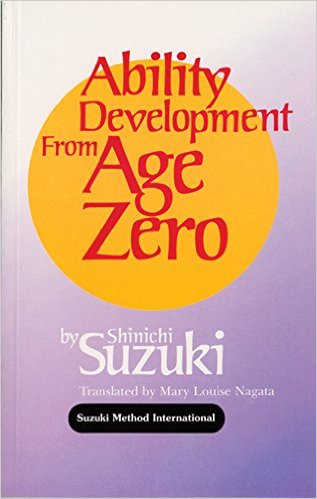
Ability Development from Age Zero by Shinichi Suzuki is required reading for Suzuki parents, those of us who put our children through music lessons with a Suzuki-certified teacher. My children take violin lessons from a Suzuki teacher and so I read this book as part of my preparation to support the teacher in her goals and methods.

Suzuki Method principles for parents

The Bible of Suzuki parents, this book should be read once a year.

First off, this is a short book – only 96 pages. Even if you read only 14 pages per day (that’s turning the page only seven times, friends!) you should be able to cover it in one week. By the way, when a book gets boring, I tell myself I have to turn the page only five more times and then I will put it down. Or something similar. Because motivation to finish something does not come easy, but if I can focus on a short-term goal, that does not seem daunting, I feel better about the task at hand.

Ability Development From Age Zero

This book does not get boring very often though. There are stories and anecdotes about different parents and children who are using the Suzuki method. There is some repetition in it, but I suppose it is a good thing. I know I need some concepts drilled into me and it only happens by hearing them over and over again.

Here are some powerful concepts from this book:  Continue reading »


Protons and Neutrons

Posted on

Protons and Neutrons is a great book for your budding chemist. Written by Mary Wissinger, this can qualify as a “my first science textbook” without being all boring and fact-focused, produced by Genius Games.

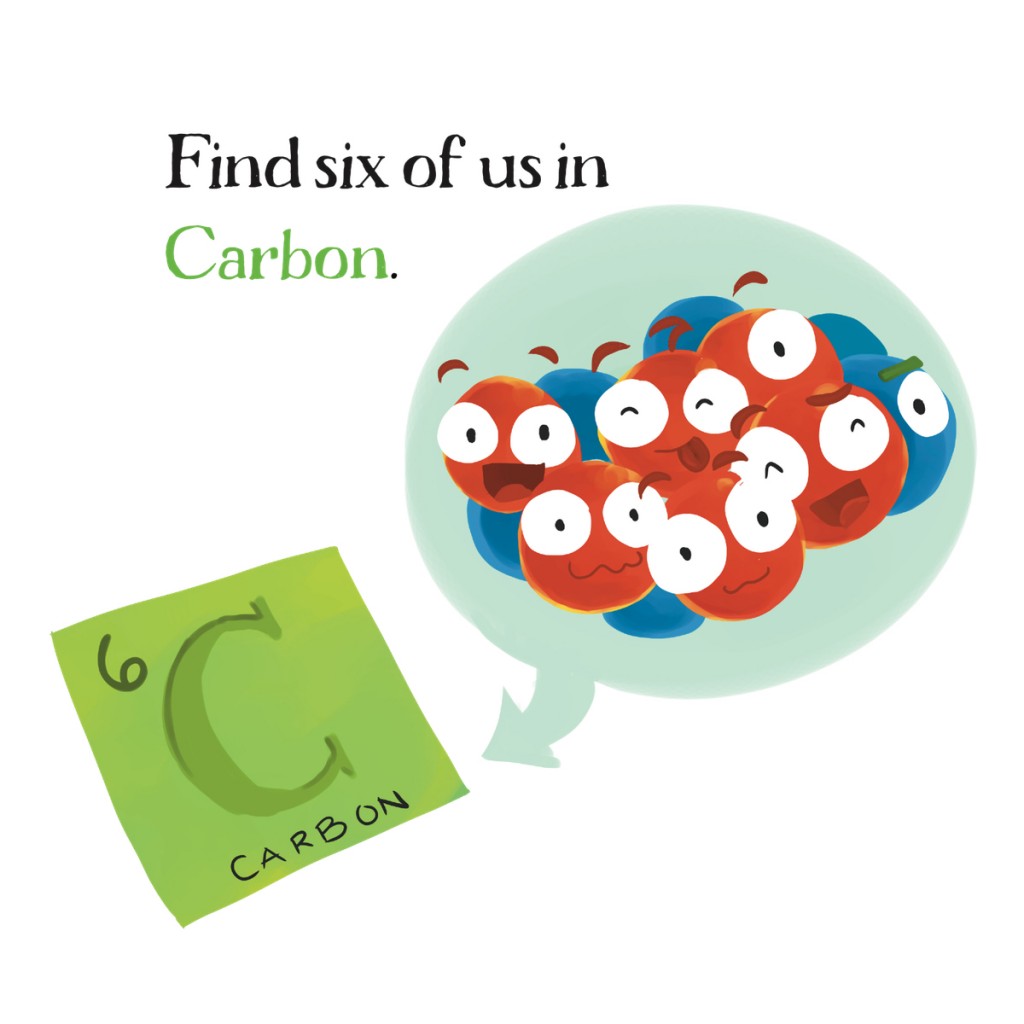
It is a picture book which introduces small children to the concept of protons, neutrons, and electrons. More specifically, what they do, what their charges are and how they are attracted to each other. Also, how chemical elements are defined through the number of protons they possess.

Protons and Neutrons book for children

One of the pages inside the book

Pete is the Proton, Ned is the Neutron, and the electron does not get a name, but one can tell it is a girl. My six-year-old daughter loved the electron because she loves to see girls and feminine details everywhere.

The first question I got from the kids after I finished reading the book was, “Can we read it again?” The second question was, “Is there another book?” meaning “Is there a sequel to this book?” I answered, “Not yet.”  Continue reading »


Tuesday Tome Week 11 – Good Talk, Dad

Posted on

Like I said last week, I needed a funny book after Uncle Tom’s Cabin. Enter Good Talk, Dad, the Anna Porter Public Library Book Group selection for the month of March. We will discuss this in a couple of weeks, so I will only share here my impression of this book.

First off, it is written by liberal journalists Bill Geist and Willie Geist, father and son who work at CBS and MSNBC respectively. As such, the book presents liberal ideas and concepts. It bashes the Vietnam war and wars in general, states that lenient parenting can produce good results and glamorizes choices that go against a biblical lifestyle.

Good Talk, Dad

I don’t even want to start arguing the reverse position of the above, – where WOULD I start? – but I disagree with the values espoused by these two journalists with every fiber of my being. In fact, the first day I started reading it, I wrote inside the front cover “funny book and the reason I reject American public schools.” Continue reading »