5 Steps to Homeschooling Back-to-School

Posted on

I spent the last few days before our homeschooling back-to-school cleaning, dusting, washing, sanitizing, sorting and organizing. Every six months we turn the house inside out, get rid of clutter, clean corners where the sun doesn’t shine, and eliminate any sources of potential hazards (like mold). In the process, we find things we had been looking for or things we completely forgot about.

Since we teach September through July, the two semi-annual cleaning sessions happen in August, just before school starts, and in February, when everybody is burned out of learning and suffers from cabin fever. What a perfect way to spend a week, cleaning and organizing, feeling like you have something under control. It is also a semi-annual reminder that we don’t need all this “stuff.” So we scale down our inventory to the next new maximum.

Here are 5 steps to organizing for homeschooling back-to-school:

1. Clean the house thoroughly. Slide furniture out of its place, get under couches, look at corners you have not seen in months (or, – dare I say it? – years). Dust bunnies have killed many a homeschool.

2. Discard items you have not used in a year or so. When it comes to sorting possessions, most organizing gurus tell us to get three boxes: “Keep”, “Throw” and “Donate”. Of course, if the items to throw or donate are large, you leave them in their spot for the day you are ready to haul them off. If they are small, you will need to use some boxes until you finish the organizing process.

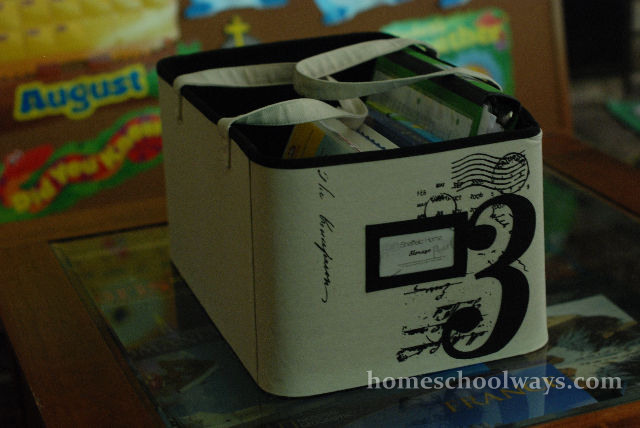
3. Organize books and school supplies. You have heard the saying, no doubt: a place for everything and everything in its place. Nothing discourages more than looking for something for ten minutes before using it. Get a grip (no pun intended) on school files and binders. If it stacks, it’s a pile. If it hangs, it’s a file. As for our daily school books, I put them in a medium size tote-like box with handles. If we have to move from one room to another, I just grab the tote.

Homeschooling Tote

4. Sort clothing according to the system under step #2. Be ruthless. Ask your spouse to help you make cutthroat decisions. The more you linger, the harder it is to get rid of stuff, especially if you have warm, fuzzy memories of your babies wearing a particular item. I am personally guilty of that.

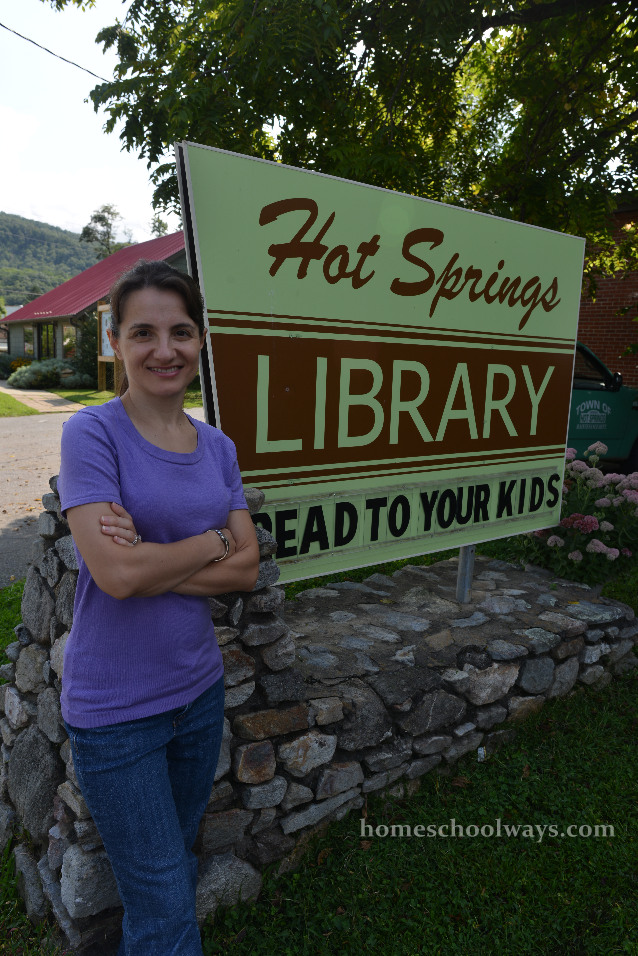
5. Take a day off. Find a reliable babysitter, if at all possible, and take an overnight trip with your husband. After all, he is the principal of the school. You two need a retreat to focus on the upcoming school year, right? Or just to forget about homeschooling entirely and relax. This year, we took our first ever overnight trip without children since we became parents. We chose Hot Springs, NC and it was a good choice. I will tell you about it in a future blog post. Here I am in front of their library. I love their sign…

Read to your kids sign @ Hot Springs Library

How do you prepare for homeschooling back-to-school? Leave me a comment below, please.


Homeschooling Blog Disclosure

Posted on

A homeschooling blog is a homeschooling blog. Or is it? Back in 2009, the Federal Trade Commission (FTC) decided it was time for bloggers to disclose if they received a freebie from a company in exchange for a  review on their blog.

Since mommy bloggers could be held liable for product reviews, I decided to look into the FTC regulations on bloggers. The result is a new tab on my website, Disclosure.

Homeschooling is a journey I never thought I would embark upon. Once I gave in to God and accepted the call to homeschool my children, I felt the need for an outlet to express not just the information I accumulate as I teach my children, but also the feelings behind our day-to-day life.

It’s not about money, but, when it has to be, I need to do things according to Caesar because, after all, we ought to give the FTC what belongs unto the FTC.

So here’s my disclosure policy…

Homeschooling Blog Disclosure

This is my blog and I write my personal opinion about different products and services inside and outside the beautiful world of homeschooling. So far, I have not been paid to provide reviews. I am open to starting such business relationships though. When I do, I will disclose it.

I have several affiliate links on this blog. If you purchase through my affiliate banners and links, I receive a small commission. Besides getting the same great product at the same great price you would get on a non-affiliate website, if you buy through my links, you also get the satisfaction of helping a homeschooling family. Thank you!


Unschooling Through August

Posted on

As I wrote in a previous post, I don’t particularly jive with unschooling. But when I decided that August was going to be our official summer break, I unleashed unschooling. The results almost persuaded me that unschooling is the Holy Grail of homeschooling. The key word being almost

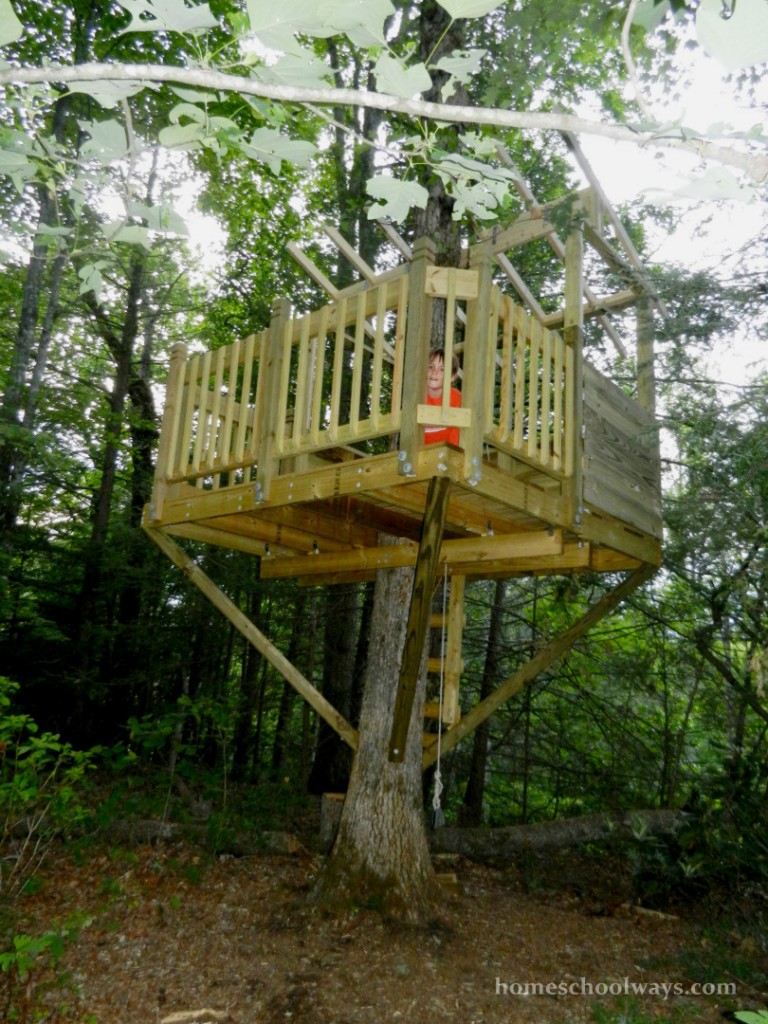
Some days, the kids played with their LEGOs and DUPLOs, with their toys and bikes, or in the sand box or the tree house. I’ll have to tell you about our tree house in a future post. In the meantime, here’s a picture of DS in the tree house just before we put a roof on it, in June 2012…

Our tree house, no roof yet


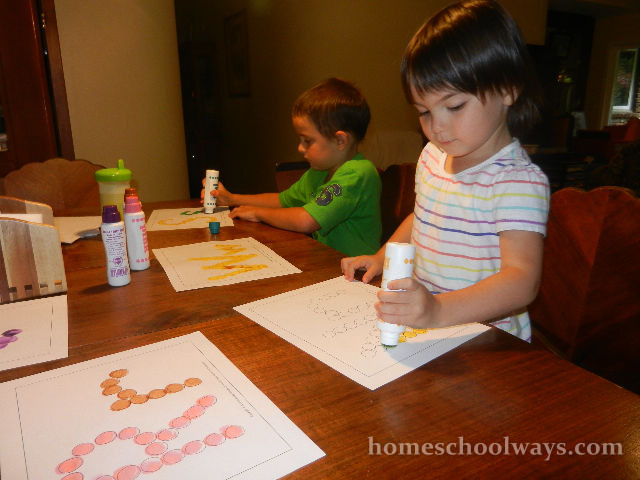
On other days, they asked for crafts and workbooks and painting time. I complied. It worked so well, it gave me an appreciation for the unschooling method. They were so eager to learn and so happy to receive instructions on how to finish their projects.

Do-a-Dot Letters

And yet. And yet. And yet. How would I know what they learned? And was it Math or Science? Do I count it as Language Arts or Fine Arts? Did they just do P.E.? Or was it recess?

Learning obviously happens all the time and everywhere we go. I just don’t know how to record it. I need a box to check.

If my kids grow up to be freer in their thinking than I am, more power to them. If they take this education revolution to the next level, it would not bother me one bit. But I can only come so far.

For now. One never knows the future. I have watched some homeschooling friends evolve over time in their methods. I suspect it can happen to me, too.

Until then, I remain eclectic with a strong classical-Charlotte Mason-Moore Formula bias. That’s not to say I don’t appreciate the energy the kids show during delight-based, child-led educational pursuits, i. e. unschooling. I’m just not ready for this approach, as I feel like I am lost without a map or a GPS in the educational jungle.

Please leave me a comment below about your experience with unschooling. How comfortable are you with this method?


7 Ways to Answer the Socialization Question

Posted on

“What about socialization?” If you homeschool, you have been asked this question at least once. And that’s OK.

Here are 7 ways to deal with the socialization question:

1. Congratulate this person for having the courage to ask. Homeschooling one’s child is like wearing braces after 35. Even though it is legal and more accepted than ever, it remains a bit of a stigma. Most people think they embarrass you if they ask questions about it.

2. Ask them to define socialization from their perspective, so you understand their background. It also helps with figuring out the emotion behind the question. Are they open-minded and curious? Or angry and closed-minded? Give information to the curious and don’t argue with the angry ones.

3. Mention your children attend [insert activities outside the home], where they have lots of opportunities to interact with people of different ages and walks of life.

4. Tell them people have socialized their children in the context of home for millennia. Ask, “Do you think American children were ‘unsocialized’ before 1852, when compulsory attendance was introduced for the first time?”

5. Smile. Ask: “What do Jesus, George Washington, Wolfgang Amadeus Mozart, Albert Einstein, Tim Tebow, and Will Smith’s children have in common? Homeschooling. As far as I know, none of them has/had problems interacting with others.”

Too Cool for School

6. Using a meek voice, tell them:  “Socialization in a school environment is self-taught and unsupervised, i.e. children learn to socialize between classes or during recess and lunch. No adult takes the time to teach them the proper way to interact with each other because adults are not welcome in their circles at those times. Adults only intervene when things get out of hand. This type of socialization has more to do with being cool and fitting in than with manners, team work, and being polite.”

7. Last but not least, use this: “Personally, I have a problem with the quality and quantity of socialization that happens in schools. Spending 35 hours a week in a classroom with 30 other children is not socialization. It is over-socialization.”

However you answer the socialization question, be gracious and patient, not snarky and sarcastic. People are on different journeys. The last thing they need is to be snapped at by a homeschooling mom.


Junior Ranger Program

Posted on

This summer, DS was finally able to take part in the Junior Ranger Program organized by the Great Smoky Mountains National Park. One must be at least five to start in one of the age groups available. I have been looking forward to this program for about 3 years. Yes, I like to plan ahead.Jr. Ranger Booklet

We bought the booklet and worked our way through the requirements:

1. Complete eight activities in the booklet. It took us three fifteen-minute sessions over a month. We stretched it out especially because we were busy with family visiting from overseas.

2. Attend one ranger-led program. We attended three. Just because. Plus I wanted my Not-So-Junior ranger badge, which one can get after attending – you guessed it! – three programs.

Our first event was Bear-mania. We learned there are 1,600 bears in the park, 2 per each square mile, which is a really good density. We got to touch a bear skin. I was OK with touching the fur, but my son invited me to feel its paws and claws. I hesitated. Then, I went ahead and touched those parts anyway, trying hard not to shudder. The things we do for our children…

Our second event was Retiring the Colors, a touching presentation on the Stars and Stripes which taught the children how the flag came about, how to fold the flag and what the stars and stripes stand for. They got to say the Pledge of Allegiance. Then, they all ligned up and folded the flag. And what do you know? My children knew how to stand in line – proof positive that they don’t need to go to school to learn that particular life skill. We practice at the supermarket every week, don’t we? I digress. The good news is that since this program both my children have been spotting the American flag everywhere we go.

Our third event was Yukky Animal Stuff, a hilarious presentation on scat, skulls, and scents. When the ranger asked for volunteers to come upfront and read the Scat Rap, DS volunteered. DS stood in front of the class, alongside six others, and followed directions. What was that question about socialization again? He even read along with them from the laminated piece of paper he received. (He reads on third grade level, but that is a topic for another post.)

In all honesty, I feel the what-in-the-world-am-I-doing-with-this-homeschooling-thing fear now and then. The fear that I am “messing up my children,” “handicapping them for life,” or “ruining their education and their ability to socialize normally” – all words said to me or my homeschooling friends by well-meaning family members and friends. But then I attend events like those just mentioned above and I relax. My children interact well with people of all ages and they are not afraid of public speaking. Breathe.

Picking up litter3. Pick up one bag of litter. We walked around our neighborhood and picked up trash from the ditches or the road itself. It took about 30 minutes. We filled up two shopping bags, especially from the ditches around overnight rentals. People like to party and throw their beer bottles in the ditches – that’s one of the lessons of the day. Besides discussing hygiene and proper trash disposal, we talked about the dangers of alcohol consumption. Again.

4. Take booklet to a Smokies park ranger at any visitor center. DS was so excited to get his badge! He got sworn in and received a certificate, as well.

As we walked away from the Sugarlands Visitor Center toward the car, my son asked me: “Did I earn it, mommy?” pointing to the certificate in his hands. We have been talking with him about how fun it is to receive gifts and how it is even more fun to earn things. I reassured him he earned it and that mommy was proud. Because I am.


Learning Styles

Posted on

Children fall into two categories: those who like school and those who hate school. The reason why some children hate school is because traditional classroom environments do not cater to their learning style.

That is why Mark Twain wrote, “I’ve never let my schooling interfere with my education.”

A book I possess, treasure and refer to on a regular basis is Cathy Duffy’s “101 Top Picks for Homeschool Curriculum.” Here is a summary of chapter four, on learning styles.

As a homeschooling teacher, you will make your life easier when you grasp three concepts:

A. Learning modalities

B. Learning styles

C. Teaching styles

A. Learning modalities

There are three types of sensory input, or learning modalities:

  • auditory (hearing)
  • visual (seeing)
  • kinesthetic (feeling or experiencing with one’s body)

People lean toward one more heavily than the others. Modalities help, but they are a bit too simplistic, even if you realize your child is 75% kinesthetic and 25% auditory. That’s where learning styles come in.


B. Learning styles

A learning style is the way a person most easily learns and processes new information or skills. A preschooler does not have a learning style yet and a five-year-old might change his learning style by the time he is ten. Up on your toes you go!

There are four learning styles:

  • Wiggly Willy (WW)
  • Perfect Paula (PP)
  • Competent Carl (CC)
  • Social Sue (SS)

Don’t worry about male/female names. Focus on characteristics. A girl can be a Wiggly Willy and a boy can be a Social Sue.

Wiggly Willy would rather play and have fun than work. He dislikes paperwork and record keeping. He leans toward the fine arts, physical education and activity-oriented classes. This student must be taught using hands-on activities, multi-sensory audio-visual aids, short, dynamic presentations and learning games. Variety is key.

Perfect Paula likes planning and following schedules. She is not very good at coming up with creative ideas. She gets upset easily when others don’t cooperate. PP is more comfortable with “cut and dry” subjects than those which require exploration with no clear answers. Best methods for this child: workbooks, consistent structure, lectures that follow an outline, drill and review, and time to prepare for any discussion (remember, she has a hard time with creativity).

Competent Carl likes to be in control. He thinks and acts logically and has trouble understanding others’ feelings and emotions. He prefers math and science rather than language arts. Methods to use with CC: independent work, logically organized lessons, clear sense of purpose for lessons, long-term projects, problem solving, brainstorming.

Sociable Sue worries about what other people think. She is idealistic and interested more in general concepts rather than details. Social Sue prefers language arts, social studies and fine arts. When teaching SS, use real books, unit studies, discussions, social interaction, public presentations and situations where she is personally recognized and valued. Sociable Sue needs repetition for detail and help with self-discipline.


C. Teaching styles

Think about how you like to learn. That’s also the way you like to teach. The above four learning styles apply to teachers as well. In His wisdom, God gives a Sociable Sue daughter to a Perfect Paula mother to help both of them develop their characters. Don’t you love it!


Winning Formula

Put learning modalities together with learning styles for a winning formula. An example should help. Your child might be a kinesthetic Sociable Sue. As such, she prefers more project-oriented learning. If you had an auditory Sociable Sue, she will lean toward sedentary, read-aloud activities.

So should we pamper our children by catering to their learning styles and modalities and never push them outside their comfort zone? Not at all. Use your knowledge of their particular learning style to introduce new and difficult subject matter. Once they have grasped a concept, use other more challenging methods. Case in point: a very active Wiggly Willy can learn math by using objects, without paper and pencil. Once he has mastered a concept, have him do a worksheet of review and practice.

Teach to their strength and review through their weakness, thus helping them grow not just academically, but in self-discipline as well.

Your next job is to match learning styles to curricula and fine tune the motivation process.

Finally, if you have tried everything and your child still does not “get” it, he might have a learning disability. Your local homeschool support group can recommend a professional in your area who will help you determine what is going on.

For extra credit, read Mariaemma Willis and Victoria Kindle Hodson’s book: “Discover Your Child’s Learning Style.”

Leave me a comment below about your experience with learning styles. Have you figured out your child’s learning style yet?


Homeschooling 101

Posted on

You have decided: you will homeschool. Now what?

Let me say this: if the “why” is big enough, the “how” will follow. In every aspect of life. Homeschooling is no exception.

Researching how to get started takes time. Don’t let it get you discouraged. Take it in stride.

Here is a checklist for you to follow, based on what I did:

1. Find out the deadline for registering in your school district. This determines how much time you have to do research and it will keep you focused. I had eighteen months, but a friend of mine said, “That first day of kindergarten will be here before you know it.” She was right.

2. Familiarize yourself with the law in your state. The HSLDA website should give you a great start to this process. There, you can locate your state’s homeschool organization and work with them directly. Whatever you do, don’t rely on word of mouth. Do you own research.

3. Plug into a support system – locally, there should be a homeschooling group you can call upon with questions. These families are usually generous with their time and knowledge, but you must remember that they will tell you what their experience has been. It may or may not apply to your family. Weigh the answers.

4. Gather up all the documentation needed to register. Depending on what you find in the previous steps, you might need a lot or a little. While you’re at it, get organized. Prepare a file strictly for the legalities of homeschooling and keep it where you can easily access it. Guess what? You would have to take this step even if you put your child in a traditional classroom.

5. Read up on homeschooling approaches, curriculum choices and learning styles. Get used to the lingo. Don’t get intimidated. It’s not as complicated as it sounds. This friend of mine told me about her first days of homeschooling: “I kept asking myself, ‘What do I do?'” She had the jitters. She also had a master’s degree in education and several years of classroom teaching experience. It is normal to feel nervous, but don’t let nervousness stop you from enjoying this exciting time.

Even if you are short on time, read the first few chapters of Cathy Duffy’s “101 Top Picks for Homeschool Curriculum.” Do you have to read all the reviews? No, you don’t. Thank God. That’s the beauty of this book. Do your homework in the beginning of the book and then you will only have a handful curriculum choices to review.

6. Get curriculum, either new or used. Get school supplies. Don’t shop till you drop. Newbies usually get too much. Rainbow Resource Center, Amazon and homeschoolclassifieds.com are great places. Your local bookstore might have a homeschooling section. Visit the bookstore to hold the book in your hand before you order it online. Used curriculum fairs happen regularly in your area. Check with your local support group.

7. Plan your school year or, at the very least, the first month of teaching. Donna Young will help you there with free planners, lesson plans, nature journals, notebooking pages and any other type of form you can think of. Did I mention they are free? Notebooking Pages might be of interest, as well.

8. Sign up for newsletters and magazines. These resources can get overwhelming. I signed up for three magazines, for instance, and realized I only read two of them. Also, if you find they do not fit your homeschool, unsubscribe. Look for a better fit. Homeschooling happens in so many ways. You will eventually find your style and your clan in the beautiful world of homeschooling.

9. Register.

10. Relax. You are home free.


Help Me Be Good Books

Posted on

Besides the references to manners, virtues and character in our Bible curricula, we use Accountable Kids for a hands-on approach to character building. After all, I am dealing with concrete thinkers. DS and DD are five and three, respectively. They see their morning cards, they go accomplish the task in the picture. When finished with all the cards, they receive a ticket, which they redeem for an activity they enjoy. The same process happens in the afternoon and evening.

Last week, I was glad to find some books at the library which supplement our character training so well, I am thinking about buying them. It’s not as much a financial decision as it is a logistical one. I have been warned by veteran homeschoolers that my house will become engulfed in books. We love books, but we do not want to get suffocated by them. Hence, our great appreciation for the local library.

As a member of several Yahoo Groups, each with a specific theme under the general category of “Homeschooling,” I learn a lot from veteran homeschooling moms. I am so thankful for their generosity. Recently, on one of these groups, I read about a series of books on individual character traits, published by Scholastic and written by Joy Berry. The name sounded familiar and then I remembered she was the author of the potty training kit we bought a few years ago.

I made a mental note of the series and went on with my life, as I was not sure we needed to look into other character curricula as yet.

When I got to the library last week, I saw new books on display in the children’s section. Sure enough, it was the Scholastic series “Help Me Be Good”. Six of them, to be precise. There are a lot more in the series.

My children loved the books. They asked me to read them over and over. We even took two of them to church, for a tactile, concrete reminder about interrupting and being messy. So this last time in church, when they started talking a little louder in their pews, I put the book in their hands and asked, “Remember what we read about?” It worked to settle them down.

It was a good day at the office. Like anything though, this method might grow old and ineffective on them over time. Oh well. I will cross that bridge when I get there…


Spell to Write and Read

Posted on

As I researched spelling curricula, I bumped into Spell to Write and Read. It was love at first sight.

From what I can tell, my children like it already, too. You see, for preschoolers or non-readers, Spell to Write and Read (SWR) offers a variety of games to develop phonemic awareness – the key to good spelling and reading skills.

On pages 20-22 of the Teacher’s Manual, Wanda Sanseri, the author, offers several games to play with preschoolers. I have already done some of these at random times of the day. They don’t even know they are learning because I took the work out of it by saying, “Let’s play a game.”

One such example is “Run around the clock,” an exercise used to teach the directional orientation needed for writing. I made 12 3×5 cards with numbers 1-12, as suggested, and placed them on the floor of our living room like the face of a clock. I asked the kids to stand at number 12 and then I gave them directions: “Run to 6”, or “Walk to 3” etc. They loved it. They asked to switch with me and they gave me commands, too. I walked or ran as they gave me my marching orders, no pun intended.

When I got a chance, after they slowed down their excited comments, I told them: “This direction is called clockwise because this is how the clock hands move. When we learn to write though, we will move in a funny direction called counterclockwise”. I said that several times. They blinked and listened.

Most of what I do with them now is quick and painless, fit for their attention span. I just drop concepts into their receptive minds and let it go. When they hear about it again, it will sound familiar. Hopefully.

But the greatest moment for me was when my son took the game one step further. After playing it for a few minutes, he ran to the table, grabbed a stack of construction paper and several markers and made 12 different drawings which he placed next to each number card. He drew several types of trucks, a teddybear, a ship, a volcano, an ambulance, a map… you get the idea. Things a 5-year-old would draw. Then, he asked me to go to the truck and run to the map. Or walk from the map to the teddybear.

He was having so much fun, he asked me not to put the clock away overnight. He wanted to play some more the next day.

Another SWR game we play (sometimes even in the car) is vowelizing words. I was trying to teach them to count the syllables in a word, but found that they started prolonging vowels and so they would end up with extra claps and extra syllables.

So he said “CAT!” and clapped once. He knew that was one syllable. Then, he said “CA-A-A-AT” and the result was confusion.

His younger sister started imitating him, as she does in everything. From my reaction, she realized she would go down the wrong path. She went back to her clapping the word and not exaggerating the vowels. She takes her learning seriously, even though everything else in life is a game for her. She is my happy-go-lucky child, but she shows a lot of maturity when it comes to learning. Meanwhile, my son got stuck.

My strategy was to get him to hum the word (as suggested on page 21 of the red SWR Teacher’s Manual). That way, he could not go wrong. I asked him to say “CAT” with his mouth closed tightly. He went, “Hum!” That was it. One syllable. Once I showed him that, I could tell he was relieved he had a tool.

This spelling curriculum, like many others, is all about giving children tools. Wish me luck as I delve into it more and more.

What about you? Have you looked at Spell to Write and Read? Have you attended any of their training seminars? Have you used it in your homeschool? Why? Why not?