Wonderful Wednesday – 4 Facts on Rhododendrons

Posted on

Back in April, our rhododendrons were putting on a show. Their explosion of color soothed our eyes, tired after a long winter.

We have several rhododendron bushes around the yard, mostly purple, my favorite color.

Our neighborhood has many of these flowers, too. My eyes feast on them as I take my morning walks.

They finished showing off for the year though. The leathery leaves will stay with us through the winter, but the flowers are gone for now.

Rhododendron flowers

Some of the showy rhododendron flowers in our yard, plus a bee

Here are four facts on rhododendrons:  Continue reading »


We Choose Virtues Parenting Cards Review

Posted on

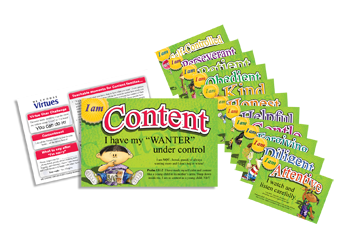
I am very excited to share with you about these Parenting Cards from We Choose Virtues. I received these materials through The Old Schoolhouse Review Crew a couple of months ago. We have used them several times a week, at the end of our devotionals. A happy homeschool cannot happen without character education. These parenting tools will help you with teaching virtue to your children.
We Choose Virtues Parenting Cards We Choose Virtues offers many products, but the goal is the same: teaching children different virtues, like honesty, contentment, patience, helpfulness, obedience, diligence, perseverance, gentleness, attentiveness, a forgiving spirit, self-control, and kindness. Continue reading »


Mom Monday Week 23 – The Homemade Pantry

Posted on

The Homemade Pantry by Alana Chernila is the latest addition to my cookbook collection. It’s a great book to read – it contains lots of stories from Alana’s life in the kitchen and around the house, besides the recipes. Alana says she is of Jewish descent, but her name sure sounds Romanian. She blogs at Eating From the Ground Up.

The Homemade Pantry Cover

As a homeschooling mom, I really enjoy taking care of my children and providing the best educational experiences for them – including cooking experiments.  Continue reading »


World Cup Soccer Series, Introduction

Posted on

As many of you know, in a few days, Brazil will welcome 32 soccer teams from as many countries, for the FIFA World Cup. The world’s most beloved sport, known as soccer in the USA, is called football everywhere else. I will call it soccer because I live in the United States.

I grew up in Romania, where soccer is a big deal. Girls did not play soccer. It was considered a male sport. It has been an adjustment to understand that here, in the USA, girls play soccer alongside the boys. And, generally speaking, soccer is viewed as a softer, less masculine sporting event compared to American football.

World Cup for Kids, Multicultural Kid Blogs

When it came time to consider P.E. options for our homeschool, in addition to all the hiking, biking and swimming we do with our children, we added soccer. I was glad to find a soccer program for our son at Berean Christian School in Knoxville. Their coach, Mike McDonald, is a former professional soccer player from England. He has also played professionally here in the USA. He has been in commercials with David Beckham, Zinedine Zidane and other greats.

Continue reading »


French Friday – French Play Group Lesson Plan Numéro 1

Posted on

About two months ago, I had a burning desire to start a French Group. All the details have been worked out and, in a few days, we will have our first meeting. So, so exciting.

This is a post for all the parents bringing their children, but I thought it might inspire others, too.


Here’s the lesson plan for the first French Play Group:

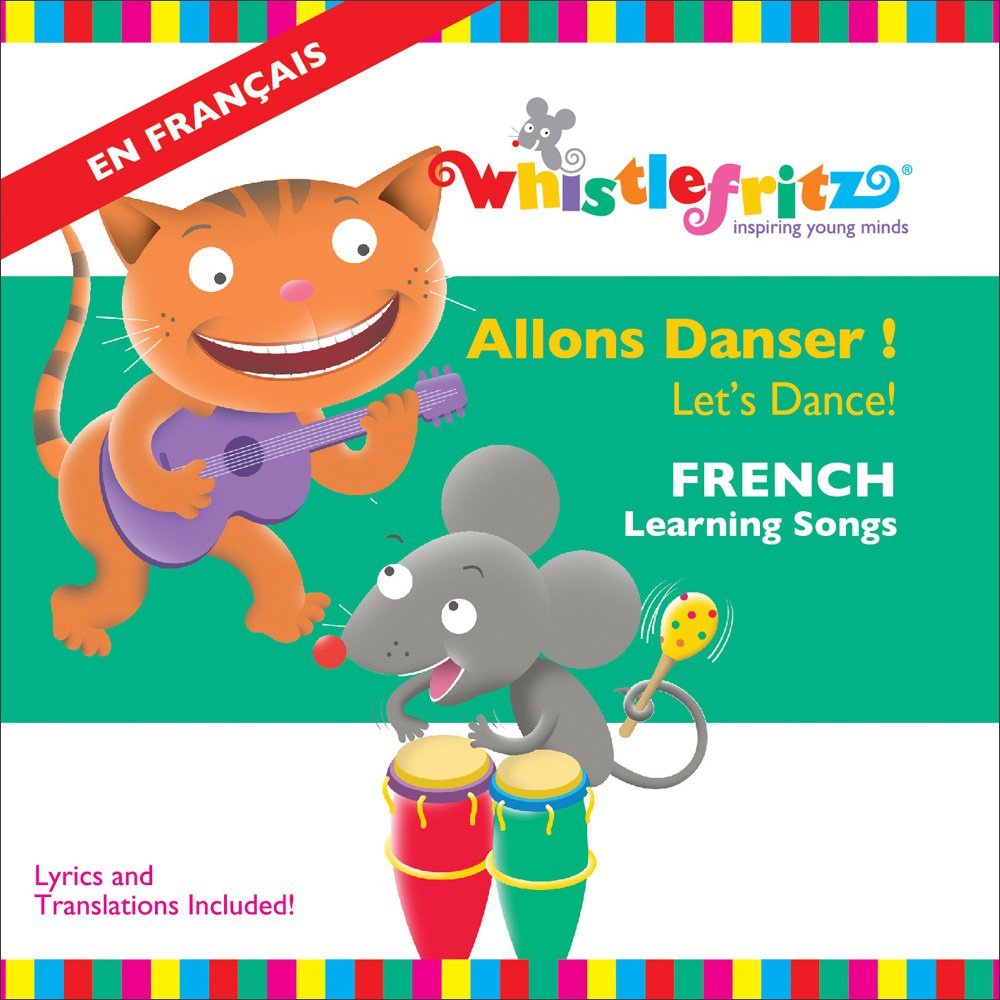
1. Start with Bonjour, bonjour les amis, a song from the CD Whistlefritz, Allons Danser. I will have the kids sitting on the floor, girls on one side and boys on the other side. That’s to demonstrate the difference between masculine and feminine nouns and adjectives in French. Also, to be able to point at the girls when we say “copines” and to point at the boys when we say “copains.”

I will bring the CD and we will sing along twice. I am making up some hand motions.

You can listen to bits of the song on the Amazon link above, to get an idea. I have not found a youtube video for it. – 5 minutes

Whistlefritz French Learning Allons Danser CD

2. Read several books to them:  Continue reading »


10 Lessons from Our First Year Homeschooling

Posted on

We finished our 180 days of Kindergarten last week. Whew! What a ride! We learned several lessons and, hopefully, we will not make the same mistakes next year.

Overall, we are very proud to have chosen this educational route with our children. We pray for God’s wisdom and guidance as we continue on this path.

Today, The Old Schoolhouse Review Crew blog featured our homeschool under their heading, Spotlight on the Crew.

I wrote the post about the 10 lessons we learned exclusively for their site. You can find it here.

In a couple short months, I will teach a first grader and a pre-kindergarten student. I will need this whole summer to adjust to this new identity for my children in my head.


Learning Breakthrough Program Review

Posted on

This spring I read A Life in Balance, a most intriguing book produced by a company called Learning Breakthrough Program. This is a book for parents, whether they homeschool their children or not.

This paperback book was written by Frank Belgau as told to his son, Eric Belgau. It is the story of how Frank Belgau, an Air Force Flyboy and mechanic turned special education teacher and researcher, created the Learning Breakthrough Program, which helps children overcome their learning differences. It is a pleasant and easy reading – 200 pages long. It costs $16.95.
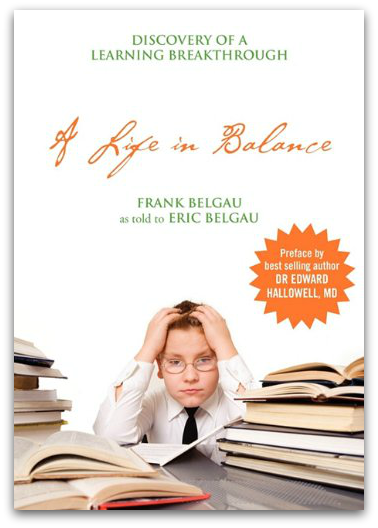
A Life In Balance book cover, by Frank Belgau


It is also an interesting account of what Houston and the space-program was like in the 1960s. Finally, it is a riveting account of how the brain works and, in particular, how the vestibular system affects our physical mental processes.

If you are looking for an ADHD alternative treatment or for a dyslexia treatment, you need to read this book. If you simply want to improve your child’s (or your own) reading, you need to read this book. If you are a professional trying to keep up with an increasingly demanding workplace, you need to read this book. The suggestions will help your brain stay focused and sharp.

Last but not least, if you have Baby Boomers in your life who want to continue to stay sharp, you need to tell them about this book. Brain training and brain fitness suggestions abound in A Life In Balance.

Have you ever noticed how your toddler toddles? Have you ever noticed children walk differently? Some walk smoothly, freely swinging the arms, with an erect posture, and in a rhythmic fashion. Others suppress their arms and their feet do not move smoothly. They seem to lose their balance after a few steps. Many are somewhere between these two extreme points.

Frank Belgau discovered the connection between the physical ability to walk straight and the cognitive ability to read in a very personal way.

Learning Breakthrough Program

You see, Frank Belgau could not learn to read himself until he was in fifth grade. As such, he developed a strong empathy for “unteachable children.” He felt the shame of being the only child in his family who could not read.

He also lost his lunch to a bully. But the bully did not want his lunch or his lunch money. The bully simply wanted to find somebody weaker than he, to beat up on and make himself feel better.

Frank tripped over his own feet after a few yards – consistently. Physically, he was a mess. The bully only made it worse.

As a fourth grader, Frank accepted the fact that he could never be as smart and accomplished in school as his siblings. But to not be an athlete and to receive daily beatings from a bully pushed him to come up with a plan. He spent the summer between his fourth and fifth grade running on the beach, aiming his feet at fiddler crab holes, like a football player doing a tire run at training camp.

At first, he tripped often and tumbled face down. As the summer wore on, he got better. His speed picked up. He could aim and not miss these holes.

When he went back to school, he put the bully in his place. They even became best friends. But he discovered his summer set of exercises brought about another benefit: he could read. Just like that.

By running and organizing his physical balance, Frank organized his brain.

Once he was honorably discharged from the Air Force, he became a teacher and, then, a special education teacher. From one school system to another, from one university research lab to another, he perfected the Balance Board and a set of exercises which help children organize their brain so they can learn.

The largest industry in the United States is the prison system. All the inmates in our prison system have some sort of learning disability or difference. These people are not stupid. Many of them are quite intelligent. But they are frustrated. They could never learn as easily as their peers. Sitting at a school desk feeling stupid and useless and inferior lead them to frustration. So they act out. And the downward spiral commences.

The book contains a preface written by Dr. Edward Hallowell, MD – a Harvard professor – who strongly believes in and supports the Learning Breakthrough principles. However, there have been many in Academia who gave Frank Belgau a hard time through the forty years of his research and experiments. You can hear the sadness and frustration in Frank’s “voice” about that as you read the book.

Personally, I think the book could use some editing to eliminate repetition and numerous typos. But, overall, this book will give you an alternative way to deal with learning differences.

I have always believed that physical exercise impacts the brain tremendously and modern research supports that premise. I saw ADHD being reversed through an education which involved similar principles when I worked for a special education residential treatment program. This book lines up even more arguments in support of such alternative programs and stepping away from medication.

The Space Walk – a series of exercises that will give you observable results in improving reading – is outlined in the back of the book.

Here are the Space Walk Activities which develop a smooth walking pattern:

  • toe on spot
  • walk heel to toe
  • sidestep, lead right
  • sidestep, lead left
  • march
  • march backwards
  • walk and turn clockwise
  • walk and turn counterclockwise
  • pick target, close eyes, and walk to target
  • close eyes, walk heel to toe on line
  • zigzag walk

All these activities are described in length in the Appendix of the book, which would give you a clear way of experiencing the benefits of the Learning Breakthrough Program before deciding about purchasing the Balance Board.

Connect with the Learning Breakthrough Program on social media:

Facebook: httpss://www.facebook.com/LearningBreakthrough
Twitter: httpss://twitter.com/LearningBreak
YouTube: httpss://www.youtube.com/user/LearningBreakthrough

Click to read Crew Reviews
Crew Disclaimer


Mom Monday Week 22 – The Trust Factor

Posted on

In the beginning of the series, I wrote about The Homeschool Mom’s Bible. I’m almost finished with this devotional because I read multiple pages per day. It has been such a source of inspiration.

Sometimes, it has brought conviction about an aspect of my life. Other times, it has taught me to anticipate a certain conflict between my children and what solutions to prepare for it. Overall, I have really enjoyed the experience.

mom monday series devotional

Throughout the book, I was encouraged to trust. Trust in God, Who called me to homeschool. Trust my motherly instinct when other people would have me change this or that about our children’s schedule. Trust my husband’s common sense when he advises for or against a certain activity. Trust in my children’s love for me, despite my shortcomings.  Continue reading »


Wonderful Wednesday – Planting a Veggie Garden

Posted on

Every spring, I buy some vegetable plants and start another garden in my 4’x8′ enclosed patch in the backyard. The whole thing started when my son was one. I felt inspired to teach him where foods come from. He is six years old now.

I have learned a thing or two every year from working in the garden. About gardening and, also, about my own character. Lately, about homeschooling, too.

This year, I have already gleaned two lessons:

1. Don’t (trans)plant too early. We planted our veggie garden in mid-April. A week later, hail and snow killed it, even though we covered it with a sheet. When it’s cold, it’s cold.  Continue reading »


Apologia “What On Earth Can I Do?” Review

Posted on

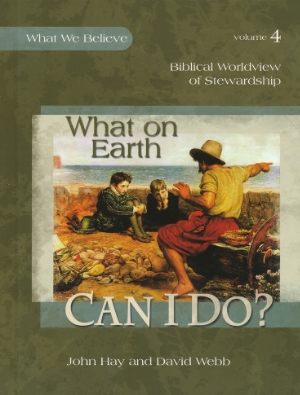
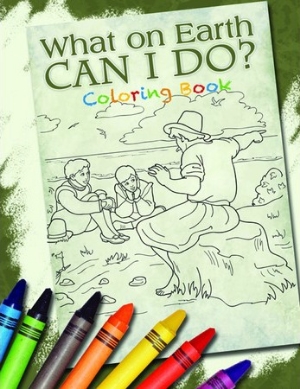
For almost two months, we have had the privilege of using a worldview curriculum called “What on Earth Can I Do?” from Apologia Educational Ministries. This post is a review of the set which contains a hardback book ($39), a notebooking journal ($24), junior notebooking journal ($24) and coloring book ($8). This set is volume 4 of the What We Believe series.

Apologia What In The World Can I Do

The thick hardback book, with full color illustrations and glossy paper, like anything else coming out of the Apologia Educational Ministries store, is impressive in both content and presentation. The junior notebooking journal contains coloring pages, word puzzles, word searches, mini books, craftivities and room to write or draw. It is a younger version of the regular notebooking journal. The coloring book contains only pages for little ones to color.

Apologia Junior Notebooking Journal

I read to my children from the book. Then, my son, who is in kindergarten, worked his way through the Junior Notebooking Journal, while my daughter, a preschooler, colored the corresponding pages in the Coloring Book.

Apologia Coloring Book

One lesson, about 50 pages long, divided into some 17 sections, looks at the same concept from a different lens. There are references to Hollywood movies (The Sound of Music), actors (Charlie Chaplin), Christian authors (Corrie ten Boom), Jesus’ parables and character development.

This worldview curriculum contains enormous amounts of information on different topics while following the main thread of stewardship. As Christians, we view the world through the lens of biblical concepts. Our children must be taught how to look at everything in life and ask, “What does the Bible say I should do in this situation?” The characters presented in the book modify their thoughts and behavior after answer that question, thus setting an example for all of us.

You may want to use it to supplement your history learning or, better yet, as a family devotional. Through all the lessons, the authors answer spiritual questions and draw real life applications. It’s really closer to a Bible curriculum if you don’t mind all the references to pop culture in the context of Bible class.

The Apologia “What In The World Can I Do?” worldview curriculum is intended for students in grades 1-6. They mention, on the Apologia website, that it is  “adaptable” to younger ages. In my experience, this curriculum takes a lot of adapting for younger children (PreK and K ages). So, if you have the energy, creativity and motivation, you can venture. If not, I suggest you wait a few years.

Apologia suggests a sample lesson plan which covers one lesson in the book in six sessions – two classes per week, over three weeks, for instance. I can tell you that the hardback book contains a lot of material and you will not find it difficult to keep your children busy.

In some cases, I had to adapt the writing quite a bit. They say the writing is on a fifth grade level, but it seems almost high-school level to me. My local newspaper is on a fifth grade level. This curriculum is higher than that.

We had a lot of new vocabulary to explain, but that was not all. I found some of the concepts quite mature – definitely not for children under 10. So we skipped over some things.

Apologia Educational Ministries

We worked through the first four lessons, which deal with World War II issues (Hitler, Churchill, the von Trapp Family, the blitz of London, the moving of children from London to the country side, the final victory) from the perspective of an English family.

I did not know how scared my children were of this story until we got to chapter four. Before I started reading, my son said, “You are reading this to us because if the war comes to Tennessee, my sister and I will have to be separated from you and daddy. We will have to go to the countryside to escape the fire bombs.”

Of course, I had to do some damage control right then and there.

In spite of all that, my children really connected with Colin and Jenny, a brother and sister, who were part of this English family. Another connection was the scene where Colin helps firefighters protect St. Paul’s Cathedral. My son loves anything that has to do with fighting fires.

St. Paul's Cathedral protected by firefighters during the Blitz

My son enjoyed coloring this page about how firefighters kept St. Paul’s safe.

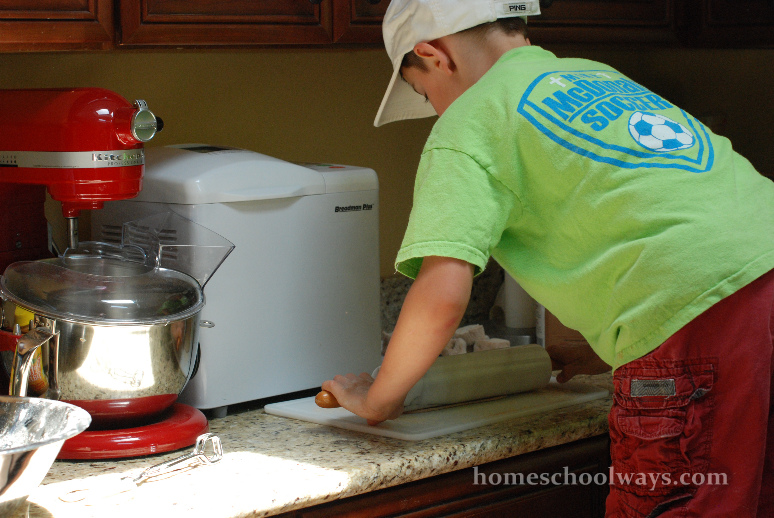
When we started the fifth lesson, they just could not forget about Colin and Jenny. A new set of siblings is introduced, this time from North Africa, and my children could not move on. So we made chapati to get them into the new story, following the recipe from the book. It was quite good when fresh and hot.

Boy rolls chapati dough

My son loved rolling out the dough for chapati

In conclusion, I would highly recommend this worldview curriculum from Apologia to older elementary or even high school students.

Click to read Crew Reviews
Here are the social media links for Apologia:

Facebook – httpss://www.facebook.com/apologiaworld
Twitter – httpss://twitter.com/apologiaworld 
Google+ – httpss://plus.google.com/105053356034237782125/posts
Pinterest – https://www.pinterest.com/apologia/

Crew Disclaimer