Wonderful Wednesday – Irises

Posted on

The Outdoor Hour Challenge last Friday was about snakes. We will keep it in mind, should we ever run into a snake. I am not necessarily scared of or grossed out by snakes, but I would not want to seek them out either.

So, instead, I chose a subject that is closer to my heart and my house – the iris. Another name for it is, of course, fleur-de-lys (also spelled fleur-de-lis), which translates to flower of lily. The word iris means rainbow in Greek – because the flower comes in so many colors.

White and purple iris flower

Iris in my garden

We live in a home built by my husband’s grandparents. We remodeled it and its garden during our first year of marriage, before moving in.

We kept some of the plants and trees, which had been planted by my husband’s grandmother. Among them, a patch of iris plants – white and purple and perfect in every way. This is the time of the year they are in full bloom.

We enjoy these flowers for their sheer beauty, as well as for the memory of our children’s great-grandmother, although neither I nor the children ever got to meet her. To bring it all full-circle, my mom re-planted some of the irises along our driveway last year, when she came to visit.

A symbol of French royalty since Clovis, the iris can be found on coats of arms throughout France and England. Apparently, English kings wanted to show their claim to France by putting an iris onto their coat of arms.

The fleur-de-lys survives as a symbol on some coats of arms today, like those of the King of Spain, the Duke of Luxembourg and the House of Bourbon. Incidentally, Queen Anne of Romania belongs to the House of Bourbon.

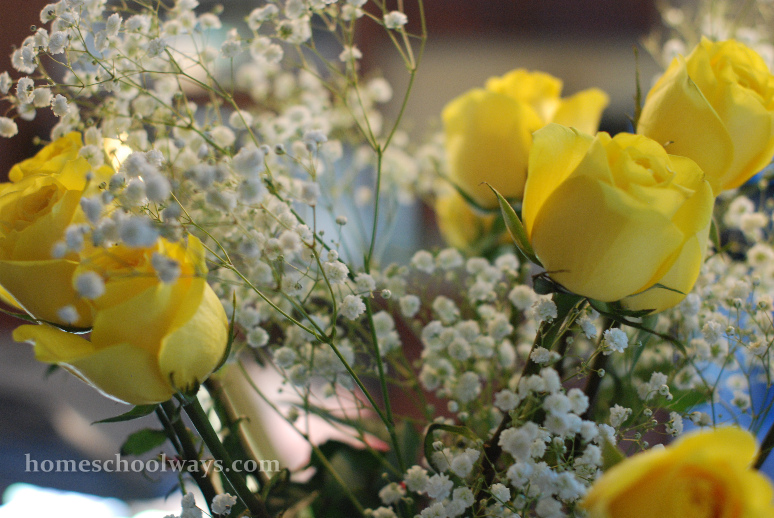
White and purple irises

Irises in our garden

They say French kings received an iris instead of a scepter during their coronation ceremony. As such, it is a symbol of perfection, light and life.

Anna Comstock says the iris contains a great lesson for all of us “because nothing in it is what it seems.” The pistil looks like leaves, the leaves look like stems and the petals hide under the sepals. Somehow this arrangement creates perfect tunnels for bees to do their work.

The fleur-de-lis is the national flower of France. It is also the state flower of Tennessee, where I live. Two hours away from my home, in Greeneville, TN, they have an annual Iris Festival. In fact, it is this weekend, should you want to go.

For other Wonderful Wednesday nature study posts, click here.


Where Am I From? Romania

Posted on

I place a strong emphasis on foreign languages in our homeschool because I am a European. More precisely, I am from Romania. I learned French and English in school like most Romanian kids. Two foreign languages were mandatory school subjects grades 5-12. I am not sure what they do now, but I expect they still do two languages. We also took one year of Latin in the eighth grade. That’s when we learned “Gaudeamus Igitur” by heart.

Romania used to be a Roman province – hence the name and the strong presence of Latin words in our language.

Latin poet Ovid was exiled to Tomis (modern day Constanta, Romania, a Black Sea port). Back then, he complained nobody spoke Latin. Little did he know how much the local language would be influenced by Latin over the centuries.

Statue of Roman poet Ovid in Constanta, Romania - about two blocks from where I used to spend my summer holidays

Statue of Roman poet Ovid in Constanta, Romania – about two blocks from where I used to spend my summer holidays

Indeed, the Romanian language finds itself in the same group as Italian, Spanish, Portuguese and French – the Romance languages of the world.

Just to give you a glimpse into the similarities… We say “casa de moda” – like in Spanish, “fashion house.” We say “merci” like in French for “thank you.” We say “noi” for “we,” just like in Italian.

We do have some Slavic words, naturally. We are surrounded by Slavic nations: Bulgaria to the south, former Yougoslavia to the southwest, Ukraine to the North and the Republic of Moldova (a bit of Russia) to the East. But we use the Roman alphabet and have been called an island of Latinity in a Sea of Slavic Languages.

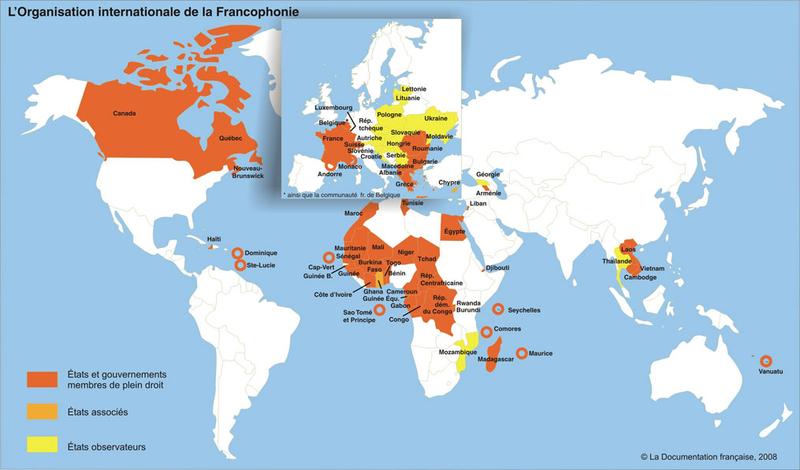
No wonder Romania is part of the francophone world and even hosted one of their summits a few years ago. Here’s a map of the Francophone countries of the world:

Map of francophone countries, with Romania being one of them

Map of francophone countries, with Romania being one of them

My husband (who is American) jokes that we Romanians like to get in the news about once a week and, alas, he is right. Sometimes it’s good news. Most of the time, it’s not. Ever since we started dating, he noticed that American media reports on at least one weekly incident involving Romanians. You watch and tell me if it’s true.

They say there are a lot of Romanians working for Microsoft in Seattle. In fact, they say Romanian is the second most spoken language in those offices – after English. That’s according to this youtube video which extols some other great facts about my country. A world without Romania would be, well, not exactly what we have today. You will have to watch to believe. (Viewer discretion advised for some references to alcohol and a short provocative collage of Romanian fashion models.)

If you want to listen to some of Romanian pop/folk music, just youtube names like Angela Similea, Gabriel Cotabita, Mircea Baniciu and Tudor Gheorghe – these are some of my favorites from the 80s. I left Romania in 1993 and have returned several times, but have lost touch with most of the culture. For traditional Romanian music, look for names like Ion Dolanescu and Maria Ciobanu. I have never been a fan, but my mom loves it.

I am proud of my heritage – for the most part – and want to pass on to my children some of the things that made me “me”. Recently, my son told me, “Mommy, I wish I had been with you in Romania when you were growing up.” He is six.

This post is part of a Multilingual Kids Blog carnival, hosted this month my Stephen of Head of the Heard.


Mom Monday Week 19 – Get Outside and Play

Posted on

How many hours a day do you spend outside? They have a saying in Sweden – I lived there for three years – “There is no such thing as bad weather, only bad clothing.”

It’s so easy to come up with excuses about not being outside: the mosquitoes, the wind, the rain, the snow, the cold, the heat, the gnats, the noise of the neighbor’s mower etc etc etc. The thing is, fresh air does so much for our minds and bodies, we should be thankful it’s freely available.

I love this blog that challenges families to spend 1,000 hours outside each year. I’ll spare you the math… That comes to two or three hours every day. What do you think? Is it doable? I think we were doing that already, but not consciously and, maybe, not every day.

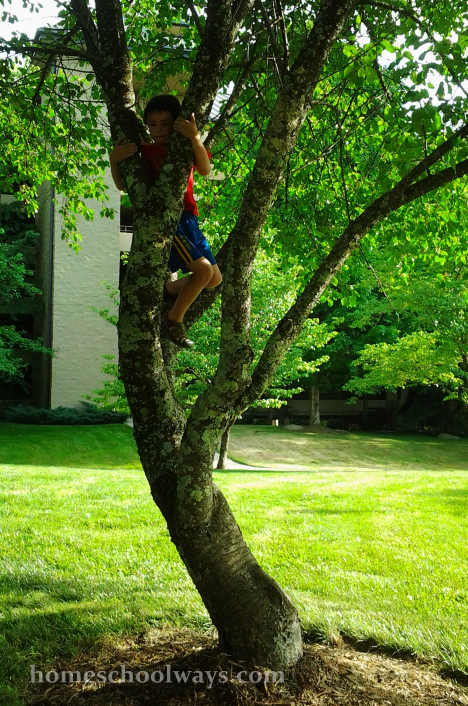
Boy in Tree

Since we took the challenge, we have been outside even in the rain and even when I had a sore throat. The kids put on their rain boots and coats and ran around in the rain. I allowed them to play with umbrellas – which are usually off limits for them. I sat under the roof overhang, on a comfortable outdoor chair, with a wet cotton sock covered by a wool pashmina around my neck (natural remedy against sore throats).  Continue reading »


Karen Whiting Books – A Review

Posted on

This post is a review of five books by Karen Whiting:

1. Nature Girl – A Guide to Caring for God’s Creation

This book is the Christian answer to the going green movement publications which stem out of New Age principles and progressive political agenda. Rebecca White co-authors with her mom, Karen Whiting. The book opens up with the ABCs of going green and the corresponding chapter that deals with it. For instance, Q is for Quiet yourself, sit outside, and listen to the sounds of nature (Chapter 1). One does not have to read the book in order. Just pick a topic you are curious or passionate about, look up the chapter and go.

Nature Girl book cover

Karen delivers timeless principles in a friendly and relaxed way. In Chapter 1, for instance, “Be You and Be Beautiful,” she says, “No amount of makeup brightens your face like the flash of a great smile!”

But this book is more than just a collection of theoretical advice. It contains activities (how to create recycled jewelry, how to plan a spa day with friends, how to team up to clean up a park), recipes (from whole-wheat doggie treats to kale chips and carrot-zucchini muffins), science experiments (oil spill cleanup) and games (animal signs scavenger hunt).


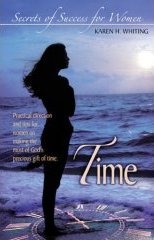
2. Time – Practical Direction and Tips for Women on Making the Most of God’s Precious Gift of Time

I don’t know about you, but I am a planner. Time is holy, in my opinion. It’s probably the most important gift God has given us and I do not take it for granted. I have read so many time management books, but I can never get enough of them. When I read Karen’s book on time, I knew I found a gem I can recommend to others. Why? Because, unlike other books I have recommended here about getting organized and planning your time better, this one comes from a biblical perspective.
SOSTime

As such, “Time” helps a Christian woman bring her workload to the Lord. Not only are the burdens left at His feet, but the assurance is there that He will help you prioritize and, ultimately, accomplish His will. From ways to schedule your day, to gracious ways of saying “no” when asked to take on one more responsibility, this book is filled with godly advice.

Even though it is a small book, the words and principles shared are deep. I found myself re-reading the same sentence over and over again. I wanted to make sure I really got the whole meaning behind the words. This book would make a great gift to any graduate. Also, homeschooling moms or any moms, for that matter.


3. My Mini Dream Room – Create the Mini Bedroom of Your Dreams

This book is part devotional and part craft projects. It is intended for tween girls, but my six-year-old son really got into this project. It’s not surprising to me because he has been building with LEGO bricks for two years now. He likes everything small. He and I built the hanging flower pot, the shelf, the books for the book shelf, and then the skateboard.

Mini Room Cover

We skipped over several pieces of furniture because we did not have the necessary materials. But I put them on a shopping list and next time I go to the craft store I will be sure to equip us so we can finish this room. My four-year-old daughter was pleased to make a hanging basket and some of the books on the shelf.

I like the design of the book – very feminine. I also enjoyed the truths shared in the book (God made you special in every detail, for instance) and the parallels Karen draws between a mini-bedroom and our lives. You know all those distorted beliefs we have about ourselves? Here’s a book that sets the record straight about your identity in a gentle, non-preachy way. So either get your daughter started right, or help her correct these distorted beliefs with this practical, fun and faith-filled book.


4. The One-Year My Princess Devotions – Preschool Edition

This book will help you create many memories with your sweet daughter. What is sweeter and more innocent than a preschool age little girl? I am in awe every day at the things my daughter says and does. This book has helped me carve out time just for her. I usually do devotions with both my children, but I read somewhere that it would be a good idea to take time with each child individually. I don’t always know what to say or how to lead her mind in the paths of righteousness. So this book serves me as a guide to work from.
Princess Devotions for Preschoolers

Also, if you are looking for a Christian alternative to Disney princesses, this book will help you. The two princesses on the cover are Elizabeth (the brunette) and Lily (the blonde). If you email Karen about it, she will send you templates so you can make puppets of the two princesses. That way, you and your daughter can have even more fun playing and learning together. Also, she has prayer cards, a princess memory game and even a coloring page.

My daughter and I have played with the cards and it’s really neat to see her reactions when she finally gets a pair of cards guessed right. The games are a great way for me to relax and connect with my daughter as peers, as fellow game players.


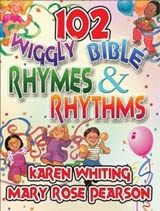
5. 102 Wiggly Bible Rhymes and Rhythms – Bible Learning Activities for Yong Children

Co-authored with Mary Rose Pearson, this book is a collection of teaching activities for small children. Children learn best by playing and we all know how much little ones enjoy playing with their hands and fingers. Whenever we memorize Scripture, we have hand motions and finger plays to help us. So I know this will come in handy whether you run a Sabbath/Sunday School class or do regular devotionals at home with your children.
Wiggle Bible Rhymes Karen Whiting

Repetition and multi-sensory learning are methods used in this book and we know they work. There are brief instructions on how to introduce a new song or activity, if you should need some guidance.

Personally, I really enjoyed the Relaxer Rhymes. There are three of them and I have almost all of them memorized. We are not very formal in our homeschool, but sometimes I do need their full attention. These rhymes that help them relax, calm down and sit down quietly are perfect.


You can connect with Karen Whiting by visiting her website.

I received a free copy of each product above in exchange for my honest review. I was not required to write a positive review, nor was I compensated in any other way. The Amazon links above are affiliate links. All opinions I have expressed here are my own or those of my family. I am disclosing this in accordance with the FTC Regulations.

Logic of English, Rhythm of Handwriting Review

Posted on

Logic of English publishes great language arts curriculum sets for homeschools, as well as for classroom settings. I recently had the privilege of reviewing Rhythm of Handwriting Complete Set for cursive.

Handwriting is a big topic. Let me just briefly mention that I believe in teaching cursive first and only cursive. Here is a great article about the advantages of cursive first and only.

As I was waiting for my son to mature his fine-motor skills, Rhythm of Handwriting became available to me through the Review Crew. I decided to try it. Perfect timing, as my son seemed to have developed enough to begin and lay the foundation for future copywork.

Logic of English, Rhythm of Handwriting, Cursive Curriculum Set

Logic of English, Rhythm of Handwriting, Cursive Curriculum Set

The complete handwriting set costs $65 and contains a student book, a quick reference guide, a set of tactile cards and a small student whiteboard. This curriculum is recommended for ages 4-adult, but, as your child’s teacher, you know if the fine motor skills are in place or not.

The student starts by using large motor skills to form the letters – the tactile cards have sandpaper shapes of each letter and even one card for each individual stroke utilized throughout the curriculum. Then, the student moves to writing on the whiteboard with a dry erase marker. That way, all the mistakes can be easily erased and the process can start all over again on a clean slate.

Boy learning cursive on a small white board

My son writing on the small white board before moving to paper

The whiteboard has two sides, one with a very large area containing the baseline, the midline and the topline for writing. The backside contains several rows of smaller widths, which also facilitate the transition to paper.

If need be, they also recommend the student practice in a sand box or any box with cornmeal or rice.

Finally, when you, as the teacher, decide he is ready, he can start using the paper pages in his student book to practice handwriting with fine motor skills.

Cursive r boy on a small white board

My son had fun drawing himself as an R boy.

The paper worksheets contain varying widths and the student can choose whichever they feel best about. My son always preferred the largest (or widest) lines, which are the last two rows on the worksheets.

To recap, here are the steps to get your young student to start penmanship:

1. Sand paper (tactile) cards – as you rehearse the instructions (curve up to the midline etc.)

2. Make the letters in sand, cornmeal, or rice.

3. Write with a dry erase marker on the large side of the whiteboard.

4. Write on the smaller side of the whiteboard.

5. Move to paper and let your student decide which height he likes the best in the provided worksheets.

6. Work your way through the list of letters.

7. Practice, practice, practice.

The first week for us was easy. It was something new and exciting. The second week was tough. The newness had worn off. His hand would do the required motions in the sand box or on the board, but not on paper. He was frustrated with his own lack of skills. I was wondering if he just was not ready for fine motor skills.

The breakthrough came when I showed him that he was almost done with the “Swing Letters” in ROH. That it’s a category and then we can move on to the next group of letters. He looked at the chart and noticed all the categories. He got excited. Now that he had an idea of what to expect, he seemed motivated to press on. And motivation took care of the skills needed to transition to paper.

What also helped was the weekend – not doing any writing for two days. After the weekend, when we picked it back up, his skills had improved dramatically. It’s as if his brain had needed some time to process. He was not ready to do a whole Practice Sheet in one sitting yet, but he could do four lines without even questioning it. Progress.

The following week, he asked to see the rest of the letters in this first category. I showed him that we would start on Curve Letters that particular week if we kept at it. He was excited at the prospect.

Cursive p on a small white board

Divide and conquer. My son made his own dots to connect before writing his “p”.

And so, one day later that week, we started Curve Letters. Once he got “a” down, I showed him how “d” is just like an “a” but with a longer “tail.” He got it after a few tries. I was trying to see if we can do two letters a day. Apparently, we could.

That’s when he asked me about writing whole words. Hmm… Really???

I showed him in the book that, at the end of the chapter on Curve Letters, we have practice pages with words. Well, he saw “dad” – the letters he learned today!

He wrote it down once and I was congratulating him so heartily, he took off running. He likes being chased around the house, so I played along. My daughter wanted to be part of the action, so, with her in my arms, I chased my son around the house, running from room to room and laughing all the while.

He loved it. He would sit down to write another “dad” and then he would say, “Now you start chasing me.” I would run and we all laughed and squealed. Whenever I got to him, I showered him with hugs and kisses. He was covering his face, laughing.

This was one of the most fun days in homeschooling my little boy. Breakthroughs are always exciting. And any time we can laugh during school, I’m happy.

The fact remains, after two weeks of cursive instruction, my son wrote his first cursive word.

For the next four weeks, we kept on practicing and almost got to loop letters. I am so glad this curriculum has worked out for us and look forward to using it through the summer, as we don’t want to lose our hard-earned skills.

Here are the social media links for Logic of English:

httpss://www.facebook.com/TheLogicOfEnglish

httpss://www.pinterest.com/logicofenglish/

httpss://www.youtube.com/logicofenglish/

httpss://twitter.com/LogicofEnglish

Click to read Crew Reviews
Crew Disclaimer


Wonderful Wednesday – Cat Nature Study

Posted on

We have a cat and we study it almost every day by virtue of sharing our lives with him. The kids have learned how to feed him. They are not coordinated enough to pour water in his bowl. Or, at least, my fear of spills will not allow me to allow them that chore yet. The kids also open the door for the cat to go in and out of the house.

Large male tabby cat

Our 18-lb, 10-year-old male cat, Izzy

Our cat lost its mommy in a storm and stumbled upon somebody’s porch. That somebody knew somebody who knew my husband was a cat lover. My husband took the kitten in and called him Izzy.

One year later, I came along. I am not particularly fond of cats. In fact, I am allergic to cat dander.

My first thought when I saw Izzy was, “I need to tolerate this one.” But I did more than tolerate him. One afternoon, as I was sitting on the couch in the living room, Izzy walked over to me and got into my lap. He started purring and suckling on my pant leg. He thought I was his mommy. He left a wet spot on my pant leg and won me over.

I have written two books about him, but never edited them properly. I had children instead.

We took some magnifying glasses to Izzy’s fur for this particular cat nature study. My son noticed a dried leaf shaped as letter “P” caught in Izzy’s fur. He did not need a magnifying glass for that. With all the catkins outside, our cat is bound to pick up some.

Children observing cat with magnifying glasses

My children observing our cat, Izzy

We made two notebooking pages about Izzy. I gave my daughter a simple blank piece of paper and we glued the cat study topper from the Outdoor Hour Challenge May newsletter. For my son, I printed out the mammal notebooking page from the same blog. I filled both of them out as we talked about cats. My children are still too young to write themselves.

As I read the Handbook of Nature Study to prepare for this lesson, I was surprised to read the recommendation that we train cats not to hunt for birds. I would have thought that a naturalist would want a cat to follow its natural instincts no matter what those may be.

We have seen our cat hunt for mice. We have observed his fear the day after a black bear visited our yard. We have had to deal with putting away dead mice, moles and birds – always daddy’s job. We have had to brush his fur or put up with cat hair on our sofas. Sometimes, both.

I have sneezed many times not realizing I had just sat in our cat’s latest favorite spot.

When the vet diagnosed our cat as a diabetic last year, we could not put him to sleep. Instead, we chose to give him shots.

I do not know how I got the courage to give him his shots, but I did. The kids watched me and daddy as we administered the cat’s shots and were amazed by how passive the cat was. We were, too.

We also fed him less and let him go outside more. Exercise, a leaner diet, plus the insulin shots did the trick.

His blood sugar levels went back down and he did not act as sluggishly as before. He actually got better. The vet declared him healed.

All this to say, we love our cat and study him daily in our homeschool.

For other Wonderful Wednesday nature studies, please click here.


Maestro Classics Review

Posted on

An integral part of our homeschool, car schooling includes listening to music, stories, audio books or audio drama in the car, on the way to appointments and classes outside the home. Recent additions to our car school curriculum, My Name is Handel: The Story of Water Music and Mike Mulligan and His Steam Shovel are produced by Maestro Classics.

The conductor, his wife and one of their sons all worked on producing this story CD, alongside famous musicians and narrators. When it comes to CDs for children, I am rather picky. So many of them feature rhythms that make the kids want to shake their behinds.

If you, like me, would like to train your children’s musical taste buds to appreciate classical music, you will want to check out this series. The stories keep their attention while the classical music is woven throughout the CD. The CDs expose their minds to vocabulary, concepts and stories beyond just classical music.

Maestro Classics Review
I read Mike Mulligan and His Steam Shovel to my children about a year ago. When I brought out the CD out, they did not know what to think. Was it a movie? No. Where can they see pictures? No pictures. We just listen to the story. But why is there music? The music threw them off.

I persevered.

After a few paragraphs, they got into it. So much so, that they asked to hear it over and over again. They like to dig like Mary Ann, faster and faster, as the story progresses and the music picks up.

Children watching a documentary about steam shovels

My children watching a short documentary about steam shovels

After listening to it four times, over a few days, my son started saying things like, “I really like the music, mama.” Bull’s-eye!

The CD booklet has several activities which enhance the learning process: a puzzle, a maze, a mirror word game, etc. My son loved finding out the words. It’s the first time he solved a cross-word puzzle, so this is one for the books.

My Name is Handel: The Story of Water Music was a bit harder to introduce to my children. I was surprised, because they like listening to Handel’s Messiah. I was expecting them to perk up at the mention of Handel’s name. But, again, I worked with their reluctance and gently asked them to listen to it.

Maestro Classics Review
My daughter is four and loves princesses, so when she heard them mention a king, she started paying attention. Isn’t that always the case? We must link new information to their existing database of knowledge. Then, when they see a connection, they are more willing to work with the new concept.

I think the story is really cute, how Handel, ever the showman, managed to weasel himself back into the king’s heart with Water Music. The more modern story about Handel’s living in England (I won’t give it away, you will have to get the CD and enjoy it firsthand) is even more intriguing. I never knew about that other theory.

Children watching animated explanations about the Panama Canal operations

Watching animated explanations about the Panama Canal operations

All this to say I, too, learned a lot from listening to it, besides enjoying the music.

Their website also produces free curriculum guides as companions for their CD series. Definitely worth looking into. You might have to adapt some of the activities based on your children’s ages and philosophy of education, of course. But you have a whole FREE unit study for each CD, with history, art, music, geography, science, language arts, and math.

The CDs cost $16.98 for the CD (plus shipping) and $9.98 for the MP3 download. Considering their quality and how much learning you get out of them, I think they are reasonably priced. I have always said that our children’s education is worth every penny.

The ideal age range for Mike Mulligan is 4+, while the ideal range for Handel is 5+. I can see how my four-year-old lags behind in appreciating them. My six-year-old got into Mike Mulligan after some coaxing, but now he loves it.

In order to stir more interest into My Name is Handel and Water Music, I did some of the activities suggested and the kids enjoyed playing with water and boats, guessing what will sink and what will float, and looking at pictures of royalty. We learned about the Panama Canal, the Industrial Revolution and the steam engine. My son, a budding engineer, loved every moment of it. We colored pictures of a steam shovel.

If you are looking for classical music for children, look no further. This CD series will help your kids appreciate classical music and learn so much more besides.

Click to read Crew Reviews
Connect with Maestro Classics on Facebook and Pinterest.

Crew Disclaimer


Mom Monday Week 18 – Ask and Ye Shall Receive

Posted on

God is in the business of answering our prayers – even those we don’t have enough faith to pray. As I hosted the latest Raising Multilingual Children blog carnival, I felt pricked in my heart about French like never before. In our homeschool, I do read to my children in French and talk to them in French now and then, but it’s not enough.

They need conversation, preferably with small people like them. Immersion. I started dreaming about a French play group. If only there were francophone children in East Tennessee…

Wait a minute! What if? What if I could bring together a small group of homeschoolers and I taught them French as they played?

I went from “if only…” to “what if?” in a matter of days.

“If this is from You, Lord, please lead me to start a French play group. I don’t know how, where, when or with whom. I feel this calling. I will take it one step at a time and watch for Your guidance.”

I did not exactly say those words, but that was the spirit of my unspoken request.

I felt called and I took the first step. I made an announcement on our homeschool support group’s page on Facebook, asking if there was any interest in a French play group.

The first reply came from a French lady who lived 30 minutes away and had a son about my son’s age… We even had five mutual Facebook friends and had lived in this area for about the same time (nine years). What are the odds?

She was thrilled to have a French play group getting started. I was thrilled to find her.

ask and ye shall receive

Had I not asked, I would have never known. As I told my husband, he said, “Ask and ye shall receive…”  Continue reading »


Animals in Our Backyard

Posted on

Less telling, more showing.

Three animals we have spotted in our yard: a groundhog, a rabbit, and a black bear. Enjoy!


Kids watching a hare in our backyard

Watching Peter Rabbit


Rabbit in backyard

He heard me


Groundhog standing in front yard

Groundhog standing


Groundhog running

Look at it go!


Man challenges black bear

My husband challenged the bear with our children’s sled before he got out the firecrackers


This bear has been coming by every evening. He is cute but he is not really scared of loud noises unless he is at eye level with you. When he was looking at my husband from the hill, he just watched and did not make a move. The firecrackers finally got him moving, but very, very slowly. That’s why I cannot leave the kids outside by themselves. Ever.


Wonderful Wednesday – Apple Tree Study

Posted on

Inspired by the Handbook of Nature Study blog, we observe and study nature by following their weekly challenges. For the apple tree, we went a few streets over in our neighborhood to look more closely at a crab apple tree. I go by it every morning on my walks.

Then, we went to an apple orchard. We spent about 15 minutes observing the tree, its bark, leaves, dried up flowers, baby apples, areas where large branches had been cut, and overall looks. We noticed the bored holes, which could be the work of either a beetle or a wookpecker.

We also observed the surroundings: a bee gathering pollen from the carpet of yellow flowers under the apple tree, a small “area rug” of lavender flowers, the taller trees from across the street (not apple trees), the younger apple trees in another part of the orchard, the sky. We also made note of the weather: it was sunny, hot, and windy.

On the way back home, we ran an errand at the bank. My daughter asked me to get some hot chocolate, which our bank offers to their clients for free. Next to the hot chocolate machine was a large bowl of red apples. I got them an apple instead of hot chocolate. I could not have planned this better.

In the car, we listened to Tchaikovsky’s Piano Concerto No. 1 – my daughter’s request. It has long been a favorite of mine and I play it often. She calls it “that other music, not Handel.”

When we got home, I glued the apple tree topper from the HNS April newsletter on a blank piece of paper, made some notes and had my daughter draw the apple tree. Such a peaceful homeschooling day. Nature soothes.