Learning Breakthrough Program Review

Posted on

This spring I read A Life in Balance, a most intriguing book produced by a company called Learning Breakthrough Program. This is a book for parents, whether they homeschool their children or not.

This paperback book was written by Frank Belgau as told to his son, Eric Belgau. It is the story of how Frank Belgau, an Air Force Flyboy and mechanic turned special education teacher and researcher, created the Learning Breakthrough Program, which helps children overcome their learning differences. It is a pleasant and easy reading – 200 pages long. It costs $16.95.
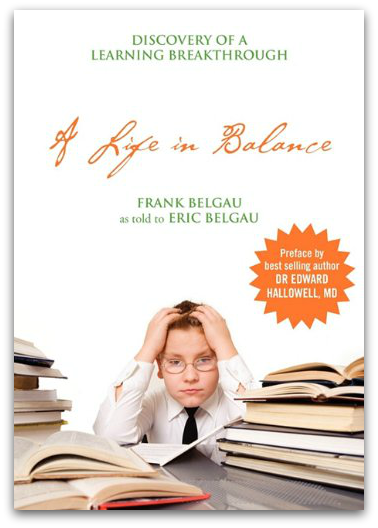
A Life In Balance book cover, by Frank Belgau


It is also an interesting account of what Houston and the space-program was like in the 1960s. Finally, it is a riveting account of how the brain works and, in particular, how the vestibular system affects our physical mental processes.

If you are looking for an ADHD alternative treatment or for a dyslexia treatment, you need to read this book. If you simply want to improve your child’s (or your own) reading, you need to read this book. If you are a professional trying to keep up with an increasingly demanding workplace, you need to read this book. The suggestions will help your brain stay focused and sharp.

Last but not least, if you have Baby Boomers in your life who want to continue to stay sharp, you need to tell them about this book. Brain training and brain fitness suggestions abound in A Life In Balance.

Have you ever noticed how your toddler toddles? Have you ever noticed children walk differently? Some walk smoothly, freely swinging the arms, with an erect posture, and in a rhythmic fashion. Others suppress their arms and their feet do not move smoothly. They seem to lose their balance after a few steps. Many are somewhere between these two extreme points.

Frank Belgau discovered the connection between the physical ability to walk straight and the cognitive ability to read in a very personal way.

Learning Breakthrough Program

You see, Frank Belgau could not learn to read himself until he was in fifth grade. As such, he developed a strong empathy for “unteachable children.” He felt the shame of being the only child in his family who could not read.

He also lost his lunch to a bully. But the bully did not want his lunch or his lunch money. The bully simply wanted to find somebody weaker than he, to beat up on and make himself feel better.

Frank tripped over his own feet after a few yards – consistently. Physically, he was a mess. The bully only made it worse.

As a fourth grader, Frank accepted the fact that he could never be as smart and accomplished in school as his siblings. But to not be an athlete and to receive daily beatings from a bully pushed him to come up with a plan. He spent the summer between his fourth and fifth grade running on the beach, aiming his feet at fiddler crab holes, like a football player doing a tire run at training camp.

At first, he tripped often and tumbled face down. As the summer wore on, he got better. His speed picked up. He could aim and not miss these holes.

When he went back to school, he put the bully in his place. They even became best friends. But he discovered his summer set of exercises brought about another benefit: he could read. Just like that.

By running and organizing his physical balance, Frank organized his brain.

Once he was honorably discharged from the Air Force, he became a teacher and, then, a special education teacher. From one school system to another, from one university research lab to another, he perfected the Balance Board and a set of exercises which help children organize their brain so they can learn.

The largest industry in the United States is the prison system. All the inmates in our prison system have some sort of learning disability or difference. These people are not stupid. Many of them are quite intelligent. But they are frustrated. They could never learn as easily as their peers. Sitting at a school desk feeling stupid and useless and inferior lead them to frustration. So they act out. And the downward spiral commences.

The book contains a preface written by Dr. Edward Hallowell, MD – a Harvard professor – who strongly believes in and supports the Learning Breakthrough principles. However, there have been many in Academia who gave Frank Belgau a hard time through the forty years of his research and experiments. You can hear the sadness and frustration in Frank’s “voice” about that as you read the book.

Personally, I think the book could use some editing to eliminate repetition and numerous typos. But, overall, this book will give you an alternative way to deal with learning differences.

I have always believed that physical exercise impacts the brain tremendously and modern research supports that premise. I saw ADHD being reversed through an education which involved similar principles when I worked for a special education residential treatment program. This book lines up even more arguments in support of such alternative programs and stepping away from medication.

The Space Walk – a series of exercises that will give you observable results in improving reading – is outlined in the back of the book.

Here are the Space Walk Activities which develop a smooth walking pattern:

  • toe on spot
  • walk heel to toe
  • sidestep, lead right
  • sidestep, lead left
  • march
  • march backwards
  • walk and turn clockwise
  • walk and turn counterclockwise
  • pick target, close eyes, and walk to target
  • close eyes, walk heel to toe on line
  • zigzag walk

All these activities are described in length in the Appendix of the book, which would give you a clear way of experiencing the benefits of the Learning Breakthrough Program before deciding about purchasing the Balance Board.

Connect with the Learning Breakthrough Program on social media:

Facebook: httpss://www.facebook.com/LearningBreakthrough
Twitter: httpss://twitter.com/LearningBreak
YouTube: httpss://www.youtube.com/user/LearningBreakthrough

Click to read Crew Reviews
Crew Disclaimer


Mom Monday Week 22 – The Trust Factor

Posted on

In the beginning of the series, I wrote about The Homeschool Mom’s Bible. I’m almost finished with this devotional because I read multiple pages per day. It has been such a source of inspiration.

Sometimes, it has brought conviction about an aspect of my life. Other times, it has taught me to anticipate a certain conflict between my children and what solutions to prepare for it. Overall, I have really enjoyed the experience.

mom monday series devotional

Throughout the book, I was encouraged to trust. Trust in God, Who called me to homeschool. Trust my motherly instinct when other people would have me change this or that about our children’s schedule. Trust my husband’s common sense when he advises for or against a certain activity. Trust in my children’s love for me, despite my shortcomings.  Continue reading »


Wonderful Wednesday – Planting a Veggie Garden

Posted on

Every spring, I buy some vegetable plants and start another garden in my 4’x8′ enclosed patch in the backyard. The whole thing started when my son was one. I felt inspired to teach him where foods come from. He is six years old now.

I have learned a thing or two every year from working in the garden. About gardening and, also, about my own character. Lately, about homeschooling, too.

This year, I have already gleaned two lessons:

1. Don’t (trans)plant too early. We planted our veggie garden in mid-April. A week later, hail and snow killed it, even though we covered it with a sheet. When it’s cold, it’s cold.  Continue reading »


Apologia “What On Earth Can I Do?” Review

Posted on

For almost two months, we have had the privilege of using a worldview curriculum called “What on Earth Can I Do?” from Apologia Educational Ministries. This post is a review of the set which contains a hardback book ($39), a notebooking journal ($24), junior notebooking journal ($24) and coloring book ($8). This set is volume 4 of the What We Believe series.

Apologia What In The World Can I Do

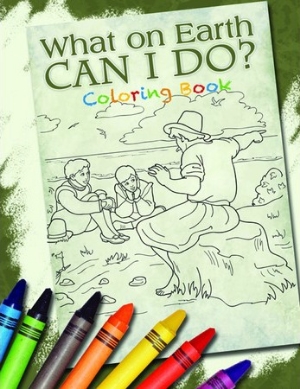
The thick hardback book, with full color illustrations and glossy paper, like anything else coming out of the Apologia Educational Ministries store, is impressive in both content and presentation. The junior notebooking journal contains coloring pages, word puzzles, word searches, mini books, craftivities and room to write or draw. It is a younger version of the regular notebooking journal. The coloring book contains only pages for little ones to color.

Apologia Junior Notebooking Journal

I read to my children from the book. Then, my son, who is in kindergarten, worked his way through the Junior Notebooking Journal, while my daughter, a preschooler, colored the corresponding pages in the Coloring Book.

Apologia Coloring Book

One lesson, about 50 pages long, divided into some 17 sections, looks at the same concept from a different lens. There are references to Hollywood movies (The Sound of Music), actors (Charlie Chaplin), Christian authors (Corrie ten Boom), Jesus’ parables and character development.

This worldview curriculum contains enormous amounts of information on different topics while following the main thread of stewardship. As Christians, we view the world through the lens of biblical concepts. Our children must be taught how to look at everything in life and ask, “What does the Bible say I should do in this situation?” The characters presented in the book modify their thoughts and behavior after answer that question, thus setting an example for all of us.

You may want to use it to supplement your history learning or, better yet, as a family devotional. Through all the lessons, the authors answer spiritual questions and draw real life applications. It’s really closer to a Bible curriculum if you don’t mind all the references to pop culture in the context of Bible class.

The Apologia “What In The World Can I Do?” worldview curriculum is intended for students in grades 1-6. They mention, on the Apologia website, that it is  “adaptable” to younger ages. In my experience, this curriculum takes a lot of adapting for younger children (PreK and K ages). So, if you have the energy, creativity and motivation, you can venture. If not, I suggest you wait a few years.

Apologia suggests a sample lesson plan which covers one lesson in the book in six sessions – two classes per week, over three weeks, for instance. I can tell you that the hardback book contains a lot of material and you will not find it difficult to keep your children busy.

In some cases, I had to adapt the writing quite a bit. They say the writing is on a fifth grade level, but it seems almost high-school level to me. My local newspaper is on a fifth grade level. This curriculum is higher than that.

We had a lot of new vocabulary to explain, but that was not all. I found some of the concepts quite mature – definitely not for children under 10. So we skipped over some things.

Apologia Educational Ministries

We worked through the first four lessons, which deal with World War II issues (Hitler, Churchill, the von Trapp Family, the blitz of London, the moving of children from London to the country side, the final victory) from the perspective of an English family.

I did not know how scared my children were of this story until we got to chapter four. Before I started reading, my son said, “You are reading this to us because if the war comes to Tennessee, my sister and I will have to be separated from you and daddy. We will have to go to the countryside to escape the fire bombs.”

Of course, I had to do some damage control right then and there.

In spite of all that, my children really connected with Colin and Jenny, a brother and sister, who were part of this English family. Another connection was the scene where Colin helps firefighters protect St. Paul’s Cathedral. My son loves anything that has to do with fighting fires.

St. Paul's Cathedral protected by firefighters during the Blitz

My son enjoyed coloring this page about how firefighters kept St. Paul’s safe.

When we started the fifth lesson, they just could not forget about Colin and Jenny. A new set of siblings is introduced, this time from North Africa, and my children could not move on. So we made chapati to get them into the new story, following the recipe from the book. It was quite good when fresh and hot.

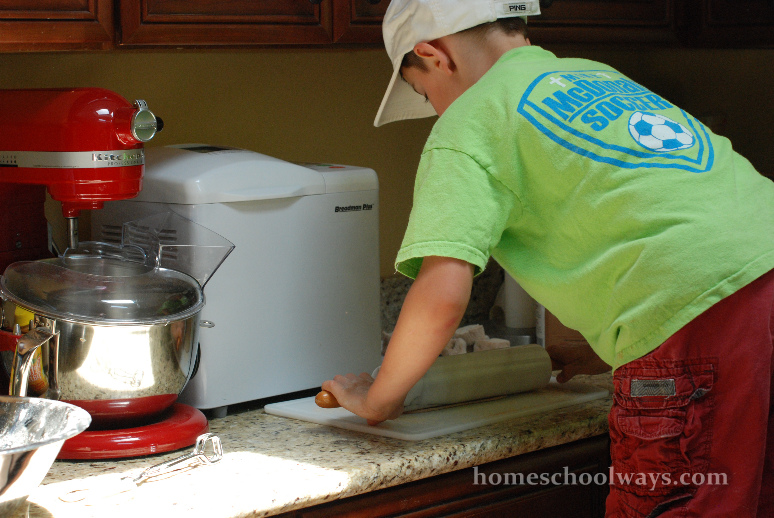
Boy rolls chapati dough

My son loved rolling out the dough for chapati

In conclusion, I would highly recommend this worldview curriculum from Apologia to older elementary or even high school students.

Click to read Crew Reviews
Here are the social media links for Apologia:

Facebook – httpss://www.facebook.com/apologiaworld
Twitter – httpss://twitter.com/apologiaworld 
Google+ – httpss://plus.google.com/105053356034237782125/posts
Pinterest – https://www.pinterest.com/apologia/

Crew Disclaimer


Mom Monday Week 21 – Summer Reading Program

Posted on

Everywhere I turn these days, somebody mentions how summer means diving into books. Naturally, as a homeschooling mom, you will take your children to the library and sign them up for the summer reading program. I know because I will do that. I assume we match.

You might want to sign yourself up for some really cool reading, too – the kind that you never had time for through the school year. I know I will.

Mom Monday Series - Summer Reading Program

What kind of books sound good to you? Personally, I like nonfiction, biographies, inspirational, and the classics.

Speaking of classics, I’m at 7% through “Les Misérables” on my Kindle. I found it for free, in French, the complete saga, and could not resist. Now I must finish what I started – eek!  Continue reading »


L’Alliance Française de Knoxville

Posted on

About a month ago, I took a more intentional approach toward teaching my children French in our homeschool. I started gathering resources to teach my children French.

Books and language lessons lay the foundation of mastering another language. Immersion and interaction with other speakers of French continue the process and solidify the vocabulary.

So I joined L’Alliance Française of Knoxville.

We attended two get-togethers already:

(1) Picnic and petanque tournament (pique-nique et tournoi de pétanque) at the Cove at Concord Park

(2) Immersion meal (table française) at the French-Belgian restaurant called “Northshore Brasserie” in West Knoxville.

The window of Northshore Brasserie

The window of Northshore Brasserie

Through the Alliance Française, we met people from Québec, France, Iran, Switzerland and even the United States (ha!). The conversations cover a multitude of topics and we all enjoy the interaction in the language of Molière. We definitely plan to join them for Bastille Day, our next “réunion.”

Here are the details

During the first event, we met everybody and played pétanque. Then, we had a picnic. Most of the dialogue was in French, but some of our spouses spoke to each other in English because they do not speak French at all.

Pétanque is a game like its Italian cousin, bocce. The difference is that, in bocce, you run before tossing the ball. In pétanque, you don’t. You stand and toss your ball from the launching spot.

Even though the weather was cold and my children were not too sure about speaking French to any of our new friends, we had a good time.

To say that I was inspired by the fellowship in French would be an understatement. I went home and worked on some more resources for our homeschool, like subscribing to different TV5 Monde newsletters and reaching out via email to a French family living in Knoxville, who were recommended by the members of this group.

By the second meeting, the immersion table, my children had more courage to interact in French. I am surprised by how quickly they pick up a language, but I should not be. Children under 12 are biologically wired to pick up multiple languages.

Alliance Française of Knoxville members enjoying lunch and French conversations  at Northshore Brasserie

Alliance Française of Knoxville members enjoying lunch and French conversations at Northshore Brasserie

After one month of teaching them, they understand simple phrases (what is your name? how old are you? come here, look at me, please, thank you etc) and they can count to ten. My son already uses “Eh, voilà!” when he brings me something.

When asked how old he was during the immersion table, he answered he was six years old. He constructed his sentence half in English and half in French. Progress.

Here’s another observation: their third language, French, is pushing their mother tongue, Romanian, to the forefront.

I spoke Romanian with my children since birth, but they answer me in English 99% of the time.

Today, my son and I were watering the garden. My daughter came over and asked to help, too. We took turns. When she asked to go over her allotted time, my son said, “In nici un caz!” in Romanian, which means “No way!”

I had never heard my son say that phrase before. Ever.

I knew he knew what it meant when I said it, but I did not know he could pronounce it so well and use it in an appropriate context. So I am really, really encouraged to see a bit of the fruit of my labors.

À bientôt!


Wonderful Wednesday – Roses

Posted on

The Outdoor Hour Challenge last Friday was about earth worms. Hmmm… I don’t want to go there. I chose roses instead because, well, they have inundated my life in the last seven days.

Our rose bushes have exploded. Then, my husband came home with yellow roses, too.

My husband and I are celebrating our ninth anniversary tomorrow. He brought me a dozen yellow roses and a card.

Yellow roses, baby breath

Bouquet of yellow roses and baby’s breath my husband brought me for our ninth anniversary

He said we already have a garden full of pink roses. And, we do.  Continue reading »


Trident Case Review

Posted on

This post is a review for The Old Schoolhouse Review Crew of a product called Kraken A.M.S. Case for Apple Mini 1/2.

Trident Case produces different shapes and colors of these rugged cases for many of your electronics. We have been using a Trident Case for our mini iPad for a few weeks and it just so happens that we got a red one. But the color, of course, does not matter as much as the question, “Will this case protect my iPad?”

Trident Case Review
This blue one, for instance, is super cute. I suppose the answer to the above question depends on what you plan on doing with your iPad. It also depends on your environment, how old your children are and how much you travel with your mini iPad.

If you happen to have a mini iPad 1 or mini iPad 2, you will want to look into a protective case for it. These sturdy iPad cases may seem like a lot of money – this particular one costs $59.95. But when you just shelled hundreds of dollars on an Apple product, you will naturally want to protect it.

This product is for all ages, of course, because, these days, all ages use mini iPads. In our home, my husband uses it more than anybody else. I am more of a Kindle gal while the kids – well – we keep them away from media as much as possible. The only thing they do on the mini iPad is an occasional Crossfingers puzzle or watch a short funny cat video with daddy – as a reward for good behavior.

Personally, I don’t travel much with my iPad, but my children are small. So the danger of breaking it comes to us at home. Even though the kids follow most house rules, they do have those days when they behave like children, carefree and carelessly. One day, daddy allowed our daughter a few minutes of puzzles on the mini iPad. He walked away to take care of something for a few minutes in another room. When he came back, the iPad was on the floor. She was done and had gone on to play with something else. He almost stepped on the iPad.

Good news: Trident cases are made to military standards when it comes to dust, vibration, drop, sand, and rain. The tests were done independently. More good news: they come in five colors – red, black, green, blue and pink.

With a weight of only 0.47 lbs, you will not add too much to your purse should you choose to carry it with you as you leave the house.

Regardless of color, Trident cases are green, i.e. eco-friendly green. I find it interesting that this case is so green, it is made of components that are recyclable, degradable and compostable. Wow!

If your lifestyle takes you biking, never fear, there’s a mount for your Trident case (which you must buy separately). If your lifestyle includes kids on the back seat, asking for the next French lesson video while you drive them to their violin lesson (and whose kids don’t?), there is a special holder for your Trident case (which you must buy separately).

They have so many of these accessories, you can even get a hand strap. That’s called flexibility and freedom in my book.

The screen is protected as well, though if you sat on it, it would not protect your device. Everything has its limits. The back of the device is protected by two layers – an inner layer made of silicone, which absorbs shocks, covered by an outer later made of hardened polycarbonate.

The corners are also made of the same double layer to protect it as much as possible. Great feature: the Kraken A.M.S. protects speakers, audio jacks and power ports from dirt and debris.

All in all, you should seriously give this device a chance and, at the very least, put it on a list next to its competitors to consider its pros and cons.

Here are the social media links for Trident Case:

 Facebook – https://www.facebook.com/tridentcase 
 Instagram – https://instagram.com/tridentcase# 
 Twitter – https://www.twitter.com/tridentcase 
 Google+ – httpss://plus.google.com/+tridentcase 
 Pinterest – https://www.pinterest.com/tridentcase 
 Vine – httpss://vine.co/Trident.Case
 YouTube – https://www.youtube.com/user/TridentCase 

Click to read Crew Reviews
 

Crew Disclaimer


Mom Monday Week 20 – A Happy Marriage

Posted on

My husband and I got married in our early 30s.

By then, we knew who we were, what we wanted out of life, and how to communicate it. As such, our marriage started out blissfully happy and it has only gotten better as time went by.

Time did go by. This week, we are celebrating our ninth anniversary.

Bride and groom kissing in the church doorway

One of our wedding pictures, in the doorway of the stone church where we got married

We have had some challenges along the way, of course. We are people, faulty and broken, surrounded by other people, faulty and broken. But, through the challenges, our love for each other has only gotten deeper and richer.

We remodeled a home and had great fun with it.  Continue reading »


7 Ways Modern Technology Helps Me Raise Multilingual Children

Posted on

We live in the United States, but my European background inspired me to raise my children with at least the languages I am fluent in: Romanian, English and French. It’s one of the reasons I homeschool.

I have been speaking to them in Romanian since birth. I introduced them to French about a year ago, when I started speaking to them during our normal routine.

My husband and I made the decision to limit our children’s screen time to 30 minutes per day and, instead, read to them extensively. We read to them mostly in English, but I also read to them in Romanian and French books. Lately, I have been more intentional about reading to them at least one book per day in Romanian and French.

Petra Lingua online language learning for children

What I realize more and more though is that my kids need more immersion into the sounds of French and Romanian. So here are some ways that I have allowed media into my children’s life. I call it “screen time with a purpose.”


1. Free books online

The Internet – the ultimate modern technology – has put me in touch with multilingual bloggers who inspire me and share their own findings. I also research the Internet to find book titles and ideas and methods. I even found a free bilingual book on Little Bilingues.

When my kids’ vocabulary picks up, we will read more advanced books in French. I found some free ones on Children’s Books Forever.


2. Google searches

A simple Google search for French books helped me find Schoenhofs, the bookstore which boasts the largest selection of foreign language books in North America. It is located in Cambridge, MA, on the campus of Harvard University. For orders over $50, shipping is free. Some of their titles begin cost under $5. So affordable.


3. Amazon Prime

Amazon remains a great source of books as well, especially because we have a Prime membership. While Amazon cannot rival Schoenhofs in selection or prices, Amazon carries certain bilingual books which Schoenhofs does not.


4. Youtube.com

Youtube helps with French nursery rhymes (comptines) and cartoons like Caillou, Léo et Popi and Trotro. These are wholesome cartoons in French which use simple vocabulary and short sentences. The dialogues help my children hear French spoken in a conversation and retain it.

Very important note: I sit with them and translate expressions and repeat the French terms. Not for everything, but for the most important words and phrases. I do it in Romanian. That way, they practice two minority languages at one time.

The other day, my son was imitating Mousseline, Caillou’s sister, who was saying, “Moi, moi, moi!” while holding her empty bowl up. Then he looked at me and said, “Mousseline is so cute. What does ‘moi’ mean, mama?”

Bonus: they don’t even realize they are having a French lesson while watching.

Even though it helps them learn French, I still limit their cartoon time to 30 minutes a day. That way, if they watch some English cartoons as well, they spend a total of one hour daily in front of a screen. I counterbalance that with three hours spent outside every day.


5. Petra Lingua

Last but not least, I have found Petra Lingua to be a fun way to allow modern technology to teach my children French. Try their free sample lesson and you will see how much your children enjoy the experience. I will have a more thorough review of this site in July, so make sure you sign up for updates from Homeschool Ways on social media or via email.

So far though, this site has boosted my children’s confidence with French. My daughter told me the other day, “I understand THIS French, mama” as we were going through the fruit and vegetable lesson for the third time.

Repetition is the mother of learning, and children know it instinctively. They ask to repeat the same lesson several times and they love that I oblige. In the process, they have just memorized 20 French words.


6. Skype

We Skype with my family who live in Spain, Sweden and Romania. Even though my children still answer my relatives in English and I have to translate, now and then they will answer in Romanian – miracle of miracles! If we keep this up, I think we will see even more progress.


7. Radio France Internationale

Listening to RFI has become a daily routine in our home. Even if it is just Le Journal En Français Facile, which takes 10 minutes, I make it a point to turn it on when the kids are playing nearby. They don’t get any of it at this point, but, over time, they will start hearing more and more familiar words.

I remember learning Swedish while living in Sweden (from TV, radio, conversations at work and at language school) and not understanding anything. After a few weeks, I could catch a phrase here, a word there. In the meantime, I learned the rhythm and the melody of the Swedish language. Four months later, I could carry on a conversation with the natives.

So, based on that experience, I immerse them into the sounds of French. Hopefully, a few months from now, I will be able to report some major victories on another multilingual blog carnival. Until then, I say au revoir!


This post is included in a Raising Multilingual Children blog carnival hosted by Rita of Multilingual Parenting.