Science education can either spark lifelong curiosity or shut it down. That’s why I was genuinely excited to sit down with illustrator, professor, and father of three Keith Lowe to talk about The Fuel Factory. This is a children’s book that teaches digestion through story, imagination, and beautifully human-made art.
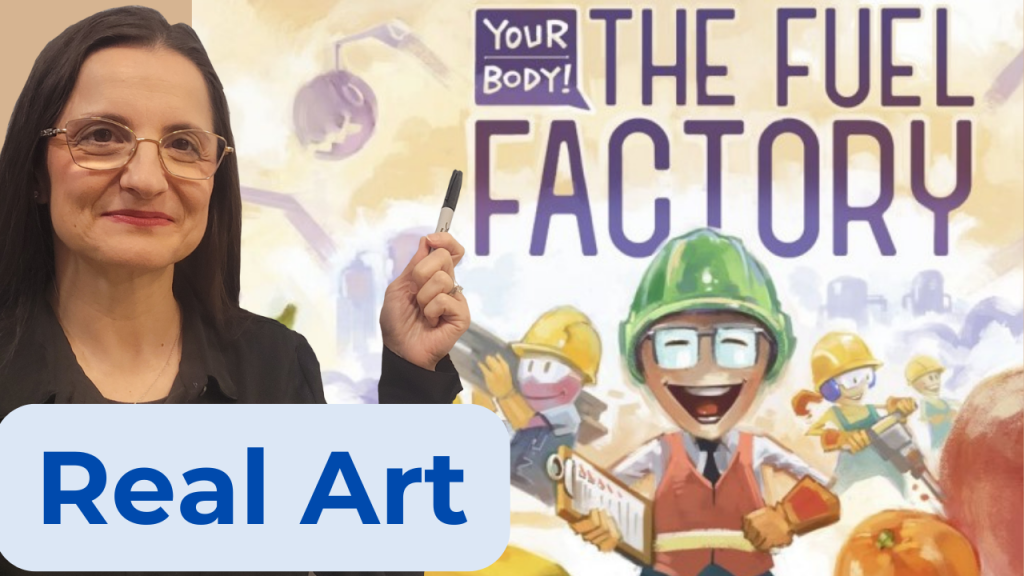
The Fuel Factory – A Biology Picture Book About Digestion
Keith’s path to children’s science books wasn’t linear. A self-described “geeky kid” who loved both drawing and games, he spent years working in the gaming and publishing industries. His work included strategy guides and board game development. Those experiences taught him teamwork, storytelling, and how people actually learn. Now, those skills show up powerfully in his educational work. Eventually, Keith followed a clear calling into education: he teaches illustration at Indiana Wesleyan University, while continuing to create as a practicing artist.
The inspiration for The Fuel Factory began at home. One night, Keith used a simple Ziploc bag filled with water to explain the bladder to his daughters. Their reaction—“Dad, do it again!”—stuck with him. Later, while pursuing his MFA in illustration, that moment resurfaced as the seed for a children’s book. The result is a story-driven exploration of digestion where the body is imagined as a bustling factory, full of machines, workers, and movement.
Vocabulary and Art
What stood out immediately to me (and to my teenage artist daughter) was the artwork. The shading, lighting, saturation, and texture are unmistakably human. Beyond the art, the book is rich in vocabulary and concepts. Kids encounter real scientific terms in context, not watered-down explanations. It’s not a textbook, but children walk away with genuine understanding.
Keith is intentional about story because story is how we’re wired to learn. Humor, emotion, and narrative create memory. In classrooms, he extends the book through hands-on activities, like having students trace a body on butcher paper and design their own “digestive factories.” The creativity and ownership kids show is remarkable. That ownership is where learning sticks.
At its heart, The Fuel Factory invites awe: awe at how the body works, awe at how wonderfully complex we are. Whether families use it as a read-aloud, a science supplement, or a full unit with the workbook, it offers something rare. This book represents science taught with imagination, depth, and joy.
Watch the interview on YouTube or Spotify.


