Homeschooling thrives on love, connection, and joyful experiences—and the same holds true for raising bilingual children. On the Homeschool Ways podcast, I spoke with Christine Yang Barry, founder of JoJo Learning and creator of the JoJo Chinese Songs for Baby & Me musical book series. [affiliate link]
Christine, a native Mandarin speaker raising three multilingual children (Mandarin, English, Spanish) in the U.S., draws from 20+ years helping families start bilingual journeys.
JoJo Learning
The big question she hears? “Bilingualism is exciting, but where do I start?” Her answer: Start young, start with love, and start with music. Babies are natural language sponges during the critical period from birth to age 7, when the brain absorbs languages effortlessly through listening, repetition, and patterns. Research from experts like Dr. Patricia Kuhl shows newborns distinguish all world sounds (fading by 6–12 months), and early bilingual exposure boosts executive function, focus, multitasking, reading, and math skills.
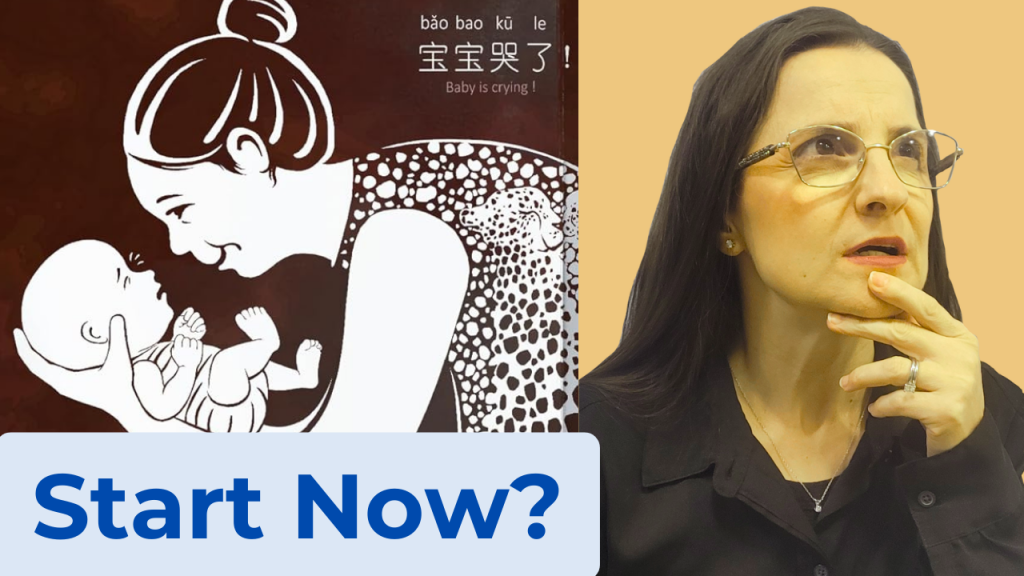
Christine’s series targets newborns and up with interactive picture books featuring:
– High-contrast black-and-white illustrations (perfect for young infants’ vision).
– Press-to-play buttons on each page that sing full songs—no extra CD needed.
– Bilingual text: Simplified Chinese, pinyin, and English.
– Lyrics rooted in everyday parental love: “You are the cutest baby,” praises, lullabies, and routines like buckling seatbelts or rocking to sleep.
These words of love naturally include high-frequency essentials (the “super seven” verbs like “I want” and “I like”). The planned six-book set introduces 300 core words as children grow from bonding newborns to active toddlers.
The JoJo Difference
What sets JoJo apart? Love as the foundation. Bilingualism isn’t a project or achievement. It’s a relationship. Social interaction drives learning; a caring adult singing and bonding matters more than screens or flashcards. After a tough postpartum ICU experience during COVID, Christine prioritized giving her voice and touch fully.
Best part for homeschool families: Non-Mandarin-speaking parents can fully participate. Built-in audio scaffolds learning. No grammar required at this stage. Press play, sing along, and enjoy bonding time. You learn naturally, just like the baby.
Christine’s top advice for raising curious, confident learners? Love what your child loves. Show genuine interest in their passions. Involvement makes kids feel supported, turning learning into shared joy.
The series has earned awards, including the 2025 IPPY Gold Medal for Best Interactive Children’s Book. Get Book 1 and bring Mandarin into your home through music and love. [affiliate link]
As homeschoolers, we relearn subjects out of devotion. Why not add a language the same way? Here’s to nurturing multilingual minds with warmth and play!
What’s your approach to early languages at home? Share below!


