What makes certain words and phrases stick in our minds for years?
Think about famous brand names like Coca-Cola, Best Buy, or Dunkin’ Donuts. Or famous literary lines such as Shakespeare’s “I count the clock that tells the time.” What they all share is alliteration — the repetition of consonant sounds at the beginning of nearby words.
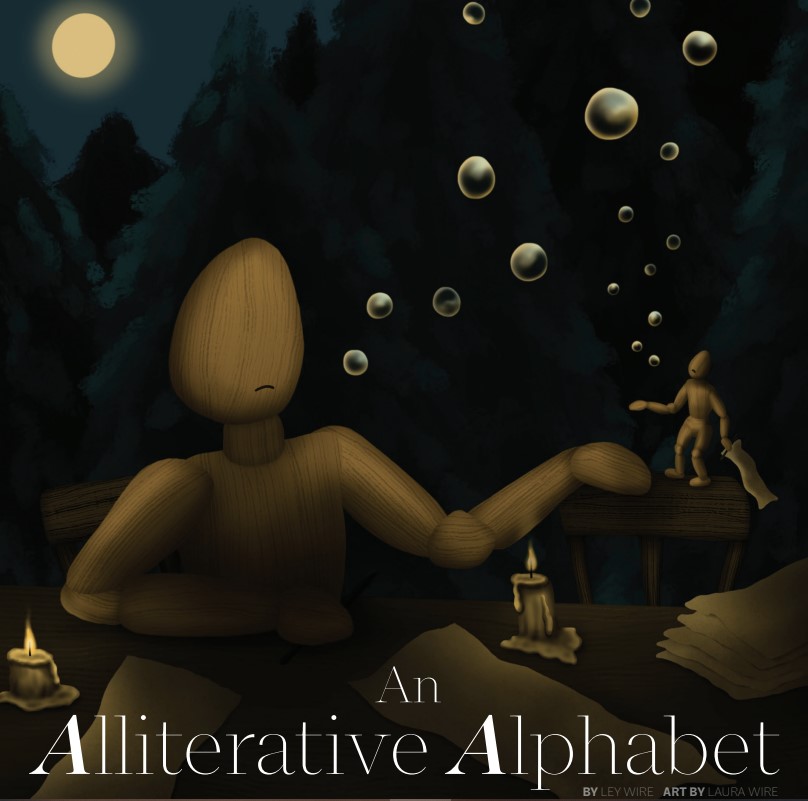
An Alliterative Alphabet
In a recent episode of the Homeschool Ways podcast, illustrator Laura Wy discussed how she and her sister-in-law Lee created An Alliterative Alphabet, a delightfully quirky picture book that teaches children the alphabet through playful language, unexpected scenarios, and memorable illustrations.
Unlike many traditional ABC books that rely on predictable examples like “A is for Apple,” this book takes a more imaginative approach. Each letter introduces children to unusual vocabulary and alliterative phrases that spark curiosity and invite discussion. The goal was not simply to teach letters, but to create a book children would remember long after story time ended.
Breakfasting Bunnies Bicker Boisterously
Laura explained that the project began casually when Lee, a homeschooling mother of eight, started sharing some of the alliterative poems she had written. Laura immediately saw illustration possibilities and offered to bring the whimsical scenes to life visually. Together, they intentionally leaned into the strange, silly, and unexpected — elements that naturally capture children’s attention.
One favorite example from the book is “Breakfasting bunnies bicker boisterously,” which Laura illustrated not as realistic rabbits, but as puppet-like stuffed bunnies engaged in dramatic arguments at breakfast. Another memorable page features “grizzled gray goats gummy green grass,” which inspired an entire imaginary business run by entrepreneurial goats turning grass into gum.
The interview highlighted something many parents and educators already know intuitively: children remember what delights and surprises them. Humor, rhythm, and unusual imagery create stronger mental connections than repetitive drills or flashcards.
The book also introduces children to sophisticated vocabulary in a natural way. Rather than simplifying language excessively, the authors intentionally expose young readers to richer words and more advanced sentence structures. This kind of vocabulary exposure matters deeply. Research consistently shows that strong early language skills are closely connected to long-term academic success.
Laura shared that real children heavily influenced the creative process. Lee tested the poems on her own children, while Laura drew inspiration from her nieces and nephews, intentionally adding tiny visual surprises and hidden details throughout the illustrations to encourage children to linger on each page.
For homeschool families especially, An Alliterative Alphabet works beautifully as a read-aloud, bedtime story, morning basket resource, or vocabulary enrichment tool. Younger children enjoy the rhythm and silliness, while older children can benefit from the advanced vocabulary and creative wordplay.
Perhaps the best advice shared during the interview was simple: let children take their time with books. Allow them to study the illustrations, ask questions, notice hidden details, and enjoy language at their own pace.
Because when children genuinely enjoy words, reading becomes less of a lesson — and more of an adventure.


